U.S. shipbuilding shrinks as China dominates global cargo-ship output
China now builds more than 1,000 cargo ships a year while the U.S. builds five or fewer, exposing a maritime gap that weakens trade, supply chains and wartime sealift.
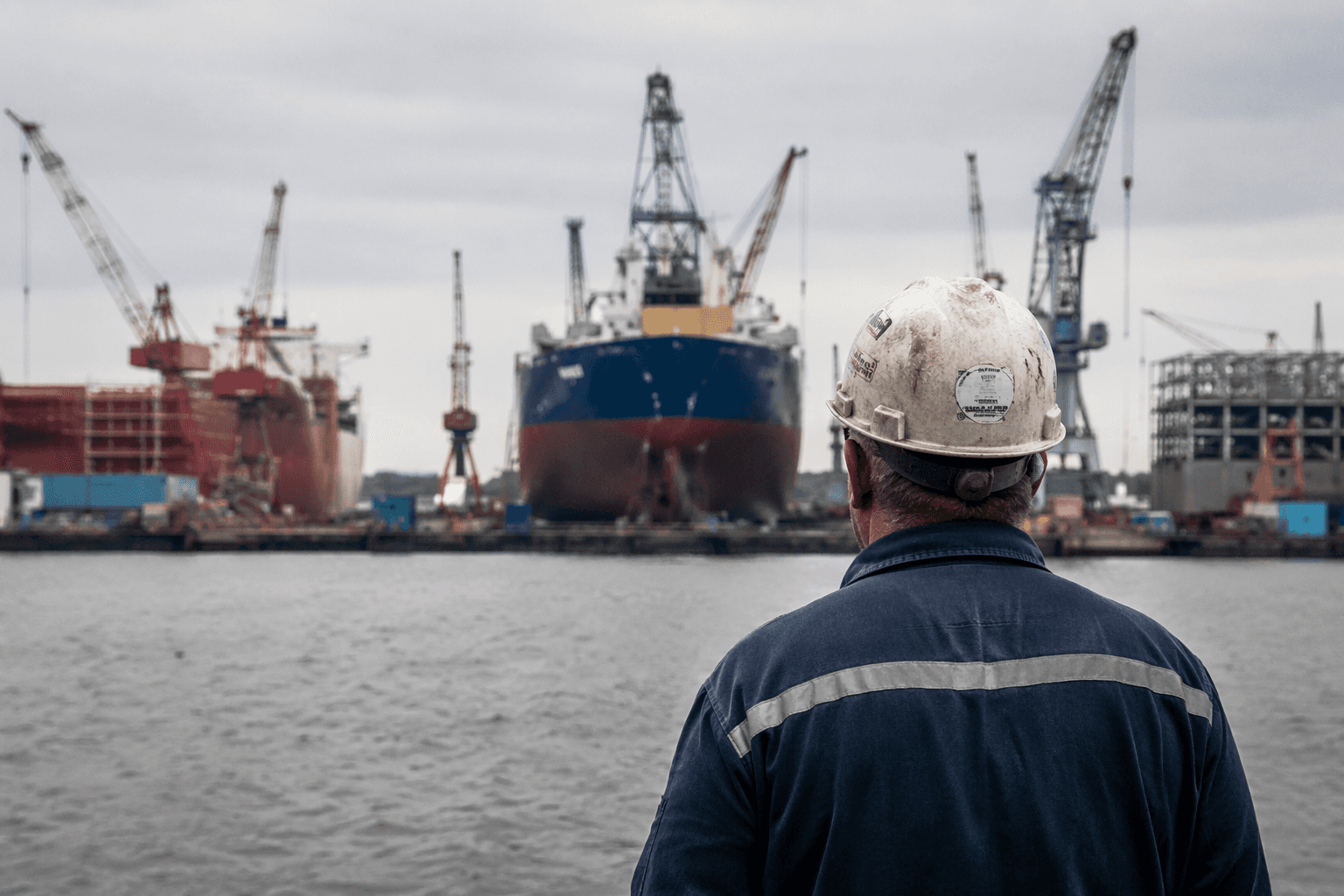
China’s shipyards are turning out more than 1,000 cargo ships a year while the United States builds five or fewer, a gap that reaches far beyond trade. It now touches military readiness, supply-chain resilience and the country’s ability to move goods or troops in a crisis.
The scale of the decline is stark. A Congressional Research Service report says China builds hundreds of ships per year while the U.S. share of global shipbuilding has fallen to about 0.1%. The same report says the United States built thousands of cargo ships during World Wars I and II, but today only two U.S. shipyards are building large oceangoing commercial cargo ships: Philadelphia Shipyard in Pennsylvania and General Dynamics NASSCO in California.
The commercial base has become so thin that most domestic shipyard capacity now serves the government, especially Navy programs. The Maritime Administration’s 2025 survey counted 145 private shipyards engaged in shipbuilding and more than 300 engaged in ship repair as of February 2025, but that footprint masks how little of it is aimed at large commercial hulls. The result is an industrial system that can still maintain and repair ships, but struggles to produce them at scale.
Washington has begun treating the problem as a strategic emergency. On April 9, 2025, President Donald Trump signed Executive Order 14269, Restoring America’s Maritime Dominance, saying U.S. commercial shipbuilding capacity and the maritime workforce had been weakened by decades of government neglect. The order directed a Maritime Action Plan and other steps to rebuild the industry. Before that, the U.S. Trade Representative launched a Section 301 investigation on April 17, 2024 into China’s targeting of the maritime, logistics and shipbuilding sectors, and on January 16, 2025 determined that China’s conduct was actionable under Section 301.

Defense analysts say the stakes are even higher than the cargo count suggests. A Center for Strategic and International Studies report said China is leveraging its dominant commercial shipbuilding industry to support naval modernization, and noted that Chinese shipbuilders built more commercial vessels by tonnage in 2024 than the entire U.S. industry had built since the end of World War II. That makes the commercial gap a military one as well, with implications for submarines, sealift and the broader naval industrial base.
There are early signs of rebuilding. In December 2024, Hanwha acquired Philly Shipyard and said it aims to expand output from about one vessel a year to 10 to 20 annually over the next decade. But closing a gap this wide will take more than one acquisition: it will require workers, orders, capital and procurement systems built for sustained commercial production, not just emergency fixes for a fleet that has been allowed to shrink for decades.
This article was produced by Prism’s automated news system from verified source data, official records, and press releases, then run through automated quality and moderation checks before publishing. The system is built and supervised by the people who set the standards it runs under. Read our full AI policy.
Did this article answer your question?