U.S. Treasury Grants India 30-Day Window to Clear Stranded Russian Oil Tankers
Washington issued a narrow waiver letting Indian refiners take delivery of Russian crude already at sea, citing Middle East energy disruptions.

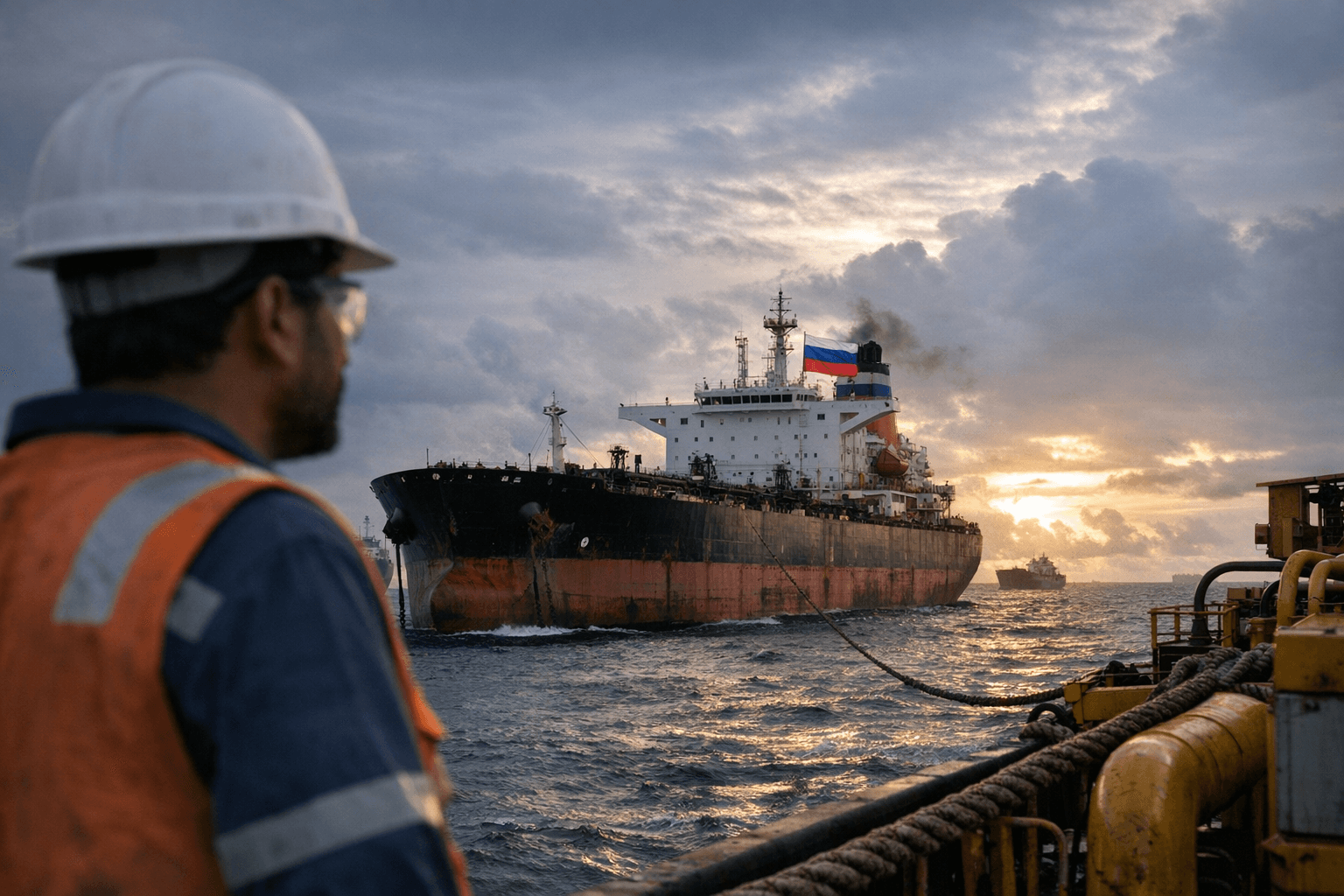
More than 22 million barrels of Russian crude are sitting unsold in idle tankers across Asia, and Washington has decided to move them. The U.S. Treasury issued a 30-day waiver under OFAC General License 133 allowing Indian refiners to complete purchases and deliveries of Russian crude already loaded onto vessels, a narrow but consequential carve-out from sanctions that would otherwise expose buyers to secondary penalties.
Treasury Secretary Scott Bessent announced the measure publicly, posting on X: "To enable oil to keep flowing into the global market, the Treasury Department is issuing a temporary 30-day waiver to allow Indian refiners to purchase Russian oil." He added that the measure "will not provide significant financial benefit to the Russian government as it only authorises transactions involving oil already stranded at sea."
The licence, issued on March 5 and expiring April 4, carries strict conditions. Transactions are authorized only if delivery or offloading occurs at a port in the Republic of India and the purchaser is an entity organized under Indian law. It applies exclusively to cargoes loaded onto vessels before March 5, and its scope extends even to tankers otherwise blocked under U.S. sanctions, allowing those ships to complete already-loaded deliveries.
The urgency is not hard to understand. Over 80 percent of the stranded tankers are near India's waters and in the Singapore Strait, with Bloomberg ship-tracking data indicating the 22-million-barrel figure may be conservative as additional vessels are still moving. The U.S. framed the waiver as a stop-gap measure to "alleviate pressure caused by Iran's attempt to take global energy hostage," a characterization reflecting acute concern about Strait of Hormuz access. India receives roughly 40 percent of its oil imports from the Middle East through that passage and holds crude stocks covering only about 25 days of demand.
India reportedly approached the Trump administration directly, seeking approval to resume Russian crude imports because of the Iran conflict. The request came against a fraught diplomatic backdrop: in early February, President Donald Trump announced that Prime Minister Narendra Modi had "agreed to stop buying Russian oil, and to buy much more from the United States and, potentially, Venezuela," and the administration had previously imposed an additional 25 percent import tariff on India over its purchases of discounted Russian crude. Indian refiners had begun reducing Russian purchases in January under Washington's pressure before the energy calculus shifted.
The market implications are significant even within the waiver's narrow scope. Sumit Ritolia, lead research analyst at energy analytics firm Kpler, said the authorization "provides a critical short-term buffer for India's refining sector while potentially reshaping Russian crude pricing dynamics and trade flows over the coming weeks." The competitive pressure of Indian buyers returning to the market may erode one of the more visible economic penalties on Russian energy exports. "Russian oil discounts will likely narrow and could turn to premiums as competition for supply rises," Ritolia said.
Treasury has been explicit that this is not a policy reversal. The waiver covers only cargoes already at sea and expires in less than four weeks. Whether Washington extends it, tightens it, or lets Indian refiners face renewed exposure after April 4 will depend on how the Middle East crisis evolves and whether India accelerates plans to shift purchases toward American suppliers.
This article was produced by Prism’s automated news system from verified source data, official records, and press releases, then run through automated quality and moderation checks before publishing. The system is built and supervised by the people who set the standards it runs under. Read our full AI policy.
Did this article answer your question?

