U.S. Votes Against UN Resolution Calling Slavery a Crime Against Humanity
The U.S. was one of only 3 countries to vote against a UN resolution naming the transatlantic slave trade the gravest crime against humanity, joined by Israel and Argentina.
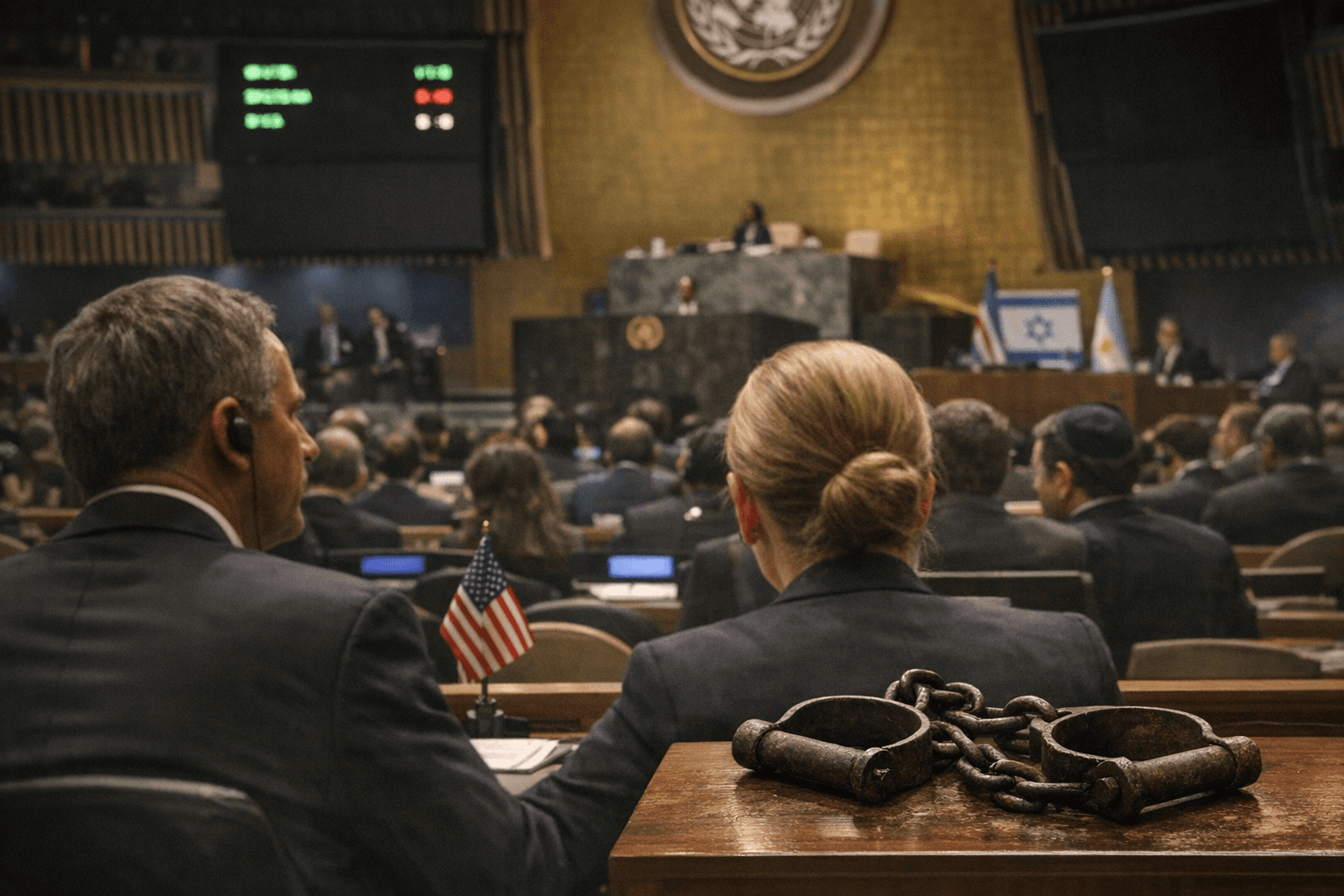
Applause erupted in the UN General Assembly Hall on Wednesday as member states adopted a resolution declaring the transatlantic slave trade the gravest crime against humanity. The United States was not among those cheering.
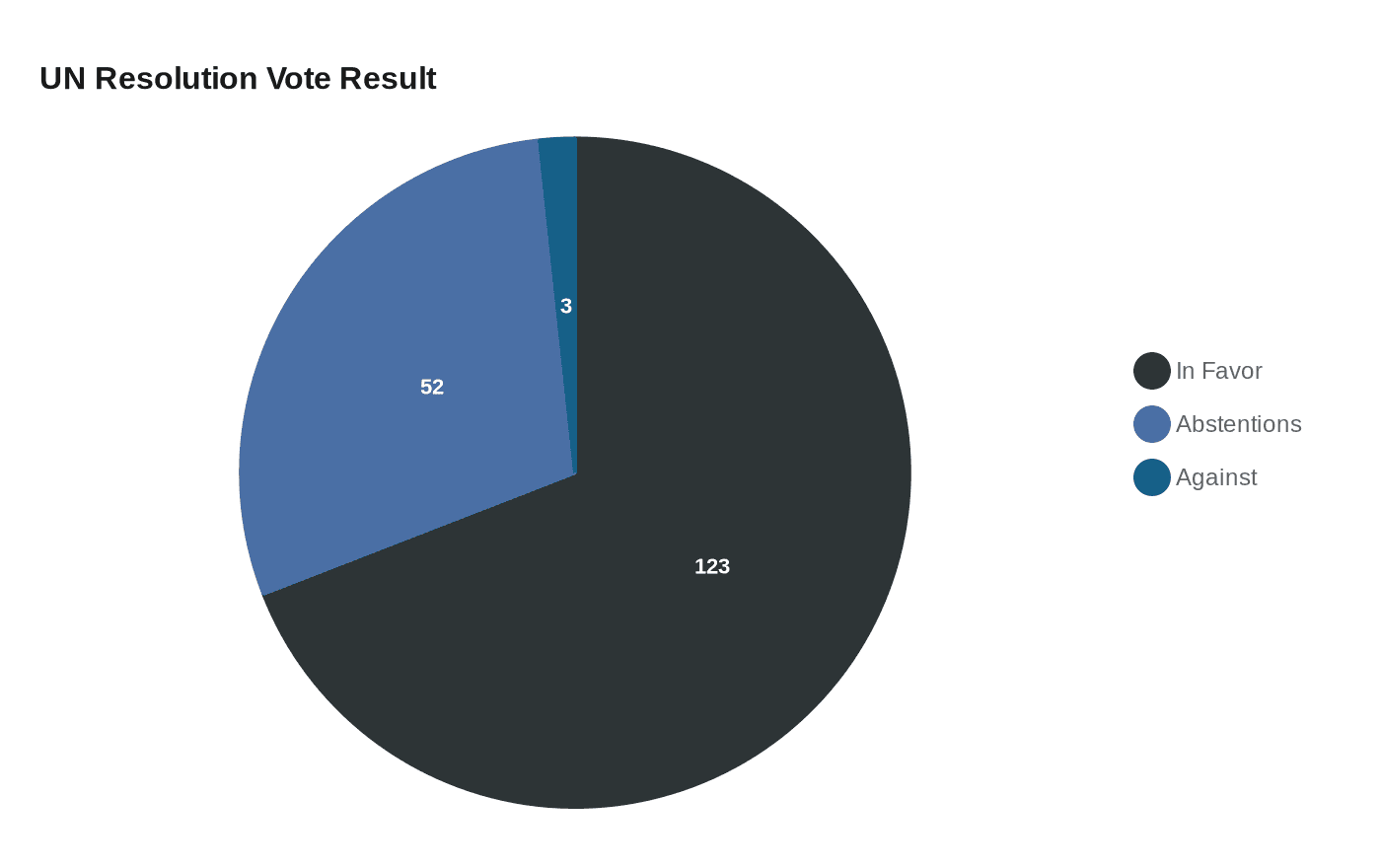
The vote in the 193-member world body was 123-3, with 52 abstentions. Argentina, Israel and the United States were the three members voting against the resolution. The United Kingdom and all 27 members of the European Union were among those that abstained.
The resolution, proposed by Ghana, recognizes transatlantic slavery as the "gravest crime against humanity" and calls for reparations. It also urges "the prompt and unhindered restitution" of cultural items, including artworks, monuments, museum pieces, documents and national archives, to their countries of origin without charge. The resolution does not specify a monetary amount for any reparations fund.
Ghana's President John Dramani Mahama, speaking ahead of the vote on behalf of the 54-member African Group, the largest regional bloc at the UN, said the resolution offered "a route to healing and reparative justice." Mahama said the resolution served as "a safeguard against forgetting," adding: "Let it be recorded that when history beckoned, we did what was right for the memory of the millions who suffered the indignity of slavery." Mahama noted that the vote was taking place on the International Day of Remembrance of the Victims of Slavery and the Transatlantic Slave Trade, honoring the memory of about 13 million African men, women and children enslaved over several centuries.
Ghana's Foreign Minister Samuel Okudzeto Ablakwa framed the demands in concrete terms, telling the BBC that African leaders were not seeking personal gain. "We are demanding compensation," Ablakwa said, calling for educational and endowment funds, skills training funds, and the return of looted cultural artefacts. "History does not disappear when ignored, truth does not weaken when delayed, crime does not rot … and justice does not expire with time," Ablakwa said.
The U.S. delegation took a sharply legal posture. Deputy U.S. Ambassador Dan Negrea stated before the vote that while the United States opposes the past wrongdoing of the transatlantic slave trade and all other forms of slavery, it "does not recognize a legal right to reparations for historical wrongs that were not illegal under international law at the time they occurred." Negrea also raised procedural objections, arguing the resolution was vague about who the recipients of reparatory justice would be. He said the United States "strongly objects to the resolution's attempt to rank crimes against humanity in any type of hierarchy," adding that "the assertion that some crimes against humanity are less severe than others objectively diminishes the suffering of countless victims and survivors of other atrocities throughout history."
The EU's abstention carried a similar legal rationale. The EU's representative argued that use of the word "gravest" in the context of crimes against humanity is "not legally accurate," implying a hierarchy among atrocity crimes when no such legal hierarchy exists, and that this "risks undermining the harm suffered by all victims."
Mahama directly criticized the domestic U.S. political climate during his remarks, accusing the Trump administration of "normalising the erasure of black history." He cited the restoration of Confederate statues and an attempt to dismantle a slavery exhibit in Philadelphia as examples.
In the United States, support for reparations gained momentum in the wake of the murder of George Floyd by a Minneapolis police officer in 2020. That momentum has since collided with conservative resistance over how race and history are addressed in public institutions, a dynamic that shaped Washington's posture in Wednesday's vote.
Justin Hansford, a law professor at Howard University, said the resolution was significant as it represented the furthest the UN has gone in recognizing transatlantic slavery as a crime against humanity and calling for reparations. "This marks the first vote on the floor of the UN," Hansford said. UN Secretary-General Antonio Guterres told the General Assembly that "far bolder action" was required from more states to confront historical injustices.
The resolution is not legally binding but carries political weight. The Netherlands remains the only European country to have issued a formal apology for its role in slavery. With 52 countries abstaining and only three in outright opposition, Wednesday's vote illustrated both the breadth of global symbolic support for recognizing the slave trade's legacy and the depth of resistance, particularly among wealthy nations, to any framework that could carry legal or financial consequences.
This article was produced by Prism’s automated news system from verified source data, official records, and press releases, then run through automated quality and moderation checks before publishing. The system is built and supervised by the people who set the standards it runs under. Read our full AI policy.
Did this article answer your question?