US weighs action on Chinese robotics imports after review, report says
Commerce is reviewing Chinese robotics imports as Washington widens its China fight beyond chips. The decision could reshape factory costs and U.S. automation plans.

Commerce Secretary Howard Lutnick told executives in a closed-door meeting Monday that the department was studying Chinese state-subsidized robotics imports and could act once the review was complete. The signal put industrial robots, not semiconductors, at the center of Washington’s latest clash with Beijing, with officials weighing whether the United States should rely less on imported systems inside factories and other critical industries.
The move fit into a broader push already moving through Congress. On June 3, lawmakers on the House Select Committee on China introduced the bipartisan GUARD Act, which would require scrutiny of robots made by China and other foreign adversaries and could block imports of systems deemed a national-security risk. The committee has also been moving to blacklist certain Chinese-made humanoid and quadruped robots from the U.S. market, sharpening the pressure on a sector that sits at the intersection of manufacturing, logistics and defense.
Commerce had already shown interest in the field earlier this year, planning a March 10 roundtable with American robotics companies to discuss how to bolster domestic production and blunt Chinese competition. The sequence suggests a sustained policy effort rather than a one-off response, and it raises the prospect that Washington could eventually turn to tariffs, procurement restrictions or other limits if the review advances.
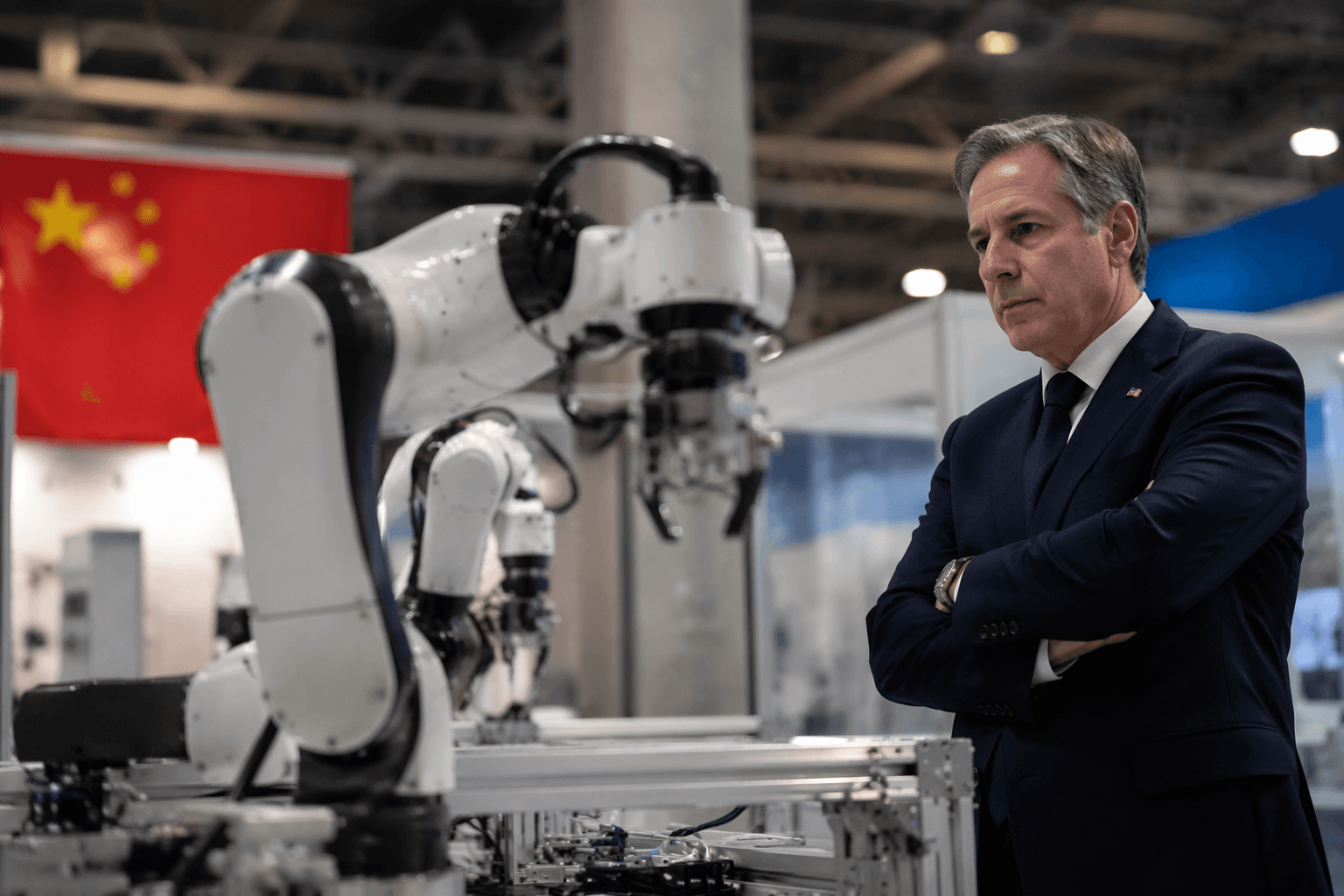
The industrial stakes are sizable. The International Federation of Robotics said the United States had 393,700 industrial robots operating in factories in 2024 and installed 34,200 that year, down 9% from the prior year. It also said the United States imports most of its robots from Japan and Europe and has few domestic suppliers, a dependence that leaves manufacturers exposed if trade rules tighten or if imported systems become more expensive.
China’s numbers are far larger. The federation said Chinese factories installed 295,000 industrial robots in 2024, the highest annual total on record, and that Chinese manufacturers sold more units at home than foreign competitors for the first time. Domestic suppliers held 57% of the Chinese market, underscoring how quickly the country has built scale in a sector that the United States still sources mostly abroad.
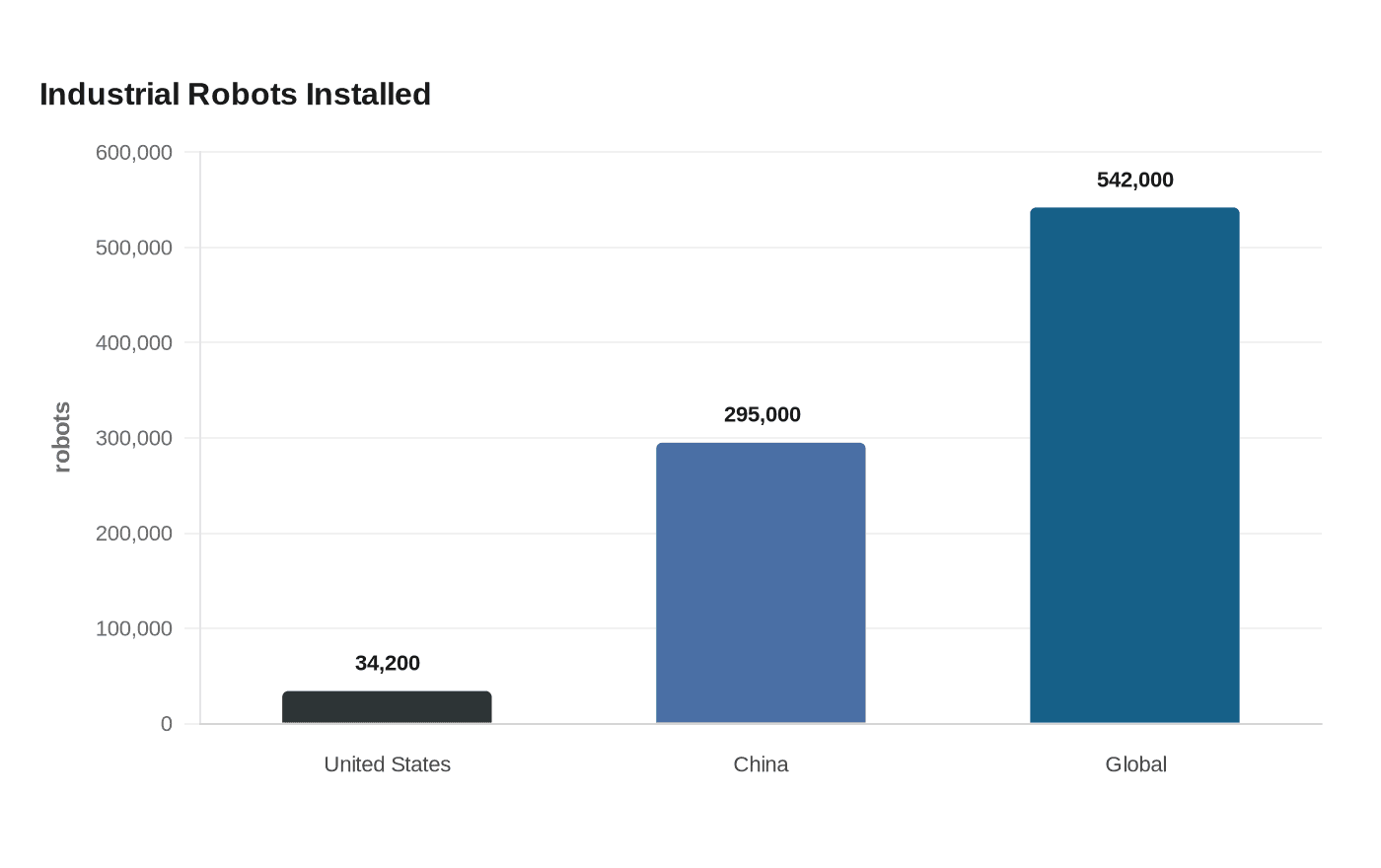
Globally, 542,000 industrial robots were installed in 2024, and Asia accounted for 74% of new deployments. That concentration is helping drive the policy debate in Washington, where the White House issued an executive order on advanced AI innovation and security on June 2 and a National Security Presidential Memorandum on AI on June 5. Together, the steps point to a widening effort to treat advanced automation as strategic infrastructure, even if that means higher costs for U.S. manufacturers in the short run.
This article was produced by Prism’s automated news system from verified source data, official records, and press releases, then run through automated quality and moderation checks before publishing. The system is built and supervised by the people who set the standards it runs under. Read our full AI policy.
Know something we missed? Have a correction or additional information?
Submit a Tip