U.S. weighs covert mission to secure Iran’s enriched uranium stockpile
Iran’s uranium stockpile reached 440.9 kilograms at 60 percent enrichment, tightening the clock without meaning Tehran already had a bomb.
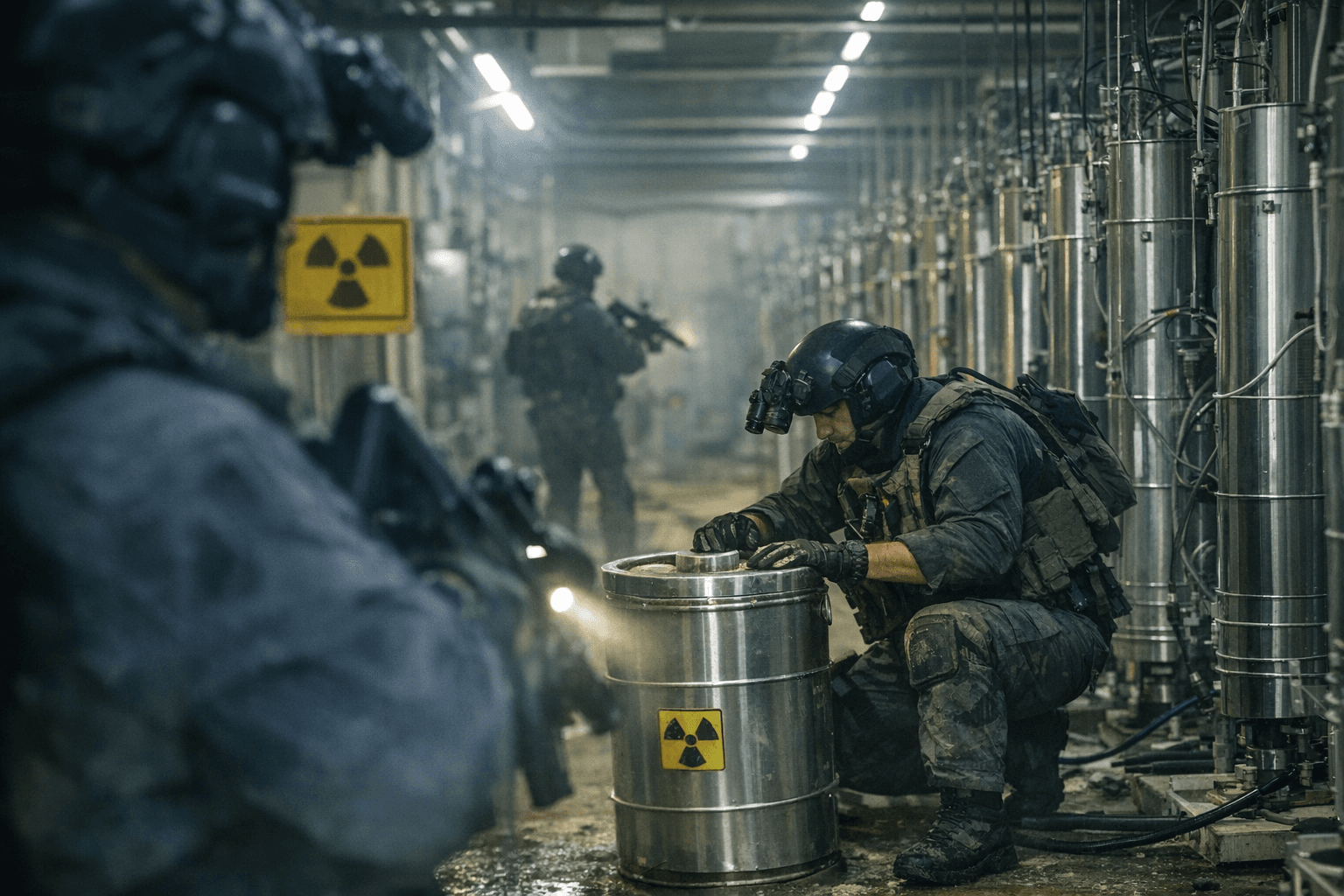
Iran’s stockpile of highly enriched uranium had crossed a threshold that mattered less as a headline number than as a shrinking clock. U.S. intelligence said in November 2024 that Iran had enough fissile material that, if further enriched, would be sufficient for “more than a dozen nuclear weapons,” even as it assessed that Tehran was not building one at the time.
By late May 2025, the stockpile had grown further. A September 2025 IAEA-related analysis cited by watchdog groups put Iran at 440.9 kilograms of uranium enriched up to 60 percent on the eve of the June 2025 Israel-Iran war. That level was close to weapons-grade, and it is why the International Atomic Energy Agency said Iran’s “significantly increased production and accumulation” of highly enriched uranium was a matter of “serious concern.”
The practical meaning is narrower than the rhetoric around breakout time. A larger stockpile does not automatically produce a bomb, but it does reduce the time needed to turn existing material into weapons-grade uranium if Iran chose to do so. It does not solve the harder steps of weaponization, delivery, and command decisions. It does, however, narrow the interval in which Washington and Jerusalem could detect, deter, or disrupt a dash to a weapon.
That is why the idea of physically securing the stockpile carries such weight. A past covert operation, Project Sapphire, removed 600 kilograms of highly enriched uranium from the Ulba Metallurgical Plant in Ust-Kamenogorsk, Kazakhstan, and shipped it to the Y-12 Plant at Oak Ridge, Tennessee. Declassified records describe a 31-person team drawn from the State, Energy, and Defense departments. Later accounts said the material was enough for roughly 20 to 24 atomic bombs.
Project Sapphire succeeded because Kazakhstan cooperated after the Soviet collapse, and because it fell under the Cooperative Threat Reduction Program. Iran is the opposite case. Any attempt to seize its uranium would require covert access to heavily defended sites, would risk escalation, and could tip into open conflict. For the United States, the question is no longer whether the stockpile matters. It is whether the remaining warning time is long enough to rely on diplomacy, sabotage or force before the material itself becomes the basis for a weapon.
This article was produced by Prism’s automated news system from verified source data, official records, and press releases, then run through automated quality and moderation checks before publishing. The system is built and supervised by the people who set the standards it runs under. Read our full AI policy.
Did this article answer your question?