Hamas says it may give up some weapons, easing Gaza ceasefire talks
Hamas has signaled it may store or freeze some weapons, but not surrender them outright. The gap over disarmament now hangs over the next Gaza ceasefire phase.
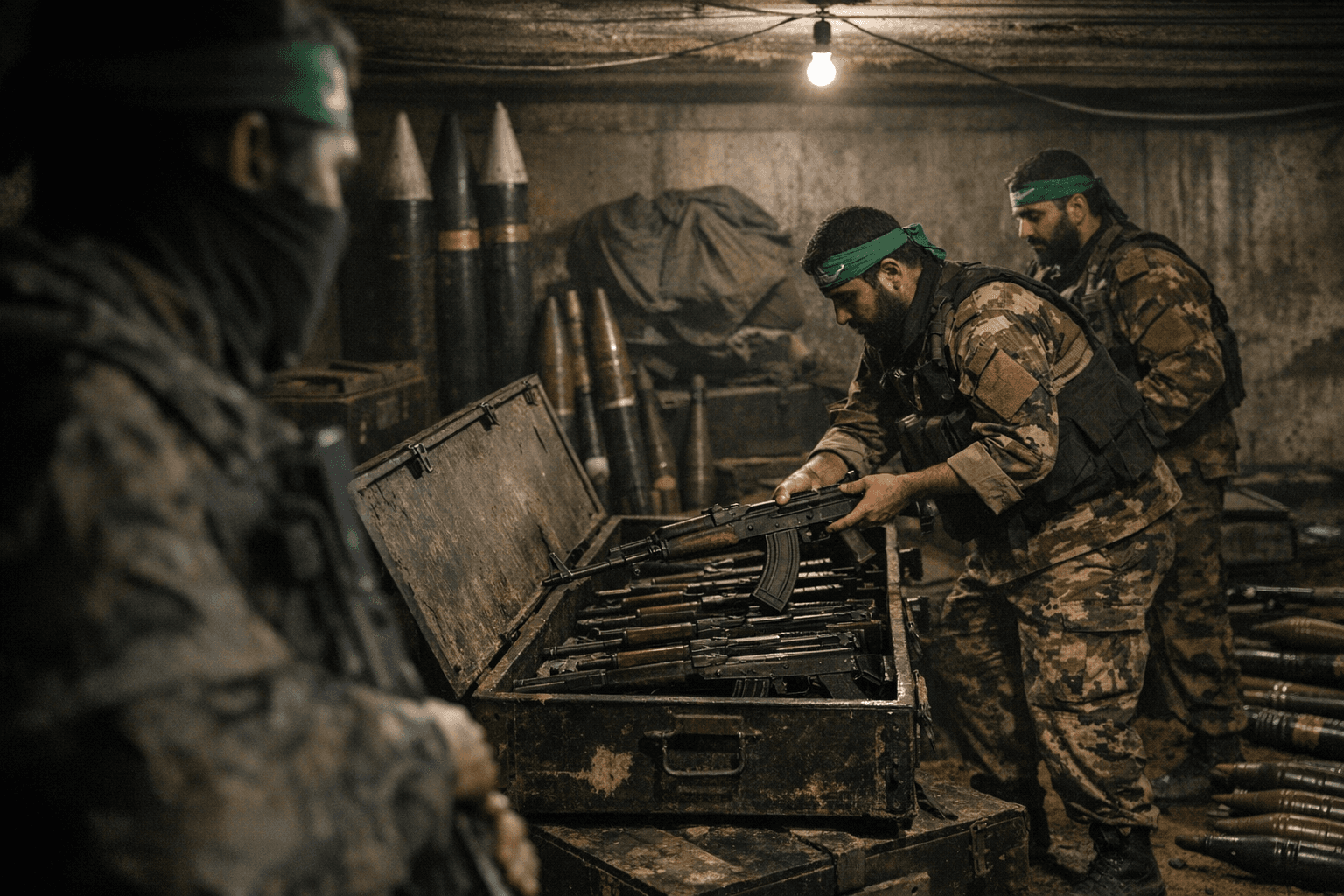
Hamas has opened the door to giving up some weapons, but only in a way that falls short of the Israeli and U.S. demand for full disarmament. Two senior Hamas officials in Gaza said the group was prepared to relinquish some automatic rifles and other arms, a limited concession that keeps the core dispute intact as ceasefire talks move toward their next phase.
Bassem Naim, a member of Hamas’ decision-making political bureau, said the group was open to a "comprehensive approach" and to "freezing or storing" its weapons to avoid further escalation. He has also insisted Hamas retains a "right to resist" until a Palestinian state is established, underscoring how far the movement remains from accepting the kind of total surrender Israeli and U.S. officials have pressed for. Hamas has publicly rejected calls in recent months to lay down its weapons, which are bound up with its ideology of armed resistance.
The dispute is central to the second phase of the U.S.-brokered Gaza ceasefire framework, which is expected to tackle disarmament alongside the deployment of an international security force, the creation of a technocratic Palestinian governing committee, and the withdrawal of Israeli troops. A March 27, 2026 disarmament plan laid out an eight-month timeline for Hamas to surrender arms in stages. It also called for Gaza’s tunnel network to be destroyed, for reconstruction to proceed only in areas designated as demilitarized, and for the process to be verified by a Weapons Collection Verification Committee.
Israeli officials have said disarmament is a key demand and could stall progress on the rest of the deal. That leaves the most consequential questions unresolved: which weapons Hamas would actually hand over, who would control the collection process, and what guarantees would keep both sides from using a partial concession as cover for a tactical reset.
Hamas has also been consulting internally with other Palestinian factions on the fate of its weapons, a sign that even a limited compromise remains politically contested. The issue carries weight far beyond the negotiating room in Doha. The ceasefire that took effect in October 2025 halted a two-year Israeli offensive in Gaza that followed Hamas’s Oct. 7, 2023 attack on Israel, and hostage-prisoner exchanges began after the truce took hold. For Gaza’s civilians, the unresolved standoff over arms, enforcement, and reconstruction will help determine whether the ceasefire becomes a durable political opening or another pause before renewed destruction.
This article was produced by Prism’s automated news system from verified source data, official records, and press releases, then run through automated quality and moderation checks before publishing. The system is built and supervised by the people who set the standards it runs under. Read our full AI policy.
Did this article answer your question?