Pro-Russian Radev Party Poised to Win Bulgaria Amid Political Crisis
Rumen Radev’s Progressive Bulgaria surged ahead in Bulgaria’s eighth election in five years, raising the prospect of a Kremlin-friendly shift on NATO, Ukraine and the euro.
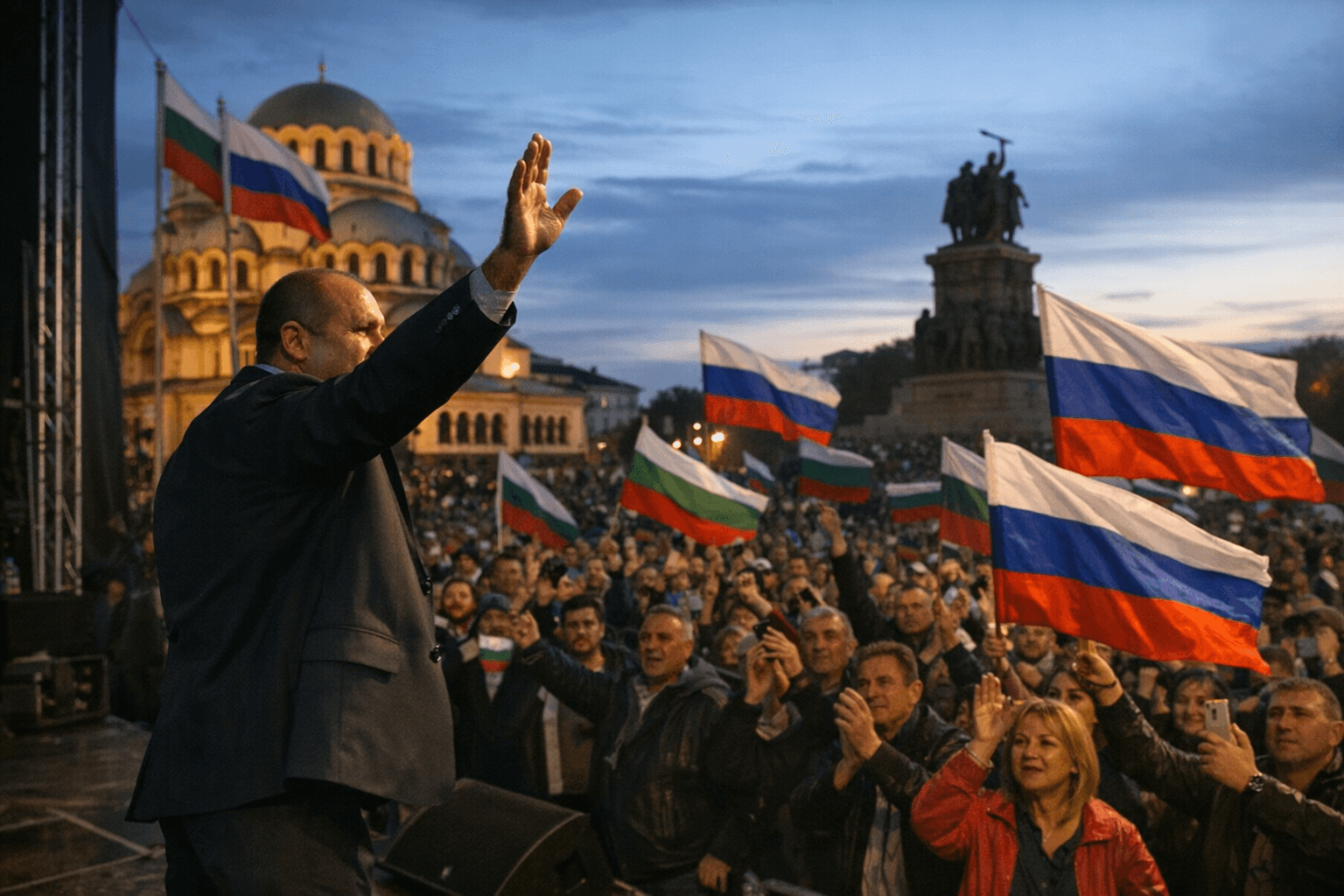
Bulgaria’s political paralysis looked set to deepen into something more consequential for Europe on Sunday, as Rumen Radev’s newly created Progressive Bulgaria movement surged toward a commanding win in a vote that could reshape the country’s stance on Ukraine, Russia and the euro.
Exit polls and updated survey data put Radev far ahead of his rivals in the 6.5 million-person NATO and European Union member. POLITICO projected Progressive Bulgaria at about 40 percent, while an updated Alpha Research exit poll reported 44 percent, more than triple GERB’s 12.5 percent. Turnout was about 47 percent with one hour left to vote, well above the 39 percent recorded in the last election in October 2024.
The result came after Bulgaria held its eighth parliamentary election in five years, a relentless cycle that has left the country with seven prime ministers since 2021, none of them able to finish a full term. Mass protests forced out the previous government in December 2025, and Radev stepped down from the presidency in January to run for parliament, making the ballot a direct test of whether a politician long seen as sympathetic to Moscow could translate anti-establishment anger into power.
Radev built his campaign around corruption, weak governments and elite capture. AP and Reuters said he framed the vote as a rejection of corruption and oligarchic rule. But the larger stakes reach well beyond Sofia. Radev has opposed military aid to Ukraine, urged Kyiv to sue for peace, criticized Bulgaria’s adoption of the euro this year and argued that the currency move has fueled inflation. He has also pressed for better relations with Moscow and the resumption of Russian oil and gas flows into Europe, while invoking Russia’s role in Bulgaria’s liberation from Ottoman rule in 1878.
That combination has made Bulgaria a strategic concern in Brussels and across NATO’s southeastern flank. The country joined the euro zone in January, adding a new layer of importance to any government led by a politician who has questioned the bloc’s direction and Europe’s sanctions posture toward Russia. For the European Union, a Radev-led government would test whether one of its newer euro members can be pulled toward Moscow just as the war in Ukraine continues to strain Western unity.
If Progressive Bulgaria falls short of a majority, the coalition arithmetic could be decisive. POLITICO said Radev may have to choose between pro-EU liberal reformists and a bloc with the Socialist party and nationalists. That second path would bring the clearest risk of a more openly pro-Moscow alignment inside an already fragile Bulgarian parliament, and would give the Kremlin another opening in a region where influence, energy and security remain tightly linked.
Know something we missed? Have a correction or additional information?
Submit a Tip