U.S. weighs strikes on Iran as tensions rise over Hormuz fees
Washington was weighing strikes on Iran as Tehran pressed a Hormuz fee plan that Gulf states rejected, and crude markets already jumped.

U.S. officials were moving through the first rung of a potential military escalation against Iran as President Donald Trump met with national security advisers and publicly left open the possibility of another strike. The immediate fight centered on the Strait of Hormuz, where Tehran’s push to assert control over traffic and impose a tolling system has rattled allies, shipping operators and oil markets.
Secretary of State Marco Rubio called Iran’s idea of creating a tolling system in the strait “not acceptable,” a sharp signal that Washington sees the proposal as more than a maritime dispute. Bahrain, Kuwait, Qatar, Saudi Arabia and the United Arab Emirates formally rejected Iran’s route-control arrangement in a letter circulated through the International Maritime Organization, underscoring how widely the move has been opposed in the region.
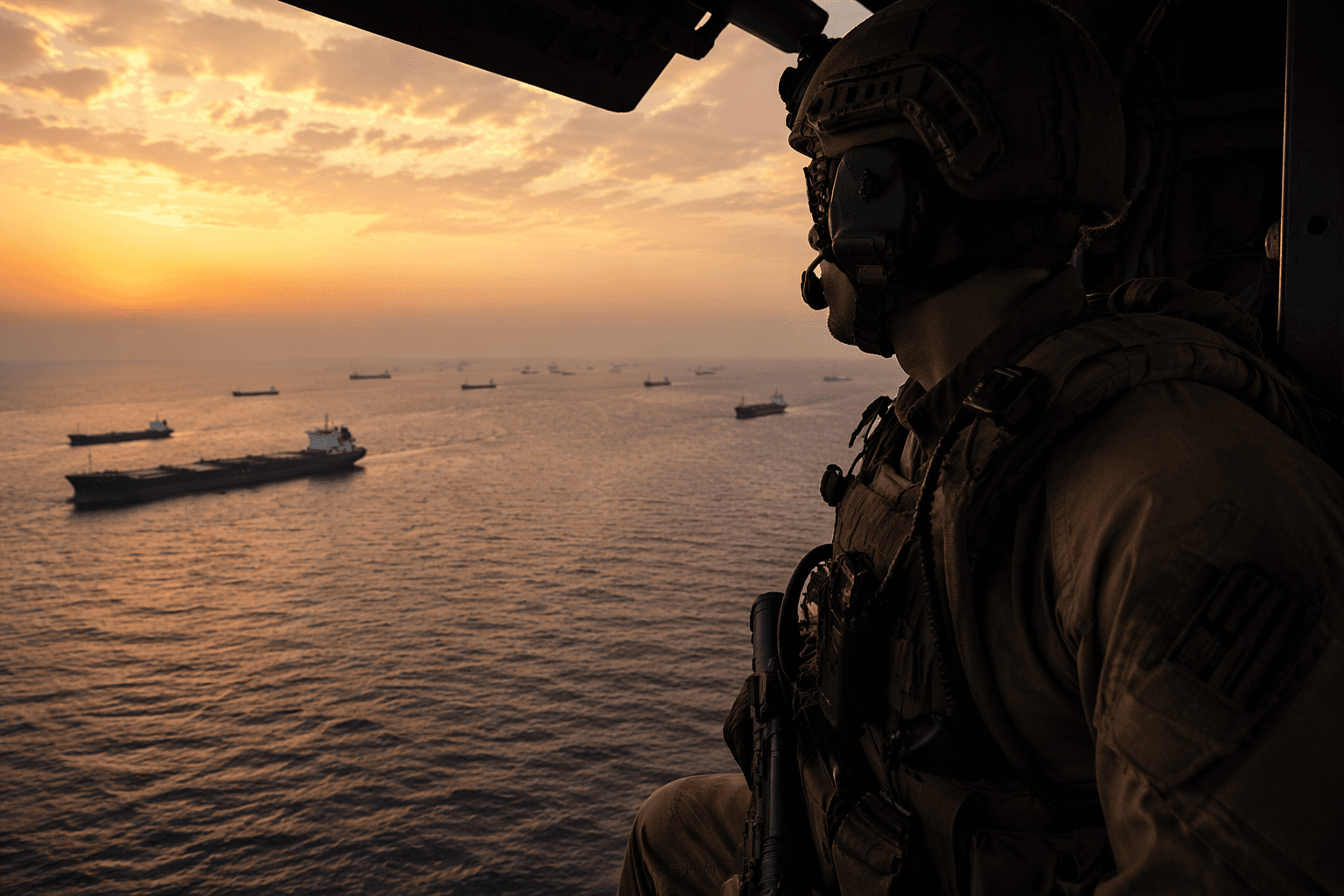
The Strait of Hormuz is the pressure point that makes this standoff so dangerous. The International Energy Agency said about 20 million barrels per day of crude oil and oil products passed through it in 2025. The U.S. Energy Information Administration said the strait carried about 20 million barrels per day in 2024, equal to roughly 20% of global petroleum liquids consumption. Any actual disruption would immediately raise risks for American forces in the Gulf, shipping lanes serving Asia and Europe, and energy prices that touch households far from the Persian Gulf.
The escalation ladder is now visible. A political warning from Trump or Rubio does not stop shipping on its own. A formal military order would be the point at which the United States moved from signaling to action, and Reuters reported on May 19 that Trump said the United States may strike Iran again and that he had been “an hour away” from deciding on a strike before postponing it. He also said Tehran wanted a deal, keeping diplomacy alive even as the military option stayed on the table.
Regional diplomacy has tried to keep the crisis from reaching that next step. Reuters reported on May 4 that the United States and Gulf Arab states were drafting a U.N. Security Council resolution condemning Iran for blocking the strait. Al-Monitor reported that peace efforts have focused on a temporary memorandum of understanding that would halt the war and reopen Hormuz while broader nuclear issues are negotiated. Abbas Araghchi said on May 15 that vessels could pass if they coordinate with Iran’s navy, except ships from parties “at war” with Tehran.
Markets have already registered the strain. The Energy Information Administration said Brent crude rose from $69 per barrel on June 12 to $74 on June 13 after regional tensions, a reminder that even the threat of force in Hormuz can move prices fast. If threats turn into strikes, the consequences would land first on American troops and ships in range, then on the tankers threading the strait, and finally on consumers who pay more when the world’s most important oil chokepoint tightens.
This article was produced by Prism’s automated news system from verified source data, official records, and press releases, then run through automated quality and moderation checks before publishing. The system is built and supervised by the people who set the standards it runs under. Read our full AI policy.
Did this article answer your question?


