USCIS says most green card applicants must leave the U.S.
USCIS first said green card applicants would generally have to leave the U.S., then DHS said most would not. The mixed signals have left families and lawyers unsure who is still at risk.
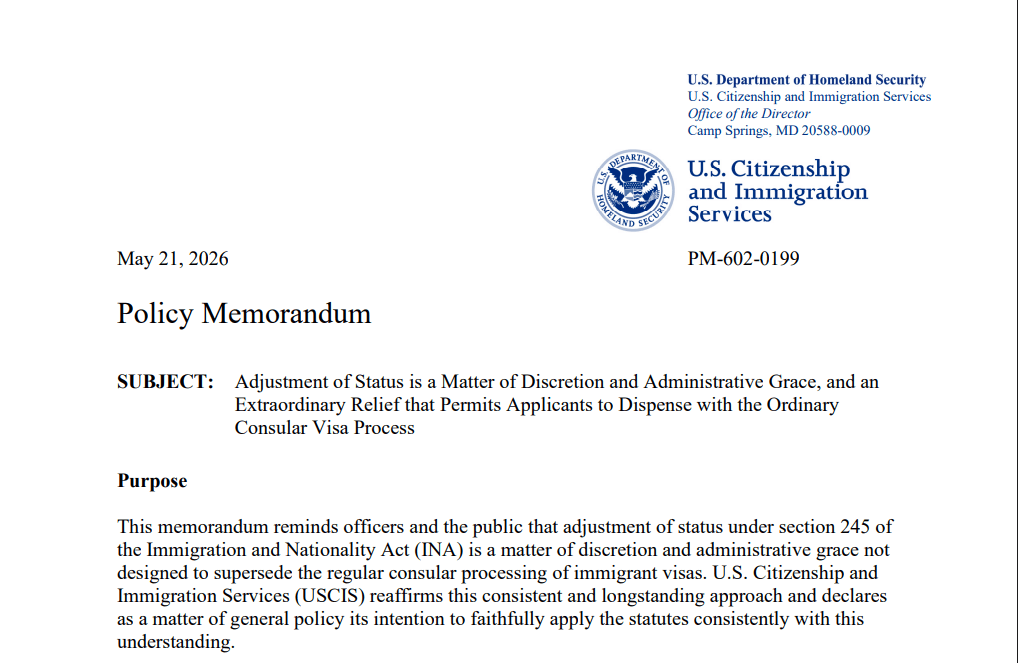
USCIS jolted immigrant families and employers with a May 21 policy memo saying adjustment of status should be treated as an “extraordinary form of relief” and an act of “administrative grace,” not a routine path to a green card. The message pointed applicants toward consular processing abroad, then quickly ran into a second, softer claim from the Department of Homeland Security that most immigrants will not need to leave the United States after all.
That whiplash matters because adjustment of status has long let certain people already in the country apply for lawful permanent residence without departing. The new memo, PM-602-0199, said the agency was returning to long-standing law and court decisions, but it gave little guidance on how the shift would work in practice. Immigration lawyers said the central question remains unanswered: who exactly must leave the country, and under what circumstances USCIS will decide a case is “extraordinary.”

The groups most exposed are wide-ranging. CBS News reported that the change could affect students, tourists, temporary workers and some people who overstayed visas, including many applying through U.S. citizen spouses or employers. Former USCIS official Michael Valverde said the move could disrupt the plans of hundreds of thousands of families and employers each year. For people already living in the United States, the risk is not just delay. If they leave for consular processing abroad, they may face new barriers to returning, especially if a visa is denied or delayed.
That danger has grown more acute because the policy landed alongside other Trump administration restrictions on legal immigration, including a travel ban affecting citizens of 39 countries and a separate pause on immigrant visas for people in 75 countries. Those limits raised the prospect that applicants forced abroad could become stranded outside the United States, even when they had been living and working here legally for years. The worry is especially sharp for families with U.S. citizen spouses and for employers trying to retain workers in a tight labor market.
Advocates and lawyers said the lack of clarity itself could become the policy’s most powerful feature. When applicants cannot tell whether they are eligible, whether they must depart, or whether they can safely return, many will simply not apply. That uncertainty can freeze family plans, unsettle companies that depend on foreign talent, and push eligible people out of a system that once let them finish the process from inside the country. The result is a green card process that now looks less like an administrative path than a gamble.
This article was produced by Prism’s automated news system from verified source data, official records, and press releases, then run through automated quality and moderation checks before publishing. The system is built and supervised by the people who set the standards it runs under. Read our full AI policy.
Did this article answer your question?