USS Gerald R. Ford sails to Middle East after COMPTUEX with 75‑aircraft capacity
The Navy’s newest carrier is steaming toward the Mideast after completing predeployment certification, even after an eight-month deployment with mechanical problems, officials say.
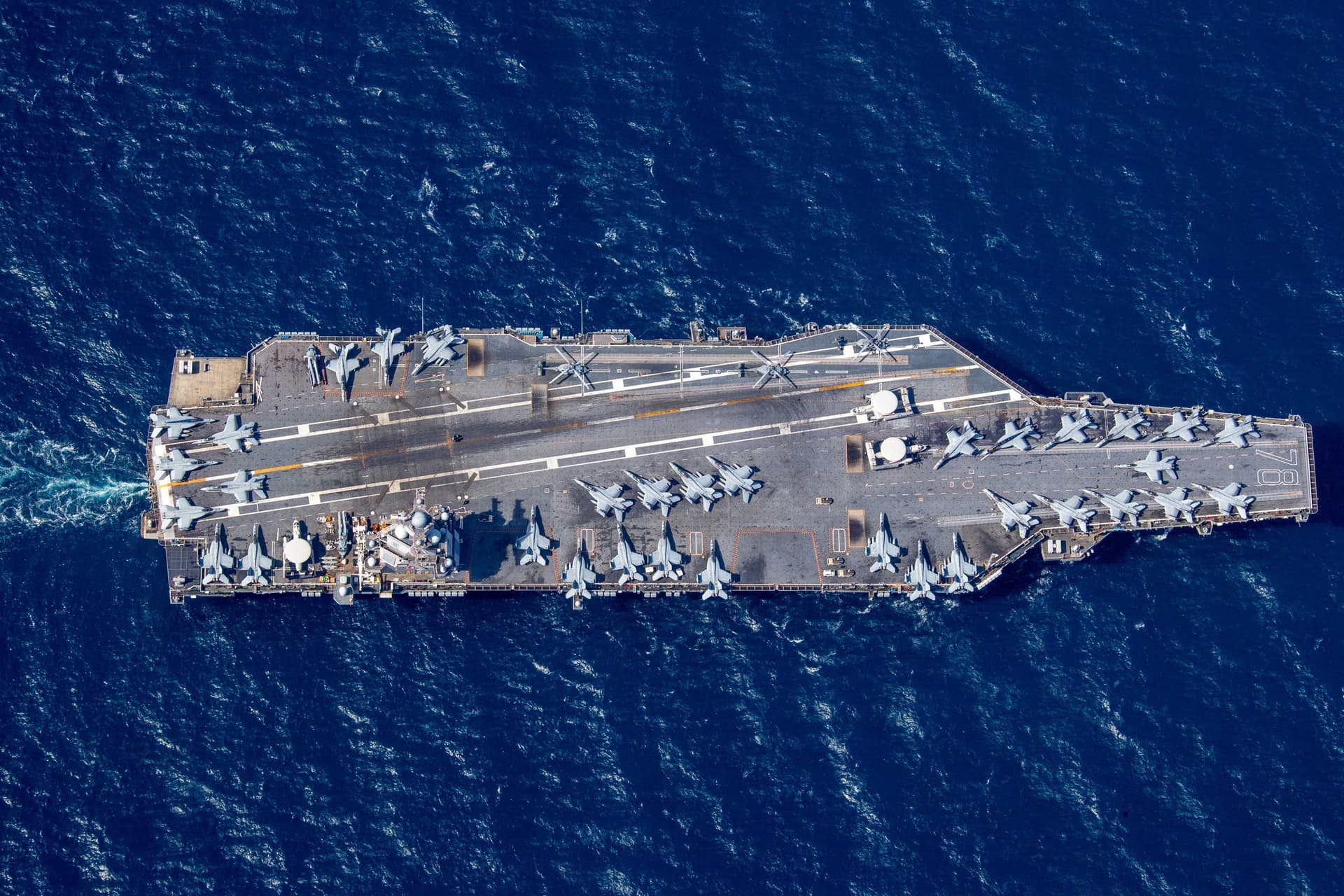
The USS Gerald R. Ford is steaming toward the Middle East after completing a Composite Unit Training Exercise with Carrier Air Wing 8 embarked, Navy officials and on-scene observers say. The 333 meter nuclear carrier, built at Newport News and valued in early estimates at roughly $13 billion plus $4.7 billion in research and development, is moving into an operational role despite a recent deployment that Navy sources acknowledge was affected by mechanical problems.
Officials authorized reporters aboard as the ship operated in the Atlantic not far from its home port. As the reporters exhaled and the plane’s aft door opened, the deck came into view with rows of F/A-18 Super Hornet jets and crews in brightly colored jerseys managing flight operations. Carrier Air Wing 8, led by Capt. David Dartez, is conducting the COMPTUEX event to certify the strike group for deployment and to practice adaptations driven by recent operations in the Red Sea, where ships have faced missile and drone attacks from Houthi forces in Yemen.
The Ford class was engineered to increase sortie rates and operational tempo. Ship specifications list a flight deck roughly 4.5 acres in area and capacity for about 75 aircraft. Its signature technologies include an electromagnetic aircraft launch system that replaces steam catapults and a redesigned island with modern combat systems. The carrier class also features a new nuclear power plant and ship dimensions intended to support sustained high sortie generation.
The ship’s ascent to operational deployments has not been smooth. “The carrier has had mechanical problems throughout its eight-month deployment, but officials now say it is ready for battle,” read a recent Navy statement provided to reporters. Program records and contemporaneous reporting over the last decade document testing milestones and recurring technical issues, from propulsion and power system anomalies to extended post-delivery work. The Ford was delivered to the Navy in 2017 and officially commissioned on July 22, 2017, but program workups continued for years as testing and repairs were completed.
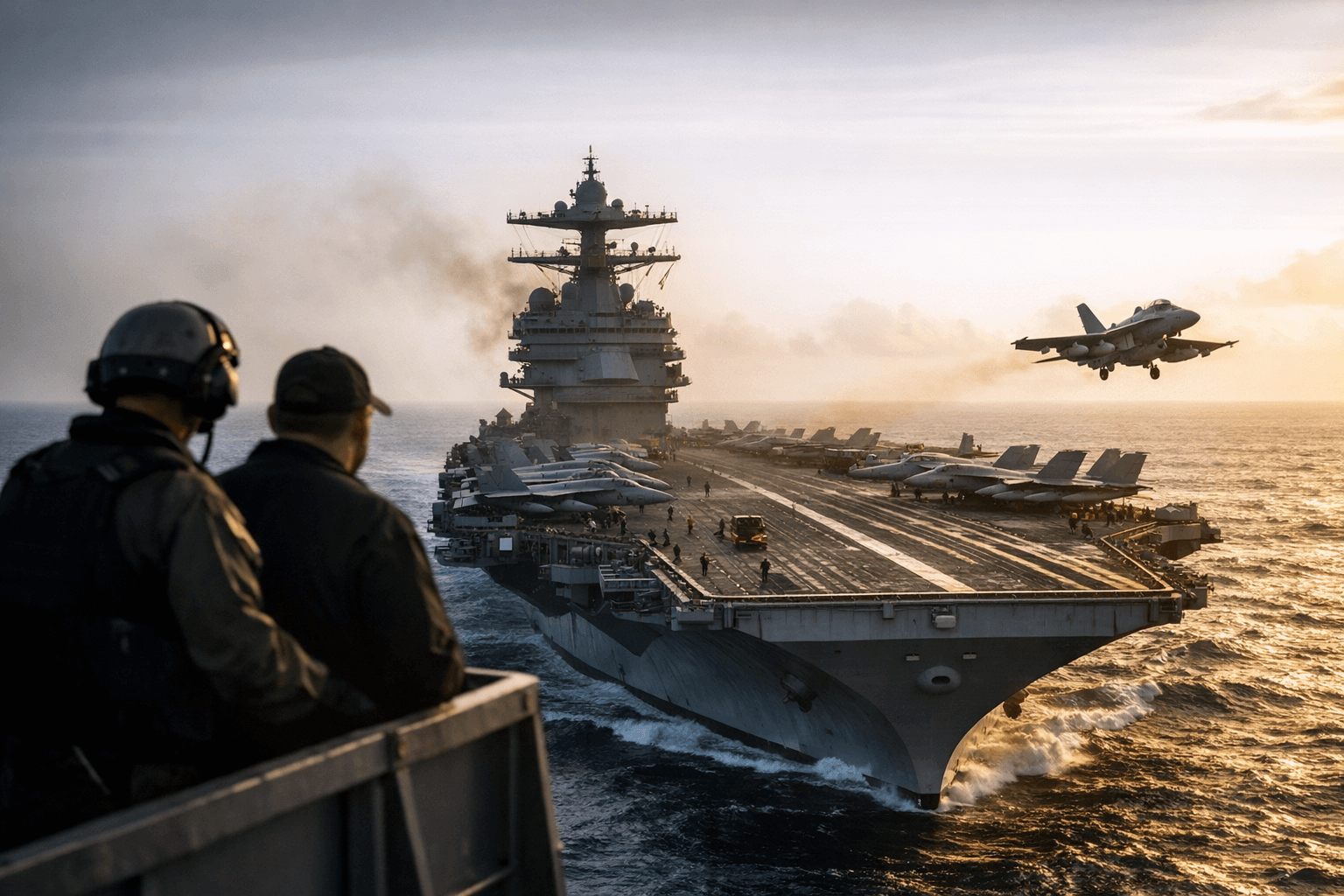
On the flight deck, the strike group’s absence of a carrier variant of the F-35 is notable; integration of that platform for the new carrier class has not yet been completed. Air operations aboard the Ford continue to rely on Super Hornets, electronic attack Growlers, E-2 Hawkeyes, Seahawk helicopters and other embarked types. Reporters saw a Greyhound taxi and a Super Hornet launch visible on an internal monitor, underscoring that flight operations are central to the ship’s operational certification.
Beyond hardware and operations, the Ford reflects institutional shifts in habitability and crew composition. The ship eliminated urinals in favor of fully private, sit-down heads, a change presented by shipbuilders and Navy planners as a move toward inclusivity and flexible billet assignment as the proportion of women in the force rises.
The deployment underscores enduring policy tensions: massive upfront procurement costs and complex systems integration on one hand, and immediate operational demands on the other. As the Ford heads to a region facing asymmetric sea launched threats, the Navy must demonstrate that technological advances translate into reliable, battle ready capability. Lawmakers and oversight bodies will likely continue to scrutinize the program’s cost, schedule and readiness as the class proceeds toward follow on ships and integration of new air platforms.
Know something we missed? Have a correction or additional information?
Submit a Tip