Uyghur fighters in Syria face new scrutiny after Assad's fall
After Assad’s fall, Uyghur fighters with years of combat experience are now embedded in Syria’s new forces, deepening Beijing’s fear of blowback from Xinjiang repression.

The collapse of Bashar al-Assad has turned Uyghur fighters in Syria into more than a footnote of the civil war. Men who left China’s Xinjiang region amid repression, discrimination and fear of arrest are now being watched by Beijing as battle-tested militants with new visibility, new ranks and, in some cases, a place inside Syria’s armed forces.
The Turkistan Islamic Party, a Uyghur militant group active in Syria for more than a decade, became one of the most visible foreign contingents in the war. Uyghurs, a Turkic-speaking, predominantly Muslim ethnic minority concentrated in Xinjiang, had already been drawn into a conflict that began in 2011 and pulled thousands of foreigners into rebel ranks. Their presence in Syria was a direct consequence of the war’s transnational pull and of the pressure many said drove them out of China in the first place.
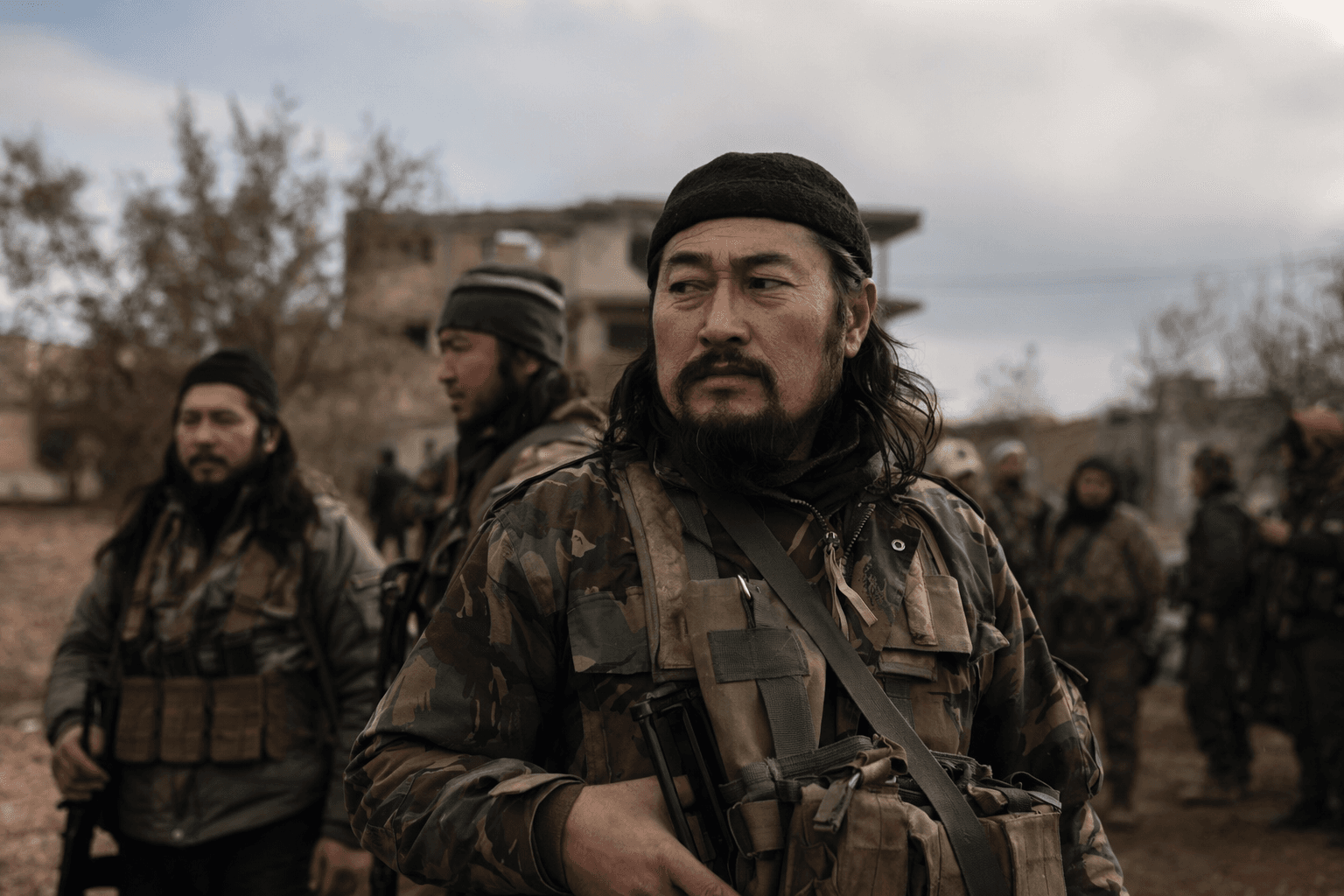
That pressure now looks like blowback for Beijing. When rebel forces took Damascus and Assad fled to Russia in December 2024, the Turkistan Islamic Party released a video on Dec. 8, 2024, publicly threatening China and vowing to continue its fight. The message was clear: fighters shaped by Syria’s war were not disappearing with Assad’s regime. They were emerging with combat experience, public recognition and a platform to threaten China more openly than before.
Syria’s new rulers compounded that concern by bringing some foreign fighters, including Uyghurs, into the country’s armed forces as they tried to turn a patchwork of rebel groups into a professional military. Late in December 2024, reports said at least six of nearly 50 defense ministry military roles went to foreigners, and several were given senior ranks such as brigadier-general and colonel. Among those elevated was Abdulaziz Dawood Hudaberdi, while the newly established 84th Division was described as being made up largely of Uyghur fighters.
The diplomacy around their fate has remained just as fraught. In 2025, Syrian authorities denied they had agreed to hand over 400 Uyghur fighters to China during talks in Beijing, underscoring how sensitive the issue has become. For China, the danger is no longer only that Uyghurs left Xinjiang for Syria, but that some returned, in effect, as commanders with battlefield training, organizational ties and a cause that now reaches from Aleppo and Idlib back toward Xinjiang.
This article was produced by Prism’s automated news system from verified source data, official records, and press releases, then run through automated quality and moderation checks before publishing. The system is built and supervised by the people who set the standards it runs under. Read our full AI policy.
Did this article answer your question?