Valentine's Day 2026 Gifts Shift to Health and Wellness Tech
Valentine’s shoppers are favoring wearables and home wellness tech this year — think Oura Ring 4 at about $349 and sleep-tracking NextSense Smartbuds at $249.
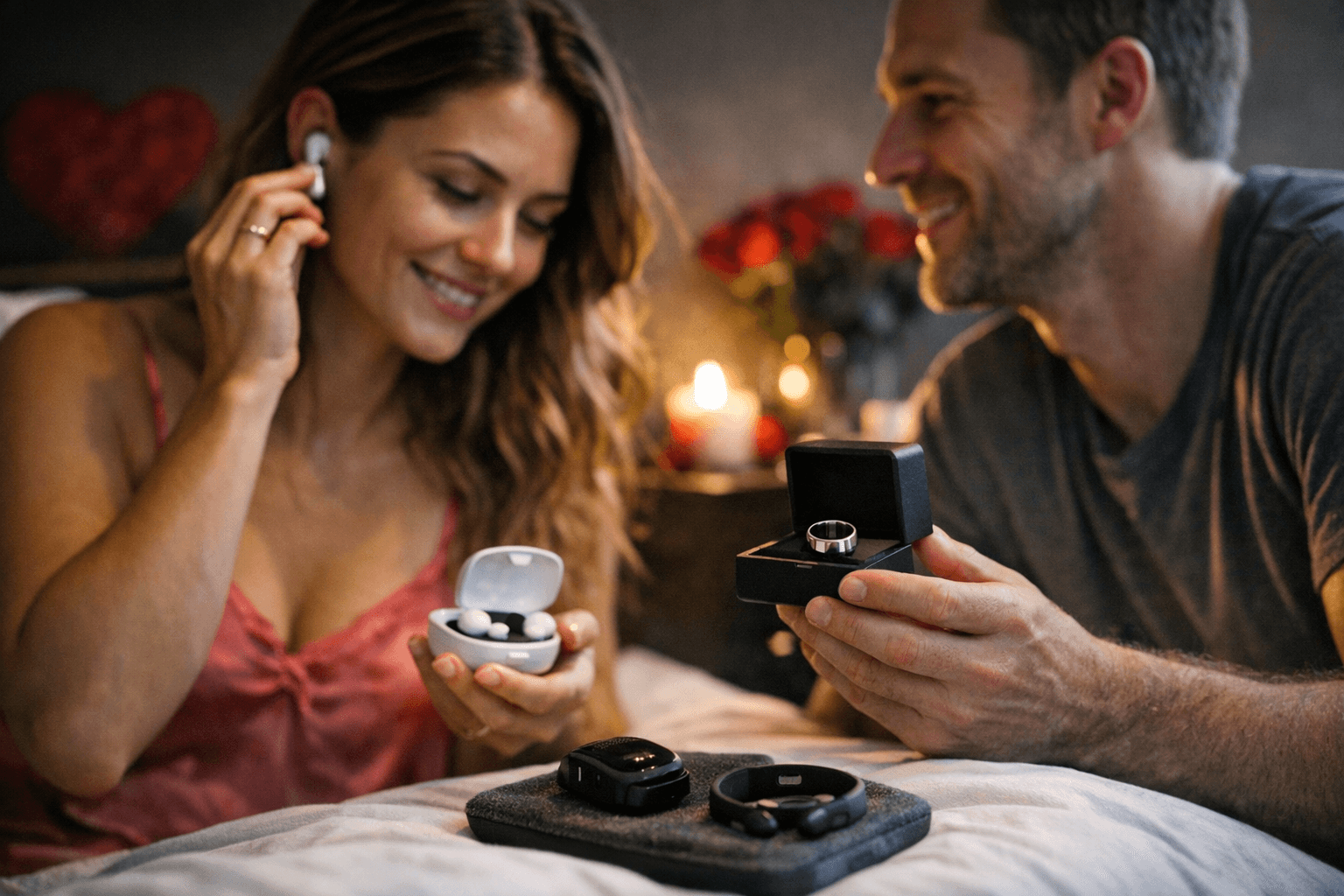
Choosing a Valentine’s gift that keeps giving has become harder and easier at the same time: shoppers who once bought flowers and one-night surprises are now buying wearables, sleep tech, and home health systems that promise daily value. Early February product roundups and press materials highlight devices such as the Oura Ring 4, positioned as a “wellness-focused wearable” combining continuous health monitoring and sleep insights and priced from approximately $349, and NextSense Smartbuds, which Jjtechish’s Substack describes as measuring brain activity overnight and listed at $249.
A Feb. 10 press release distributed via EIN Presswire from Vilnius, Lithuania explicitly frames the Oura Ring 4 as “both a functional health tool and a minimalist piece of everyday jewelry,” and markets it to consumers “seeking gifts that reflect long-term care, healthy habits, and daily well-being.” That press distribution included the standard editorial disclaimer noting the content was distributed by a media service and that newsroom staff were not involved, which underscores that the Oura positioning comes from company PR rather than independent testing.
Sleep optimization emerged as its own category in recent roundups. Jjtechish wrote that “the NextSense Smartbuds have officially launched with a different spin on sleep tracking” and quoted the product claim that the in-ear buds “deliver EEG-level sleep data from the comfort of your pillow.” Cybernews and product reviewers amplified sleep and metabolic tracking as Valentine’s picks, pointing to devices such as the Ultrahuman Ring, promoted for metabolic responses and glucose patterns, and the Withings ScanWatch 2, labeled by Cybernews as the “best heart-health smartwatch for long-term wellbeing.”
Home health diagnostics and practical wellness gifts also feature heavily. Cybernews highlighted the HumeHealth Body Pod as a way to “give you a full breakdown of muscle, fat, hydration, and metabolic data right from home,” while SimPureLife’s marketing copy lists model specs such as the Y9A’s 300GPD flow, the Y11C-A’s chilled alkaline water at 43°F, and the tankless T1-400ALK that “saves 70% of under-sink space.” Jjtechish singled out SPARQ Diagnostics as a budget-minded Valentine’s option that “plugs into your car and explains what’s going on in plain English,” noting a sale price of $99 for Valentine’s Day down from a typical $129.
Practical recovery and beauty tech round out the marketplace: TechSesh’s Jessica Naziri recommends recovery devices that “combine shiatsu-style kneading, heat therapy, vibration, and compression” with specific prices such as a heated hand massager at $55.99 and calls the FOREO BEAR 2 microcurrent device a splurge at $419 for skincare devotees. Those product-level prices give shoppers concrete decision points between a $99 car diagnostic, a $249 sleep device, and a $349 wellness ring.
If you want lasting and measurable impact, choose a wellness wearable like the Oura Ring 4 or an at-home measurement tool such as the Body Pod; if sleep is the priority, the NextSense Smartbuds headline the category. Polarizing take: skip the roses and buy a ring that tracks health. Tag someone who needs this. Would you splurge on a $419 FOREO BEAR 2 or buy a SimPure water system for daily wellness?
Know something we missed? Have a correction or additional information?
Submit a Tip