Valentine’s Day Floral Sales Hold Steady Despite Category Mix and Operational Challenges
Valentine’s Day floral sales stayed broadly steady—35% of Americans bought fresh flowers in 2025, and some florists reported last-minute pickup surges of 50% or more.
Floral sales for Valentine’s Day held steady across the United States, even as the industry navigated tariff talks, higher freight and rising labor costs. The Society of American Florists data reported a 35 percent purchase rate in 2025, the highest level of flower gifting in 11 years, and Floraldaily’s peer-to-peer pulse found that “Valentine's Day 2026 in the United States was not characterized as extraordinary - but neither was it weak.”
Revenue context underlines the holiday’s scale: SAF figures indicate Valentine’s Day generated roughly $2.3 billion in 2022 and accounted for about 28 percent of floral sales volume that year, while the IPSOS poll conducted for SAF on February 15, 2022 showed Valentine’s Day represented 30 percent of transactions and 28 percent of dollar volume. The IPSOS survey also recorded that 22 percent of Americans bought fresh flowers or plants for Valentine’s Day in 2022 from a sample of roughly 1,005 adults.
Operationally, channel shifts shaped florist strategies more than headline demand. Joost Bongaerts, CEO of Florabundance Inc., reported “substantial growth in online and phone orders, complemented by a surge in last-minute walk-in sales,” and he added that “Pickup orders surged significantly, with some florists reporting a 50 percent or higher increase in last-minute pickups.” Floraldaily’s survey of more than 40 U.S. industry leaders found most respondents felt the Saturday placement for Valentine’s Day had minimal impact on overall demand, even as practitioners prepared for heavier weekend and same-day pickup traffic.
Margin pressure was a consistent theme. Floraldaily respondents flagged tariff discussions, freight increases, winter weather disruptions and labor expense growth as headwinds going into the holiday. An industry speaker identified only as Wheat warned “pricing remains a challenge as rising costs impact every channel” and described steps taken: “We continue to review our recipes and pricing structures to protect profitability...We’re regularly adjusting recipes by cost and efficiency and implementing limited selections to maximize production,” adding collaboration with wholesalers to steady supply and costs.
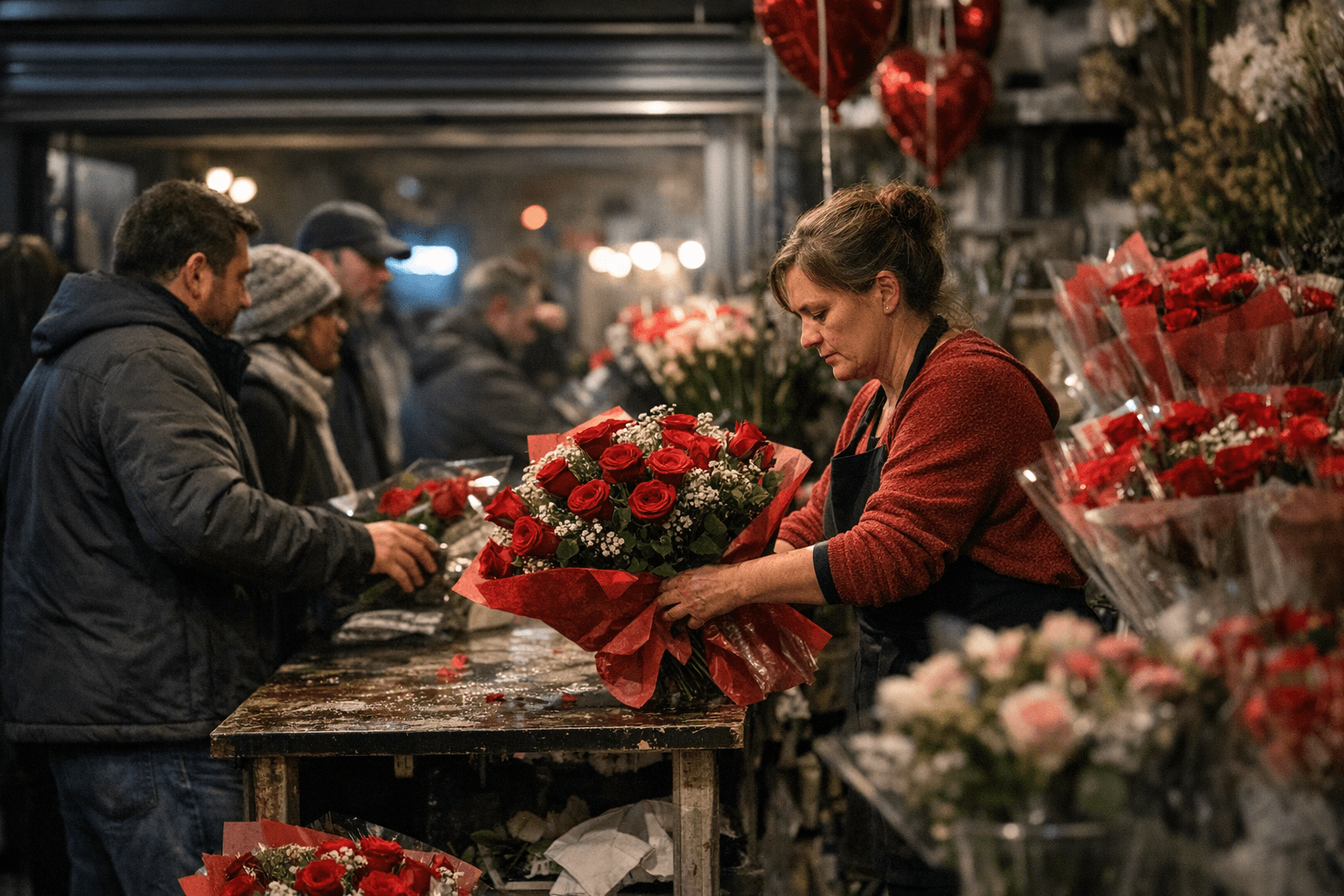
Local examples illustrated those tensions. Howard Hurst, president of Tipton & Hurst in Arkansas, noted modest local price moves—“I bet our roses were maybe $89, and now they’re $99. I don’t think it’s been that big of an increase”—even as he estimated the industry is “probably up 20 to 25% from what it was 10 years ago.” Tipton & Hurst sold a classic dozen arranged for delivery at $99, offered small plants at $29 or $39, and marked its 140th anniversary by including 14 roses in promotions.
Consumer preferences and scale remain unmistakable: industry counts estimate roughly 250 million rose stems are produced for Valentine’s Day, with red roses leading but demand rising for alternative colors for non-romantic gifting. The overall industry picture is steady sales paired with squeezed profitability, and florists say continued emphasis on preplanning, streamlined menus and pickup logistics will define how the season performs going forward.
Know something we missed? Have a correction or additional information?
Submit a Tip