Vegan Birthstone Jewelry Trends Mix Lab-Grown Stones, Recycled Metals, Personalization
Vegan birthstone jewelry pairs lab-grown gems and recycled or Fairmined metals with tech-led personalization — perfect for layered, heirloom-style looks if you demand clear certifications.
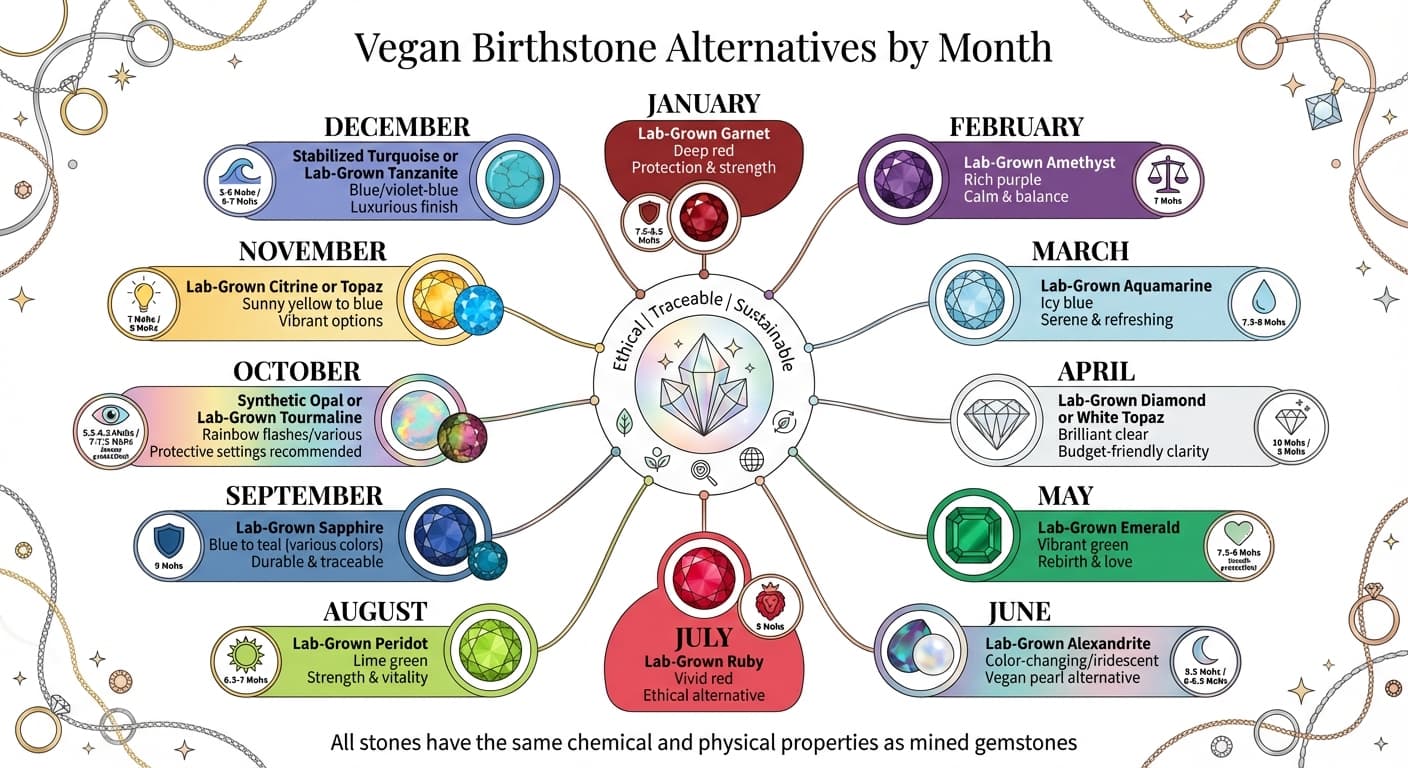
Vegan birthstone jewelry has moved from niche to mainstream, and the pieces people are buying for 2025 wear three clear signatures: lab-grown stones or synthetic alternatives, recycled or Fairmined metals, and a personalization-first design language built for stacking and storytelling. Larimarcreations frames these as the year’s defining looks, while LaCkore Couture and Atolyestone supply the language and product details that show how makers are translating ethics into chain width, gemstone origin, and manufacturing choices.
What “vegan” birthstone jewelry means
LaCkore Couture’s trend guide outlines a distinct "vegan" approach to birthstone jewellery: using lab-grown gemstones, recycled and Fairmined metals, and synthetic/plant-based alternatives to animal-sourced materials (e.g., replacing silk string. That phrasing captures the literal shift designers are making: “vegan” here is not just about avoiding leather or bone, but about replacing animal-derived processes and inputs across stones, mounts, and even the threads that hold a charm.
Atolyestone unpacks the same idea from a process angle: “With the vegan lifestyle becoming popular lately, a lot of vegans look for products that are free from animal cruelty. As some animals are used for making jewelry too, vegan jewelry became a thing. These are jewelry created from entirely vegan and cruelty-free materials.” The site goes further on factory practice, noting that “apart from the materials, the tools and manufacturing process are also executed following the vegan prescriptive.” Taken together, these descriptions show a movement toward complete supply-chain thinking — materials, tools and finishing — rather than single-item substitutions.
Materials and sourcing: lab-grown, recycled and Fairmined
The most concrete material choices in the notes are lab-grown stones and recycled metals. Larimarcreations states plainly that “lab-created stones are also big, giving birthstone jewelry a responsible, modern edge.” LaCkore explicitly pairs lab-grown gemstones with “recycled and Fairmined metals,” placing Fairmined language into the vegan framing.
Atolyestone provides the technical backbone for recycled metals: “Recycled jewelry, as the name signifies itself, is not sourced from mines. Instead, these materials are extracted from old jewelry for creating new ones. Usually, they are refined thoroughly for high-quality touch to the gold or silver surfaces.” It also lists the usual suspects for recycling: “Gold, silver, and copper are commonly used materials for making recycled jewelry. That's because these materials are easily recycled without affecting the material quality.” Those two sentences explain why recycled metals are both feasible and familiar to buyers: chemically, precious metals retain their quality through refining.
A practical buyer’s caveat from the research: Larimarcreations includes a market stat — “In fact, 35% of buyers last year prioritized eco-friendly options.” That signals real demand but is presented without methodological detail; you should ask sellers where that number comes from before treating it as a market-wide fact. Similarly, LaCkore’s use of the term Fairmined should prompt you to request documentary proof of certification rather than taking the label at face value.
Design trends for 2025: layering, vintage and personal tokens
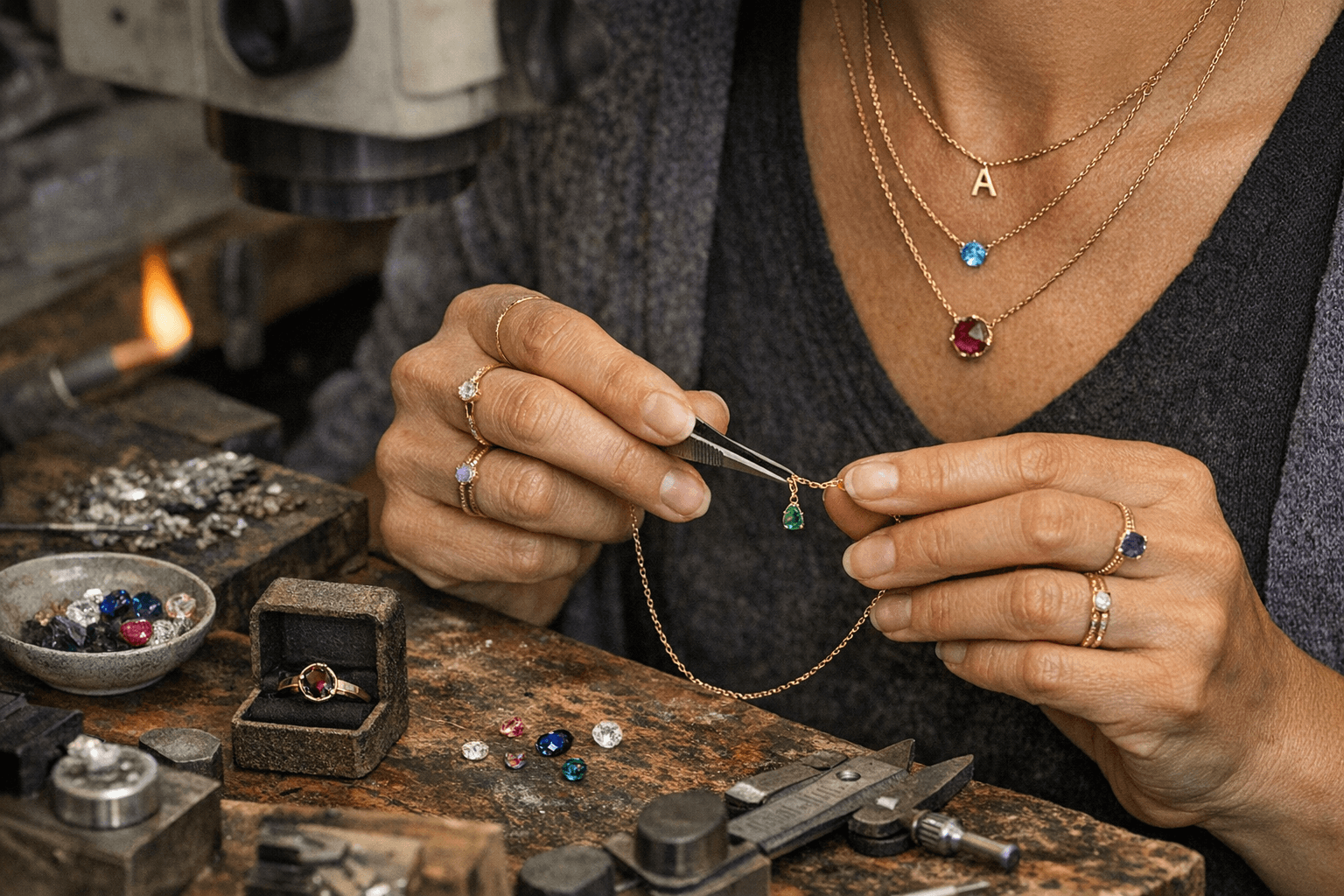
Style is where these ethical choices become expressive. Larimarcreations opens its forecast with, “Ready for a peek at what’s hot in birthstone jewelry for 2025? The trends this year are all about mixing tradition with personal flair.” The report’s most emphatic note is on layering: “Layering is having a moment. People are pairing dainty birthstone necklaces with chunky chains or stacking rings and bracelets for a relaxed, chic vibe. Mixing metals and stones makes each piece feel super personal. This trend lets you tell your story with every layer.”
That mix-and-match sensibility extends to vintage references — Larimarcreations lists “Vintage and Heirloom-Inspired Designs” as a named trend — and to jewelry types: “Layered necklaces with different stone shapes let you stack your story. Stackable rings are everywhere, with people wearing a ring for each loved one or milestone. Charm bracelets are making a comeback, too, with tiny birthstone charms adding a pop of color to any wrist.” The result is an aesthetic that pairs contemporary ethical materials with silhouette cues borrowed from heirloom jewelry: small pendants, signet-inspired charms, and textured links intended to age gracefully.
Personalization and the role of technology
Personalization isn’t just an engraving option; it’s a digital-first shopping experience. Larimarcreations reports that “Personalization is easier than ever thanks to online tools. Virtual try-ons and ‘design your own’ features are booming. More people are shopping for birthstone jewelry online, using tech to create pieces that perfectly reflect their style.” Expect more retailers to offer configurators that let you choose a gemstone (lab-grown or natural), metal (recycled gold or silver), and setting — and to preview how layers sit together using virtual overlays.
Product examples and measurable specs
When a claim becomes a purchase, specs matter. Atolyestone lists concrete product headings and a precise chain spec that gives you a sense of scale and finish: “This 14K white gold necklace chain is a sheer example of simplicity and beauty in one place. It is available in different sizes ranging from 55 cm to 75 cm with a width of around 2.5 mm. The necklace makes a perfect pick for any special day.” The same site highlights category names you’ll encounter from sellers: “Box Chain Rose Gold” and “White Gold Streamline Cuff,” signaling that many of the trending shapes — box chains, streamlined cuffs, petite pendants — are already being produced in gold finishes that brands may label as sustainable or recycled.
Care, maintenance and quality expectations
Atolyestone asserts that recycled and vegan pieces maintain quality: “Sustainable and ethical jewelry should be bought by every person for the main idea behind its manufacturing. Not only are they eco-friendly, but they maintain the same quality.” And its recycled-jewelry definition highlights that recycled metals are “refined thoroughly for high-quality touch to the gold or silver surfaces.” Practically, that means a recycled 14K gold chain will look and wear like any other 14K chain if it has been properly refined and hallmarked — again, the onus is on the seller to supply assays or hallmark evidence.
- Certification for metals labeled Fairmined or recycled, and whether the recycled content is pre-consumer scrap, post-consumer jewelry, or industrial scrap.
- Clear disclosure for stones: “lab-grown” vs. “natural,” the growth method (for diamonds: CVD or HPHT; for other gems: flux, hydrothermal, etc.), and the lab’s report if one exists.
- Exact chain specs (karat, length and width); use the Atolyestone 14K white gold example as a reference (55–75 cm lengths; ~2.5 mm width).
- Details on plant-based or synthetic substitutes for animal-derived materials — what fiber is replacing silk string, and whether it is biodegradable or synthetic.
- Evidence for any market claims you see, especially statistics such as the “35% of buyers” figure; request the source and methodology.
What to ask and verify when you buy
When you’re shopping for vegan birthstone jewelry — whether a stacked set of lab-grown sapphires or a 14K white gold chain — insist on transparency. Ask for:
Where the gaps remain
The pushes toward vegan and recycled goods are clear in the trend language, but the materials and numbers sometimes arrive without verification. LaCkore Couture’s guide includes the Fairmined term but does not display a date, and Larimarcreations’ “35%” figure is uncited in the supplied material. Atolyestone supplies attractive product specs but does not attach certification documentation to its sustainability claims. Those are straightforward checks to make before paying a premium for ethically-marketed pieces.
Conclusion The birthstone jewelry you’ll see in 2025 wears its ethics as visibly as its stones: lab-grown gems, recycled and Fairmined-labeled metals, and vegan manufacturing choices are being designed into layered, heirloom-minded pieces that invite personalization via digital tools. That combination lets you stack a modern, conscience-forward collection that still reads as beautiful and tactile — as long as you demand the paperwork behind the labels. Ask for certifications, assay marks and lab reports, and treat claims like Fairmined or “35% eco-minded buyers” as starting points for a conversation rather than a finished sale. When verified, these pieces deliver both the story you want to tell and the provenance you deserve.
Know something we missed? Have a correction or additional information?
Submit a Tip
%3Amax_bytes(150000)%3Astrip_icc()%3Afocal(714x410%3A716x412)%2FKate-Middleton-Catherine-Princess-of-Wales-Windsor-Castle-2026-2-011526-17e9f336847a4cfba7f8a845ef3c7318.jpg&w=1920&q=75)