Venezuela courts foreign miners, but armed groups control gold fields
Armed groups, corrupt networks and weak policing are shadowing Venezuela’s bid to reopen its gold sector to foreign money. Miners in Bolívar say no law can outrun violence on the roads and in the pits.
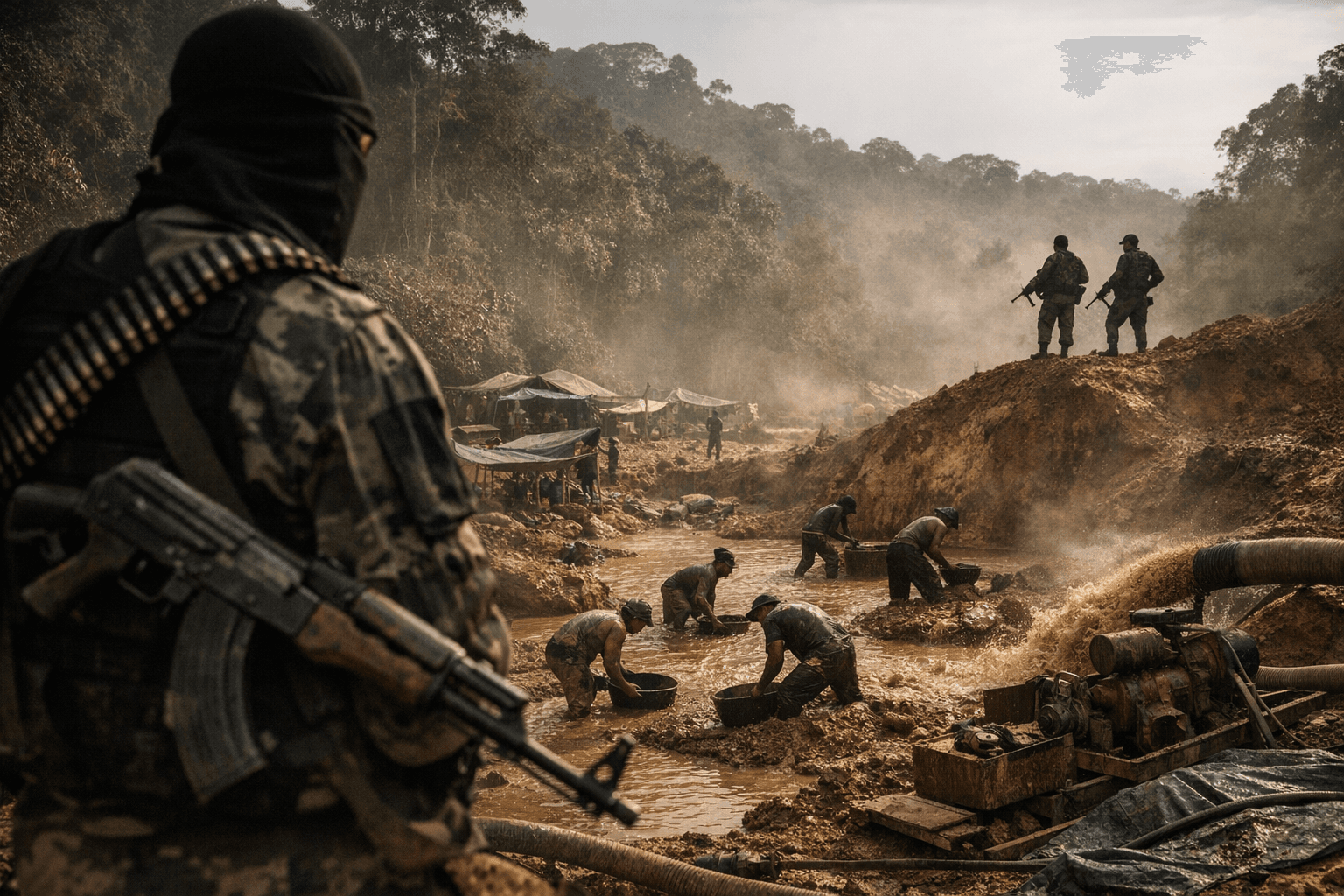
In the goldfields around El Callao, the pitch to foreign investors collides with a far harsher reality: criminal syndicates and armed groups still set the rules, and many miners say no legal reform can matter until the state regains control of the roads and the pits. Venezuela is trying to reopen its gold, iron and bauxite sector to international capital, but the security vacuum in Bolívar state is making the project look far riskier than a simple change in policy.
The government’s latest move is a 131-article mining law approved by the National Assembly on April 9. It repeals older rules from 1999 and 2015 and opens the sector to domestic, foreign, state-owned and private companies, or consortia, that want to extract gold and other strategic minerals. Bloomberg reported that the law also adds economic equilibrium clauses and access to international arbitration, clear signals that Caracas wants to make the sector more palatable to outside financiers.
On paper, the promise is obvious. Venezuela’s oil-dependent economy has been battered by hyperinflation, sanctions, crumbling oil infrastructure, corruption and a deep brain drain. The Orinoco Mining Arc, created by decree in February 2016, spans roughly 111,843 to 111,846.70 square kilometers, about 12.2% of the country, and holds gold, bauxite, coltan and diamonds. A 2025 State Department report said well-respected sources estimate Venezuelan gold mining has averaged about $2.2 billion a year over the past five years, a sum that helps explain why the government is trying to pry open the sector now.
But the same mineral wealth has also drawn a dense illicit economy. U.S. human-rights reporting has tied illegal gold mining in the Orinoco Mining Arc to forced labor, child labor, trafficking and abuses against Indigenous peoples. The 2024 human-rights report said children and adolescents were among victims of forced labor there, while trafficking reports say women and girls are exploited in sex trafficking, children are forced to work in mines and youth are recruited into armed criminal groups.
That history is why miners and community activists in Bolívar remain skeptical that foreign firms will invest at scale without a major security overhaul. One informal miner in El Callao described the mines as places where criminal syndicates enforce their own order and use violence when needed. Local criminal networks operate alongside Colombian rebels, and state security forces have at times been accused of colluding with those networks to keep illegal gold flowing.
The Trump administration has backed the effort to lure investors back, but the real test is whether Caracas can secure territory it has long failed to control. Without that, the new law may do little more than formalize a resource race already dominated by force, corruption and the underground economy.
This article was produced by Prism’s automated news system from verified source data, official records, and press releases, then run through automated quality and moderation checks before publishing. The system is built and supervised by the people who set the standards it runs under. Read our full AI policy.
Did this article answer your question?