Venezuela frees 104 detainees labeled political prisoners amid talks
Foro Penal says 104 political prisoners were released Sunday amid ongoing negotiations; the move raises questions about legal status, transparency and political leverage.
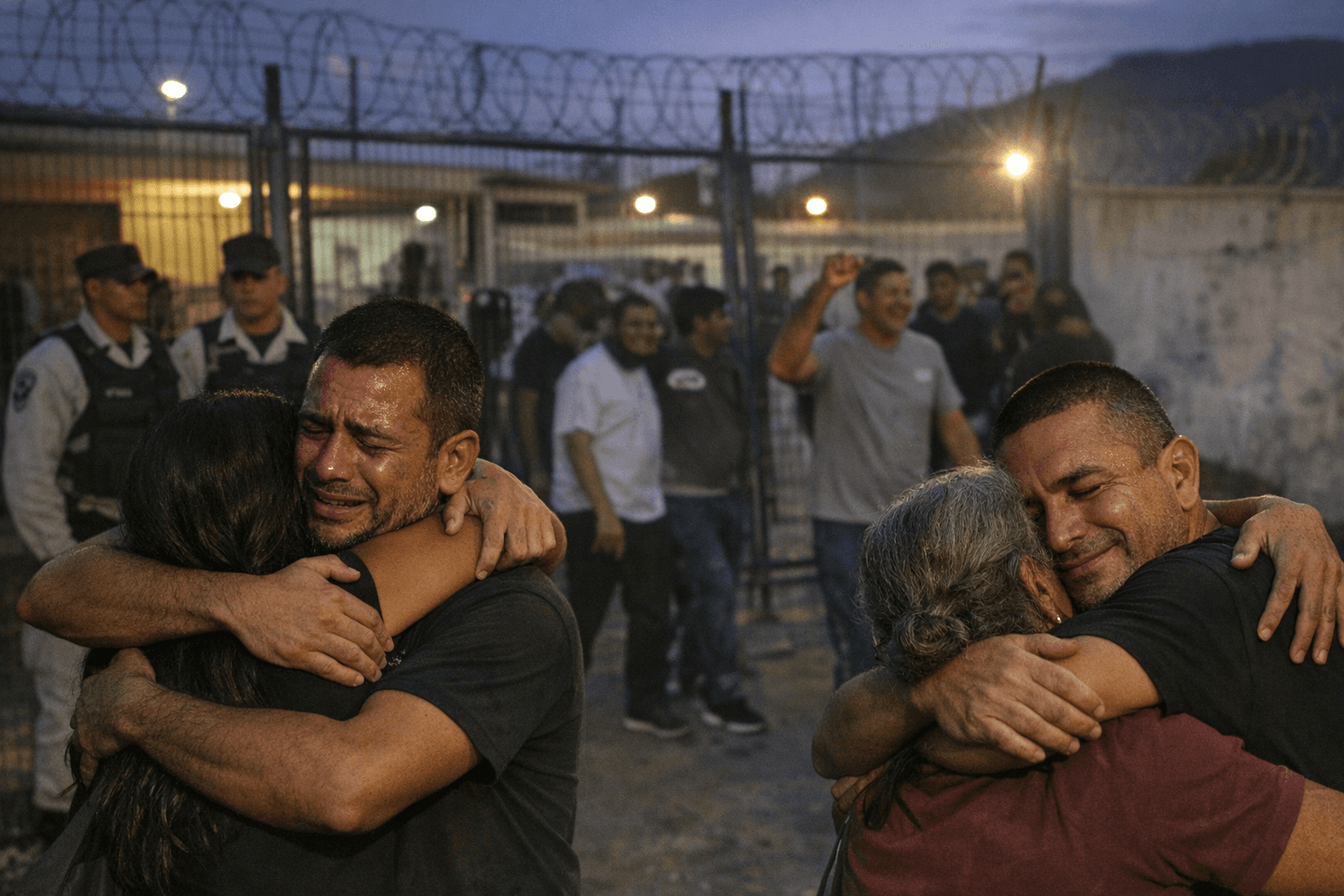
Foro Penal, a leading Venezuelan human rights organization, said at least 104 people it considers political prisoners were released on Sunday across multiple prisons as part of a broader release process tied to ongoing political negotiations. The announcement deepens scrutiny of how the government and opposition are using detainee releases as a tool in a fragile political bargaining environment.
Foro Penal director Alfredo Romero confirmed the releases occurred at several detention facilities but provided no immediate list of names or legal terms attached to the releases. The organization’s tally and framing underscore persistent concerns over the definition and treatment of political detainees in Venezuela, where imprisonment of activists, opposition figures and critics has been a recurrent point of contention between domestic actors and international observers.
The immediate policy question is whether the freed individuals were fully exonerated, granted conditional release, placed under house arrest, or subject to travel or political participation restrictions. Without transparent legal documentation, the releases risk appearing transactional rather than restorative, offering short-term relief for detainees while leaving structural issues unresolved. The Venezuelan judiciary’s role in authorizing or legitimizing the releases will be a critical indicator of institutional independence and due process.
Releases of political detainees have clear political utility. They can be leveraged to build trust between negotiating parties, to defuse international pressure, or to recalibrate opposition strategy ahead of high-stakes discussions. For civic engagement, freed activists may return to organizing, influencing local mobilization and voter outreach. Conversely, if releases are accompanied by restrictions or surveillance, civic space may remain constrained and public participation depressed.
Electoral implications hinge on transparency and timing. If the releases are perceived as genuine steps toward normalizing political competition, they could increase voter confidence and opposition willingness to participate in electoral processes. If viewed as tactical concessions without legal clarity, they may deepen skepticism about the sincerity of negotiations and depress turnout among disaffected voters who see detentions as bargaining chips rather than justice issues.
Institutionally, the episode highlights the need for independent verification mechanisms. Civil society groups, families of detainees and international actors will likely press for full public lists, copies of court orders or pardon decrees, and unimpeded access to monitor compliance with any agreed conditions. The absence of such documentation complicates efforts to ensure accountability and to distinguish between durable releases and temporary measures aimed at placating critics.
For the broader negotiating framework, the release of 104 detainees can be a confidence-building measure if followed by systemic reforms: clear criteria for defining political imprisonment, judicial review of past cases, and safeguards against re-arrest for political activity. Without those measures, releases risk becoming episodic gestures that fail to alter the underlying incentives that produced political detentions in the first place.
Authorities and negotiators should make public the legal status of those released and allow independent monitoring to verify compliance. Families, civil society and electoral stakeholders will closely watch whether this development translates into a substantive shift in governance practices or remains a tactical pause in a much longer struggle over political rights and institutional integrity.
This article was produced by Prism’s automated news system from verified source data, official records, and press releases, then run through automated quality and moderation checks before publishing. The system is built and supervised by the people who set the standards it runs under. Read our full AI policy.
Did this article answer your question?

