Vessel tracking shows Hormuz tanker transits steady despite FT, NYT claims
Bloomberg data show a seven-day rolling average of 42–45 oil tankers through the Strait of Hormuz, contradicting FT and NYT headlines that said flows "dried up" or "plummeted."
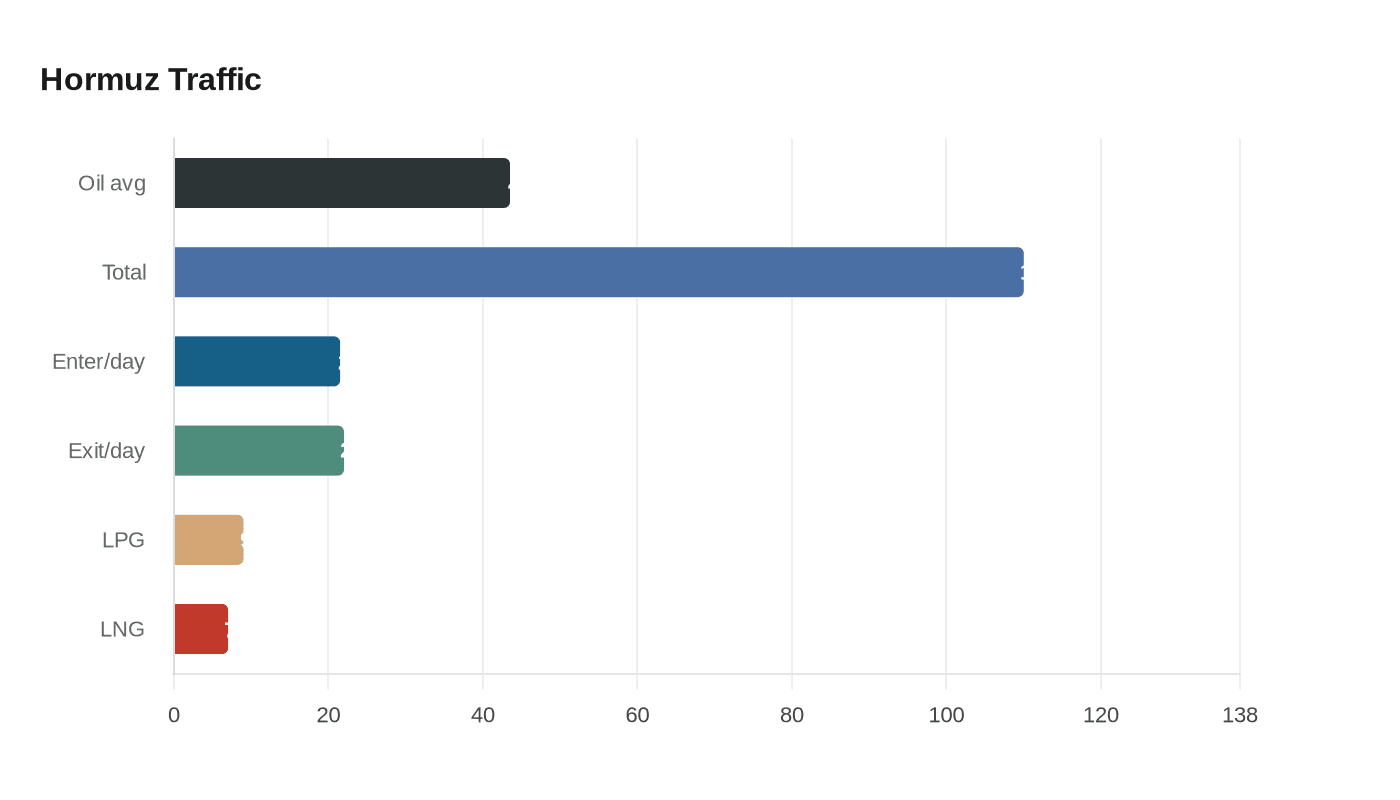
Bloomberg vessel‑tracking data covering the week since Israel and Iran began exchanging missile barrages show oil‑tanker transits through the Strait of Hormuz have largely continued, with a seven‑day rolling average of “approximately 42‑to‑45” oil tankers above 10,000 deadweight tons and total commercial traffic “amounted to about 110 vessels,” the tracker published by Bloomberg and republished by World Oil and Oil & Gas 360 reported. Over the same seven‑day window Bloomberg recorded 20‑23 oil tankers entering the Persian Gulf daily and “roughly 22 ships exited each day,” with liquefied petroleum gas tankers at “8‑10 ships” and LNG carriers within “daily norms of 6‑8 vessels.”
Those figures stand in tension with headlines published by the Financial Times and The New York Times that framed the situation as a collapse in traffic. The FT headline stated “Iran conflict: Oil flows through Strait of Hormuz dry up,” and the NYT headline said ship traffic “plummets in Strait of Hormuz.” The full FT and NYT articles were not supplied with the tracker data summarised here, and the differing claims have not been reconciled in the public summary of sources.
Bloomberg cautioned that short‑term vessel counts can fluctuate wildly because of “loading timings, weather, and the impact of widespread electronic interference on navigation signals,” and noted the tracker is intended to capture traffic for all classes of commercial shipping during heightened tensions. Bloomberg also reported the shipping industry remains “on alert for any U.S. military intervention in the region,” and that “immediate concerns have eased, for now, on President Donald Trump’s suggestion that a decision on any strike against Iran may take up to two weeks.”

Market commentators and regional observers warn that even the prospect of disruption has real economic consequences. Dolat Capital, cited by CNBC‑TV18, called the Strait a “major potential flashpoint,” estimated “around 20% of global oil supply transiting the narrow passage,” and warned that “oil prices could spike sharply toward $100 per barrel.” Dolat Capital added that “markets may not have fully priced in the risk of a disruption.” The U.S. Energy Information Administration, cited by the Indian Express, calls the waterway the “world’s most important oil transit chokepoint” and estimates that roughly one‑fifth of global liquid fuel consumption and LNG trade transit the strait. Bloomberg described the passage as a route through which “more than a quarter of the world’s oil is shipped,” reflecting variation in widely reported estimates.
The economic exposure is acute for energy importers. CNBC‑TV18, relaying Dolat Capital, said roughly “50% of India’s crude oil imports and about 60% of its LNG imports transit through the Strait.” The Indian Express reported that while flows have “so far not majorly disrupted physical oil and gas flows,” there is evidence of an inflationary impact on shipping and insurance rates in the form of a higher geopolitical risk premium, and that “a few shipping lines may be reassessing routes.”
Financial market and insurance signals are another separate channel of disruption. The Financial Times ran a second headline, “Insurers to cancel policies and raise prices for ships in Gulf and Strait of Hormuz,” indicating carriers and underwriters are recalibrating risk, though the underlying FT text detailing which insurers or policies would be affected was not included in the material provided.
At present the empirical tracker data and the media headlines present competing pictures: physical transits recorded by AIS‑based trackers have continued at near‑normal volumes over the seven‑day window Bloomberg analysed, while press and market coverage signals heightened commercial and insurance stress. Key verification steps remain: obtain the full FT and NYT texts and timestamps, secure Bloomberg’s tracker methodology, and seek confirmation from insurers, major carriers, port authorities and AIS providers on whether insured or rerouted traffic diverges from raw transit counts. Policymakers and market participants will need those reconciled facts to assess whether the Strait’s function as a global energy chokepoint is being impaired, or whether the principal damage so far has been to costs, insurance, and market sentiment.
This article was produced by Prism’s automated news system from verified source data, official records, and press releases, then run through automated quality and moderation checks before publishing. The system is built and supervised by the people who set the standards it runs under. Read our full AI policy.
Did this article answer your question?