Vietnam veterans sue to block Trump’s planned Arlington arch
Vietnam veterans say Trump’s planned arch would dishonor the dead and violate the rules for federal memorials. The fight now reaches beyond Arlington to who controls military sacrifice on public land.

Veterans suing to stop Donald Trump’s planned 250-foot arch at Arlington National Cemetery say the project is not a patriotic tribute but a breach of duty to the fallen. Shaun Byrnes, Jon Gundersen and Michael Lemmon, all Vietnam veterans, joined retired architectural historian Calder Loth in a federal lawsuit filed February 19 in U.S. District Court for the District of Columbia.
“I think it's just disrespectful to those that I served with who didn't come back,” Byrnes told CBS News. He said he joined the case out of respect for soldiers buried in Arlington, not partisanship. Gundersen put the challenge in personal terms as well: “I think what we’re doing is being loyal to the country. And loyalty can be measured in different ways.”
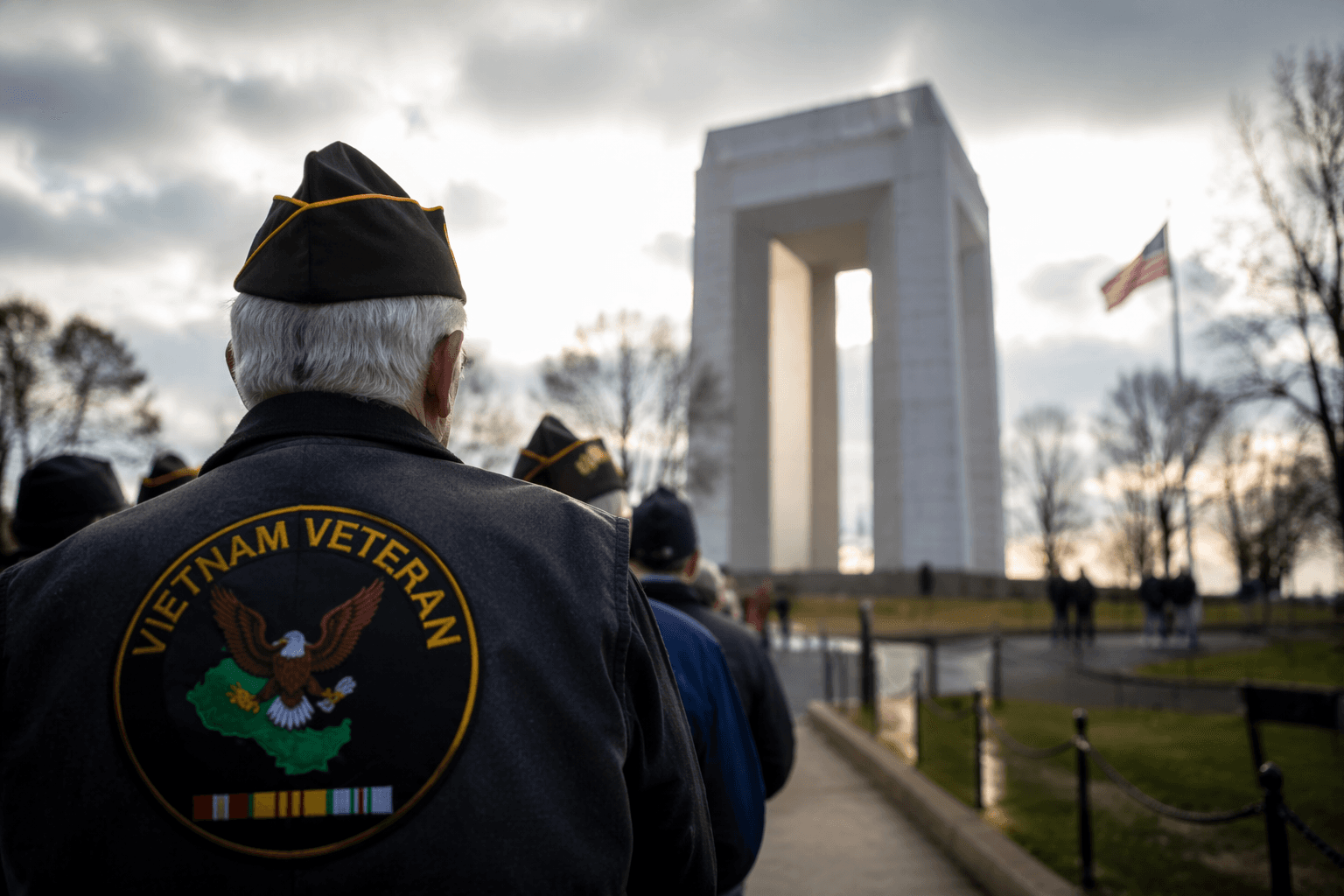
The lawsuit targets a monument Trump has tied to America’s 250th anniversary and critics have called the “Arc de Trump.” Planned for Memorial Circle, the empty traffic circle between Arlington National Cemetery and the Lincoln Memorial, the arch would rise 250 feet, more than twice the height of the 99-foot Lincoln Memorial. Updated renderings reportedly show a 60-foot statue on top.
The plaintiffs say the project would do more than alter the skyline. They argue it would disrupt the historic sightline between Arlington House and the Lincoln Memorial, a view meant to symbolize national unity after the Civil War. They also contend Congress has never authorized the arch under the Commemorative Works Act and that required review under environmental and historic-preservation law, including the National Environmental Policy Act and the National Historic Preservation Act, has not been completed.
The Justice Department has moved to dismiss the case on standing grounds, and a federal judge denied an emergency request to pause construction last month. The U.S. Commission of Fine Arts approved the design on May 21, and the project still awaits review by the National Capital Planning Commission, set for June 4.
At stake is not only one monument but a larger test of who gets to define military sacrifice on public land. The veterans say the answer cannot be a structure they see as looming over Arlington’s memorial landscape and recasting remembrance into personal branding, even when wrapped in the language of national celebration.
Know something we missed? Have a correction or additional information?
Submit a Tip