Vietnam’s counterfeit market thrives despite U.S. pressure on piracy
Fake goods stayed openly on sale in Hanoi’s outskirts even as Washington threatened tougher trade action over Vietnam’s piracy problem.
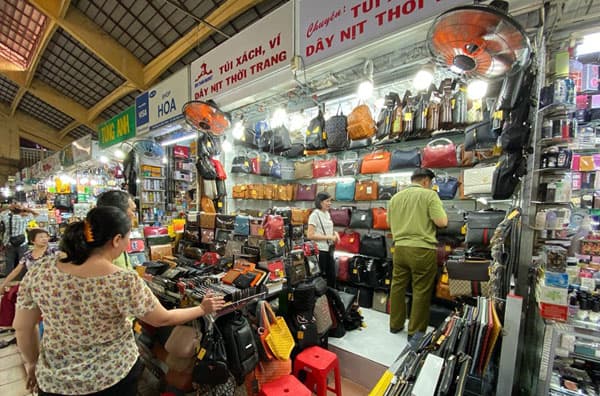
At Ninh Hiep wholesale market on the edge of Hanoi, fake-brand merchandise remained easy to find even as Vietnam faced fresh U.S. pressure over intellectual-property enforcement. One seller’s description of the cycle captured the credibility gap: police arrive once a year, cameras follow, a shop is seized, and business resumes as usual.
That gap now sits at the center of a broader trade dispute. On April 30, 2026, the United States Trade Representative designated Vietnam a Priority Foreign Country in the 2026 Special 301 Report, the most serious category in a process Washington uses to judge whether trading partners adequately protect and enforce intellectual property. USTR said it had reviewed more than 100 trading partners and would decide within 30 days whether to launch a Section 301 investigation, a step that can lead to consultations and trade remedies.
The scale of the enforcement challenge stretches beyond one market. USTR’s 2025 Notorious Markets List identified 37 online markets and 32 physical markets involved in or facilitating substantial trademark counterfeiting or copyright piracy. USTR has used the notorious-markets designation since 2006, and Ninh Hiep is among roughly 30 markets that have appeared on the list over time.
Vietnam-linked piracy online remains just as difficult to contain. Streaming sites believed to operate from Vietnam, including MyFlixerz, continued to distribute pirated films and television series and were still accessible after an announced crackdown. Some Vietnam-linked pirate sites are believed to draw hundreds of millions of monthly visitors worldwide, underscoring how lucrative the trade has become and how far its reach extends beyond Vietnam’s borders.

The issue has also become a direct test of Vietnam’s export relationship with the United States. U.S. data cited in the reporting showed a $54.8 billion U.S. trade deficit with Vietnam in the first three months of 2026, larger than the deficits with China and Mexico. That makes intellectual-property enforcement more than a legal or policing issue for Hanoi. It is now part of the bargaining over trade, market access and supply-chain credibility.
Vietnam’s foreign ministry said on May 1, 2026, that the United States should make an objective and balanced assessment of Vietnam’s efforts, saying the country has strengthened its IP laws, raised public awareness and expanded cooperation with the World Intellectual Property Organisation and the United States. Vietnam has also tightened inspections on imported counterfeits, including luxury goods, electronics, toys, shampoos and razors, and has warned companies about counterfeit software use.
For global brands and U.S. manufacturers, the problem is immediate: counterfeit goods erode sales, pirated content drains revenue and weak enforcement invites more of both. For Hanoi, the risk is that tariff pressure will keep rising unless the crackdown moves from sporadic raids and public showpieces to sustained enforcement that changes what consumers and smugglers see on the ground.
This article was produced by Prism’s automated news system from verified source data, official records, and press releases, then run through automated quality and moderation checks before publishing. The system is built and supervised by the people who set the standards it runs under. Read our full AI policy.
Did this article answer your question?

