Vinton Cerf retires as Google’s chief internet evangelist after 20 years
Vinton Cerf will leave Google next week, ending a 20-year run as its public face for an internet built on open standards. His exit marks the fading of the network’s founding era.

Vinton Cerf will step down next week as Google’s chief internet evangelist, closing a 20-year run in one of the company’s most symbolic public roles. Cerf is 83 and has held the title since 2005, when Google brought in one of the architects of the modern internet to speak for its future.
The retirement became public at the Open Frontier conference hosted by the Laude Institute, where University of California, Berkeley computer scientist Dave Patterson told the audience that Cerf had been at Google for more than 20 years and was “retiring a week from today.” The remark drew applause and underscored Cerf’s place as one of the most recognizable living figures from the internet’s formative years.
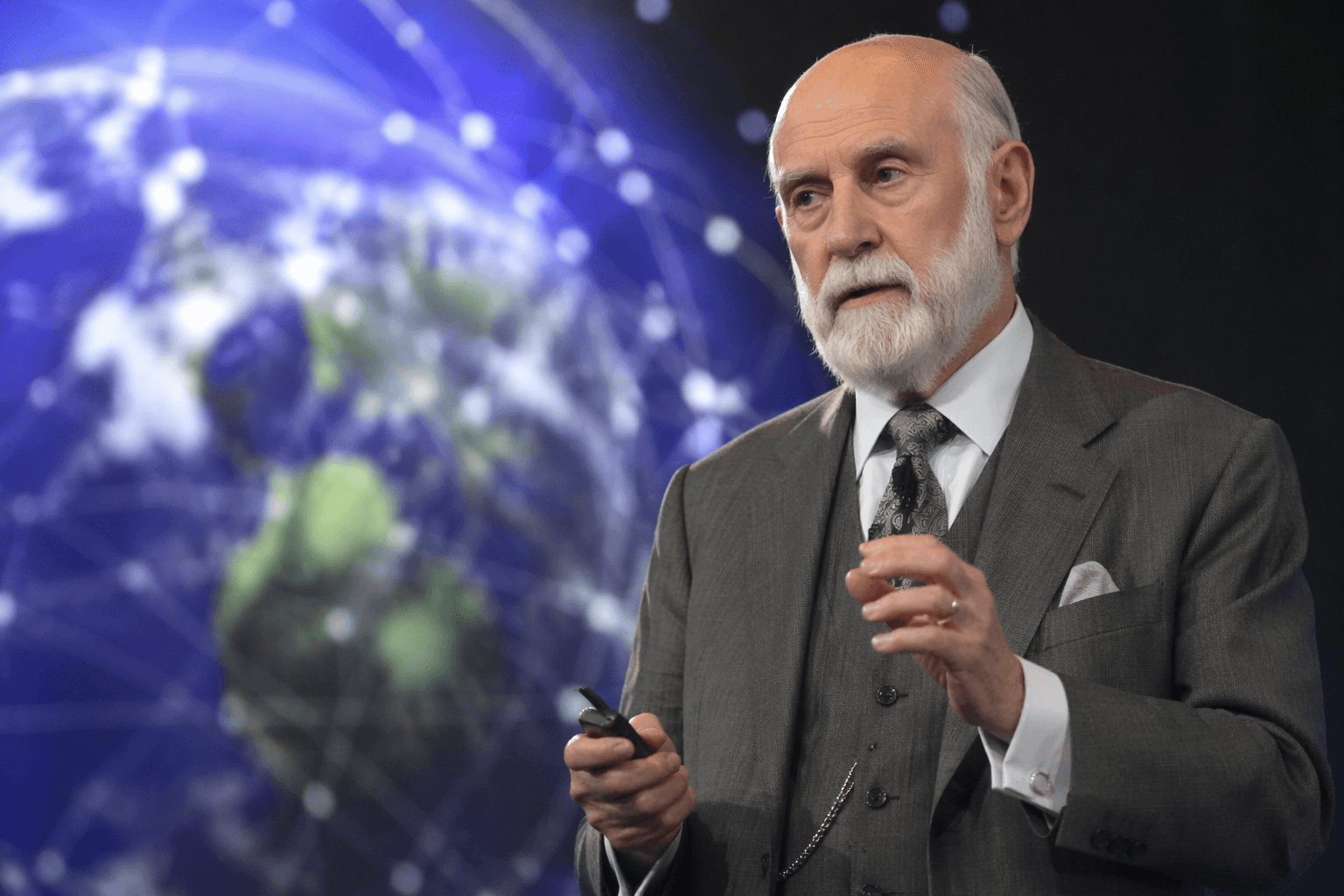
Cerf and Robert Kahn are widely credited with designing TCP/IP, the set of networking protocols that made the modern internet possible. Google’s own materials say TCP/IP became operational on January 1, 1983, a date often described as the internet’s operational birthday. That work gave Cerf unusual standing inside and outside Silicon Valley: not just as an executive, but as a custodian of the network’s original architecture.
At Google, Cerf’s role was described as contributing to global policy development and the continued spread of the internet. Company biographies also tied him to internet accessibility, digital preservation and open standards, a record that fit his long-running argument for systems that could connect across platforms and borders rather than lock users into closed networks. Google says he joined the company in 2005 after earlier work at Stanford, ARPA, DARPA and MCI.
His departure lands at a moment when the internet he helped build looks very different from the one imagined in its early years. Cerf has spent decades pressing for openness and interoperability, even as the online world has become more concentrated and platform-driven. That contrast gives his retirement more weight than a routine executive change: it marks the exit of a founder-era voice just as the network’s biggest fights have shifted from connectivity to control, with attention centered on power, access and who gets to shape the rules.
Google had not responded to a request for comment by publication time.
This article was produced by Prism’s automated news system from verified source data, official records, and press releases, then run through automated quality and moderation checks before publishing. The system is built and supervised by the people who set the standards it runs under. Read our full AI policy.
Did this article answer your question?