Viral Study Claiming British Youth Church Surge Was Simply Wrong
A YouGov survey underpinning the Bible Society's "Quiet Revival" report contained fraudulent respondents, collapsing a claim that British youth church attendance had quadrupled.
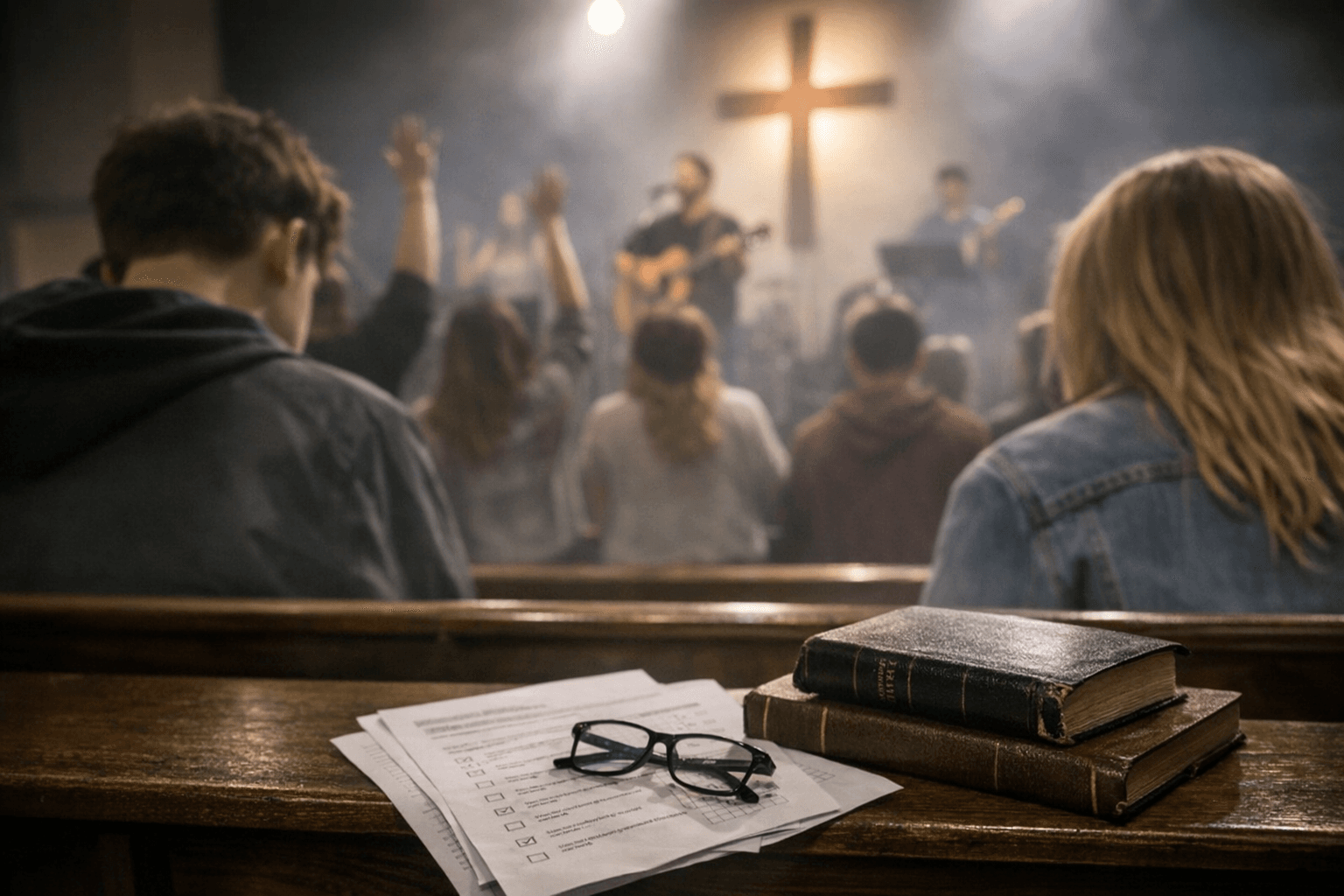
For nearly a year, a single report reshaped global conversation about religion in Britain. "The Quiet Revival," published by the Bible Society in April 2025, declared that Christianity was staging a comeback, driven by young people who were quietly filling pews again. Religious conservatives around the world cited it eagerly. The data, it turned out, was built on fraud.
The report claimed that monthly church attendance among 18-to-24-year-olds in England and Wales had surged from 4 percent in 2018 to 16 percent by 2024, with young men reportedly leading the charge. Attendance among young women in the same age group was said to have risen from 4 percent to 12 percent. The numbers implied a generational reversal of decades-long decline in organised religion, and they spread fast.
YouGov, which carried out the surveys in 2024 after being commissioned by the Bible Society, has since apologised, admitting it found major flaws in its data collection. Due to human error, a range of quality control technologies were not activated. YouGov said its findings "contained a number of respondents who we can now identify as fraudulent," adding that targeting harder-to-reach groups, including ethnic minorities and young people, made the survey more vulnerable to fraudulent or problematic responses.
YouGov CEO Stephan Shakespeare said: "YouGov takes full responsibility for the outputs of the original 2024 research, and we apologize for what has happened." The Bible Society formally retracted the report on March 26, 2026.
The collapse had been predicted. New analysis of British Social Attitudes Survey data by Humanists UK showed that churchgoing, including among Gen Z, had continued its long-term decline, consistent with the Church of England's and the Catholic Church's own attendance records. Humanists UK and the KCL Policy Unit brought together leading demographers in January 2026 to analyse the Bible Society polling, raising the possibility that the result could be skewed by junk participants recruited into YouGov's online opt-in polling sample.
Critics, including social scientist David Voas of University College London, had questioned claims about a religious revival in Britain, noting that churchgoing rates had risen from the lows of the coronavirus pandemic but remained below pre-pandemic levels.
The problem was not just that the method was flawed. Very few people asked hard questions about it, because the conclusion was so welcome; the quiet revival narrative spread not because the evidence was strong, but because it confirmed what many Christians hoped was true.
The Bible Society's chief executive, Paul Williams, called the discovery "frustrating" and "disappointing." The organisation plans to repeat the YouGov survey later in 2026, having ensured appropriate safeguards are in place, though it acknowledges it does not yet know what the new findings will reveal. What the existing institutional data already shows is unambiguous: no revival occurred.
This article was produced by Prism’s automated news system from verified source data, official records, and press releases, then run through automated quality and moderation checks before publishing. The system is built and supervised by the people who set the standards it runs under. Read our full AI policy.
Did this article answer your question?


