Virginia court lets Democrats use voter-approved congressional map
Virginia voters backed a map that could hand Democrats four more House seats, and the legal fight over whether it can stand is now racing to the state Supreme Court.
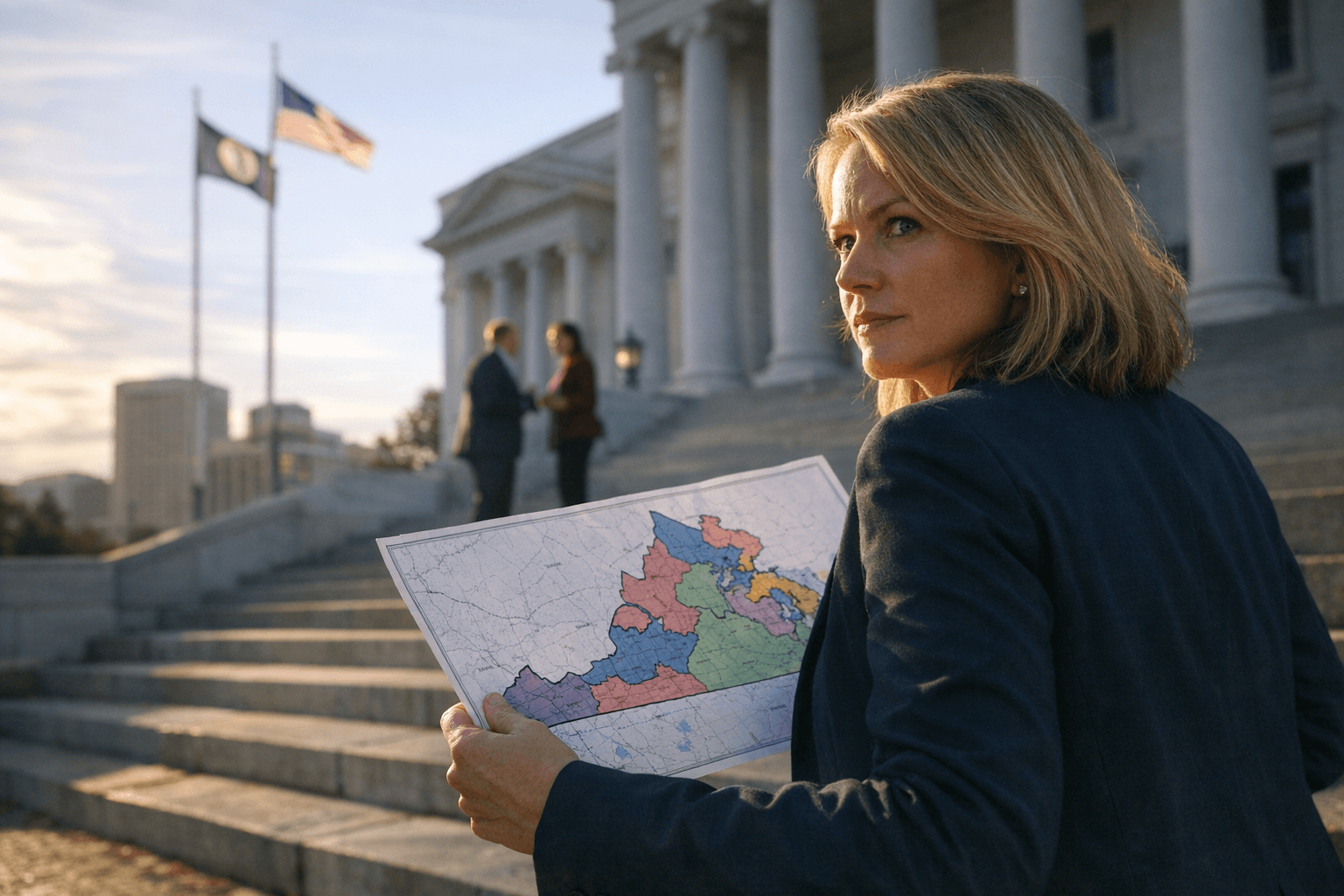
A Virginia court refused to halt Democrats’ new congressional map even after a separate ruling blocked certification of the referendum results, putting the state at the center of a fast-moving fight over who gets to draw House districts and when.
The stakes are unusually high. Virginia voters approved a constitutional amendment on April 21 by 51.45% to 48.55%, with about 3.06 million ballots cast, opening the door for the General Assembly to temporarily draw new congressional districts before the usual redistricting authority returns to the Virginia Redistricting Commission after the 2030 census. Under the proposed map, Democrats could move from a 6-5 edge in Virginia’s 11-seat delegation to a 10-1 advantage, a shift that could net the party up to four additional U.S. House seats in the 2026 midterms.
The legal challenge escalated almost immediately. Tazewell County Circuit Court Judge Jack Hurley issued an order on April 22 blocking certification of the referendum results, and Virginia Attorney General Jay Jones said he would appeal at once. The Virginia Supreme Court has set oral arguments for Monday, April 27, in one of the related redistricting cases, a sign that the dispute is moving on an accelerated track as election officials and candidates brace for what map will govern the next congressional cycle.

The fight reflects a broader change in American redistricting politics. Virginia’s State Board of Elections says the state normally redraws congressional districts once every ten years through the Virginia Redistricting Commission, but the amended constitution would let lawmakers step in temporarily and redraw the lines through the legislature. Democrats cast the push as a response to Republican mapmaking efforts in other states and to pressure from Donald Trump on red states to redraw their maps. Republicans argued that the ballot question moved too fast and violated state law or the Virginia constitution.
The General Assembly’s push began in late 2025, with party-line votes in October and February laying the groundwork for the special election. Now Virginia is testing a new model of power: instead of back-room mapmaking alone, the next congressional balance may be decided by voter-approved ballot measures, emergency court rulings and a state Supreme Court that could determine whether the map is used in 2026, 2028 and 2030.
This article was produced by Prism’s automated news system from verified source data, official records, and press releases, then run through automated quality and moderation checks before publishing. The system is built and supervised by the people who set the standards it runs under. Read our full AI policy.
Did this article answer your question?

