Virginia voters decide ballot measure that could reshape House map
Virginia’s yes-or-no vote could give Democrats temporary control of the state’s congressional map and possibly flip up to four Republican-held House seats.
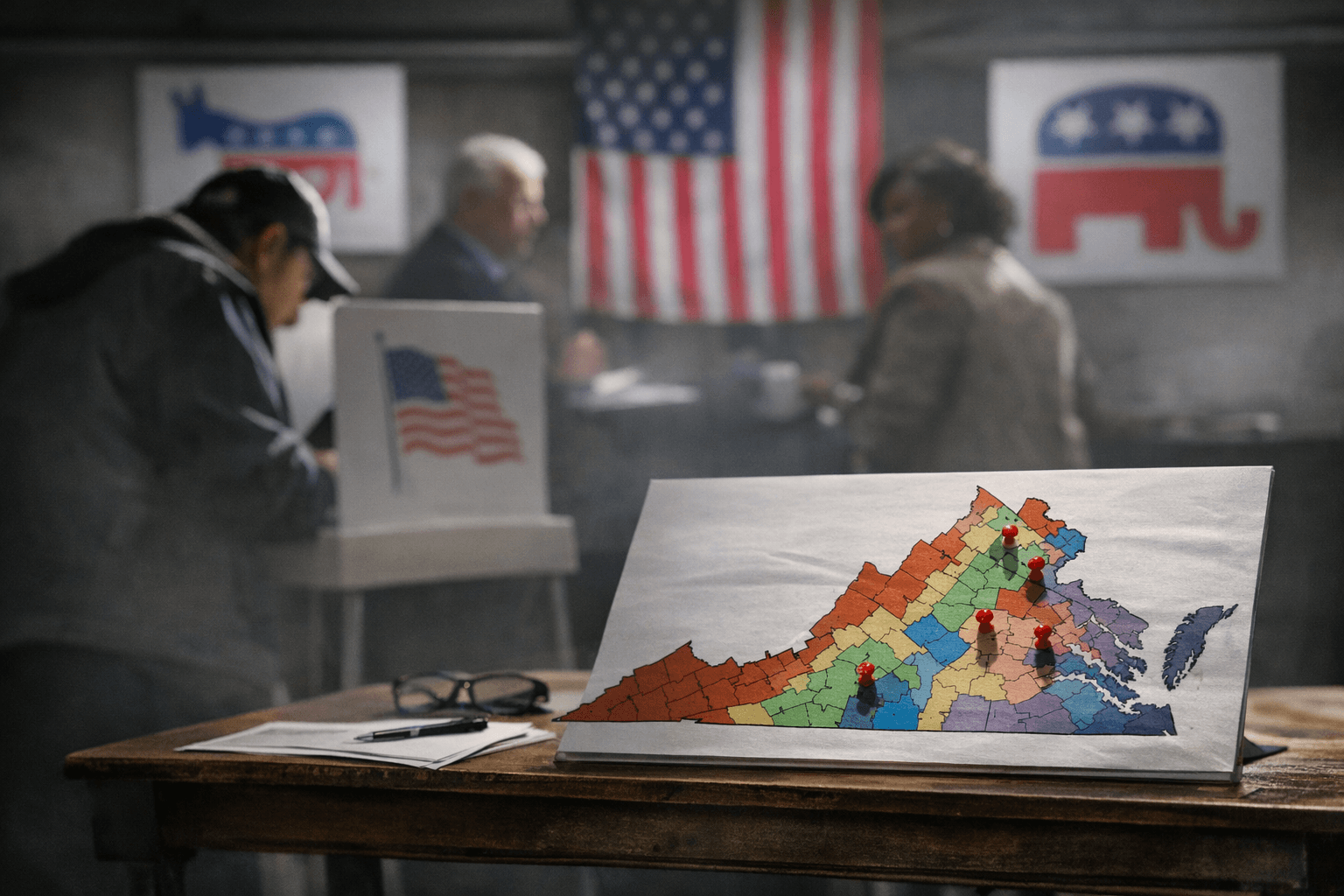
Virginia voters weighed a ballot measure Tuesday that could hand Democrats temporary power to redraw the state’s congressional districts and reshape the battle for control of the U.S. House. The measure had no candidates on the ballot, but its outcome could still alter the balance of power in Washington.
The proposal would amend the Virginia Constitution so the Democratic-majority General Assembly could adopt new congressional lines before the 2030 census cycle restores the state’s normal redistricting process. Election officials said the question was framed as a way to “restore fairness” in upcoming elections, but in practical terms it would shift mapmaking power away from the current 16-member Virginia Redistricting Commission, which has equal numbers of Republicans and Democrats, plus citizen members.
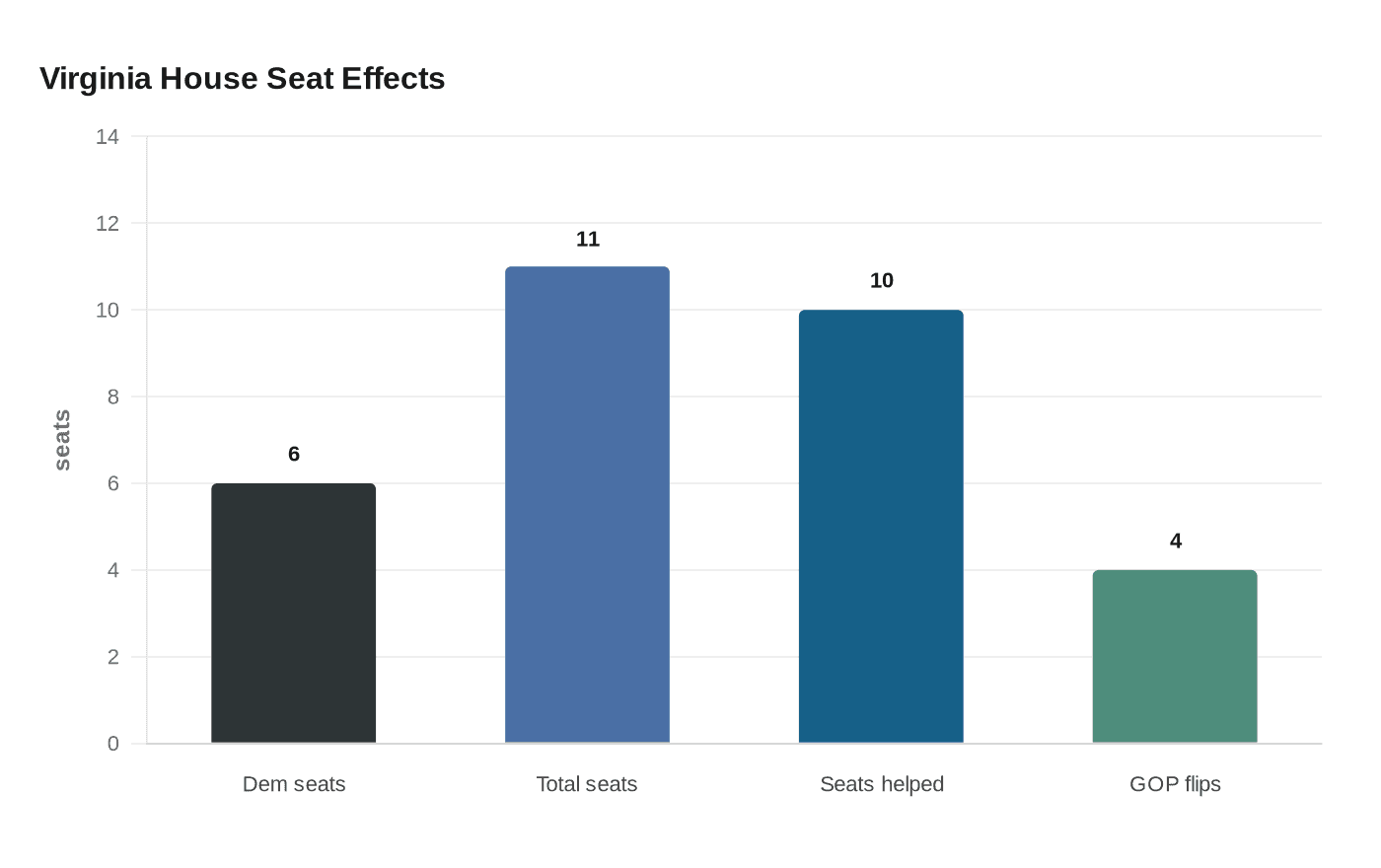
If voters approved the measure, lawmakers could act only within a temporary window from January 1, 2025, through October 31, 2030. That would give Democrats leverage to redraw districts in a way that could improve their odds in as many as 10 seats, with the Associated Press saying the map could flip up to four Republican-held districts. Democrats currently hold six of Virginia’s 11 U.S. House seats, and the new lines could arrive in time for the November midterms, when a handful of seats may decide which party controls the chamber for the final two years of President Donald Trump’s term.
If voters rejected it, Virginia’s current commission system would remain intact, preserving the bipartisan redistricting model that state voters approved in 2020 as a check on partisan gerrymandering. That outcome would leave Republicans with fewer immediate opportunities to contest the state’s map, while keeping the Legislature out of the process until the next regular redistricting round after the 2030 census.
The fight has become a national test of whether voters will accept mid-decade map changes in response to what the AP described as an escalating redistricting arms race that began after Texas Republicans redrew their maps at Trump’s urging in July 2025. Supporters included Gov. Abigail Spanberger and former President Barack Obama, while former Govs. Glenn Youngkin and George Allen opposed the measure. The Supreme Court of Virginia allowed the referendum to proceed after a Tazewell County Circuit Court injunction tried to block it, and early voting began March 6.
Money has poured into the contest, too. The Virginia Public Access Project reported major fundraising on both sides after April 14 disclosures, with at least $70 million in political action committee spending on the referendum fight this year. However Virginia voters ruled, the result carried implications far beyond Richmond: it would signal whether a procedural-looking ballot measure can become a blueprint for other states eager to redraw the political map before the next census.
Know something we missed? Have a correction or additional information?
Submit a Tip