Virunga rangers battle Ebola threat to gorillas and travelers
Virunga’s rangers are screening for Ebola while facing gunfire, turning a gorilla sanctuary into a frontline for public health and survival.
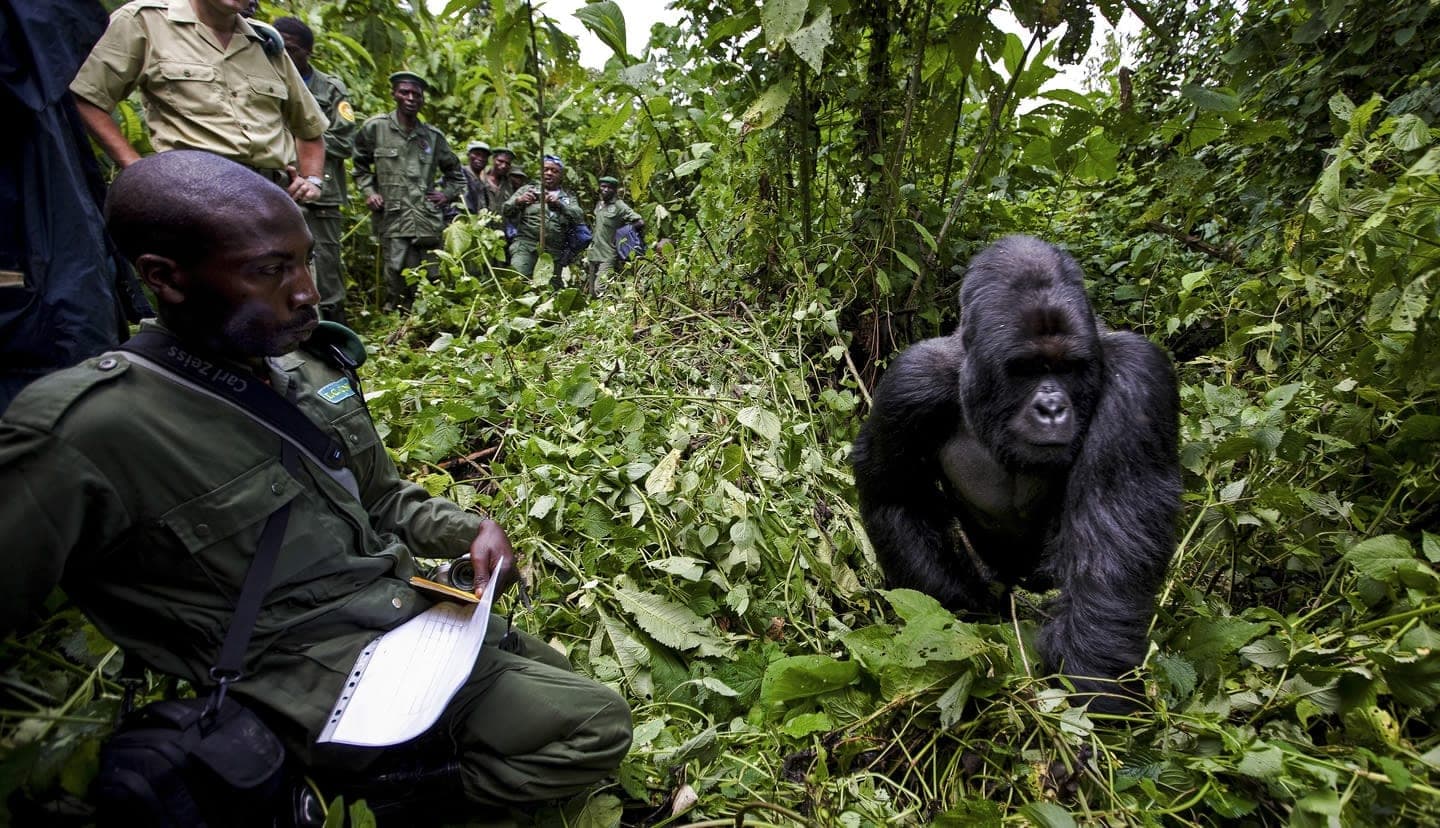
A park forced to do two jobs at once
Virunga National Park has become a place where outbreak control and conflict response are inseparable. Rangers are setting up Ebola screening checkpoints for travelers moving through the park, using roads and river crossings as choke points that officials say can be screened almost completely. In a region where disease surveillance and insecurity collide, the park is no longer just guarding wildlife, it is helping hold together a fragile public health perimeter.

That burden falls on a vast landscape. Virunga stretches across about 2 million acres and runs more than 180 miles from north to south in eastern Democratic Republic of Congo, near the border with Uganda. It is home to several hundred mountain gorillas, roughly one-third of the world’s population, which makes every threat to the park a threat to the species itself.
Why Ebola raises the stakes for gorillas and people
Ebola changes the meaning of protection inside Virunga. A 2023 scientific model projected that if just one gorilla became infected, fewer than 20 percent of the population would survive 100 days later. The same study found that vaccination could make a major difference, but only if at least half of habituated gorillas were vaccinated within three weeks of the first infectious case, a narrow window that shows how quickly the outbreak could outrun response efforts.
That scientific warning matters because Virunga is not only a conservation site, it is a cross-border corridor where travelers, local residents, park staff and wildlife move through the same space. Great apes are especially vulnerable to Ebola, and the park’s screening points are meant to reduce the chance that a human health emergency becomes a mass mortality event for one of the world’s most endangered primates.
Security is part of the health response
The rangers doing this work are also facing escalating violence. On May 21, 2026, gunmen attacked a control post at Kamuhororo on the southern shore of Lake Edward inside Virunga and killed two rangers, Kasereka Valyathire Baraka, 35, and Munguakonkwa Mihigo Jacques, 34. The provincial office of the Congolese Institute for Nature Conservation called the attack “odious and unacceptable,” and director Emmanuel de Merode demanded a thorough and urgent investigation.
The attack is part of a much longer pattern of danger. Park officials say more than 200 rangers have been killed in Virunga over the last century, a staggering toll that underscores how conservation work in eastern Congo has long been tied to armed conflict. De Merode, who has worked in eastern DRC with the National Park Service since 1993, said the current mix of Ebola risk, rebel violence and shrinking aid is the worst the park has faced in 30 years.
That wider insecurity is not abstract. Eastern Congo remains destabilized by armed groups including M23, Mai-Mai militias, the ADF and others, and recent violence has included large-scale abuses near the park. In that environment, disease surveillance is inseparable from personal safety, because every checkpoint, patrol and medical response depends on staff who can move and work without becoming targets themselves.
A conservation site under permanent strain
Virunga’s ecological value is enormous, but its outlook is increasingly fragile. Established in 1925, it is Africa’s oldest national park and a UNESCO World Heritage Site, as well as one of the most biologically diverse protected areas on the continent. It holds mountain gorillas, eastern lowland gorillas, chimpanzees, elephants, hippos and many other species across the Virunga Massif, between the Rwenzori Mountains and the Mitumba Mountains.
That diversity is now under pressure from several directions at once. The park remains vulnerable to long-running insecurity, possible future oil exploitation and a management system stretched far beyond comfortable limits. In the latest IUCN World Heritage Outlook cycle, finalized on Oct. 11, 2025, Virunga’s conservation outlook was rated “critical,” with biological attributes described as severely degraded and management capacities as permanently overstretched.
Inside that pressure cooker, Virunga’s more than 800 rangers have become both conservation officers and emergency responders. Their job is not just to deter poaching or monitor wildlife. They are also checking movement, reducing disease risk and maintaining a functioning state presence in places where that presence can be thin or contested.
Why community trust decides whether conservation works
The park’s survival does not depend only on patrols and checkpoints. Conservation groups and park managers say protection has to be paired with economic alternatives for nearby communities, because conservation fails if it imposes hardship without offering substitutes. That is especially true in eastern Congo, where families living around the park often face insecurity, limited livelihoods and the daily pressure of armed groups operating across the region.
This is where the Ebola response and the conservation mission meet social equity. Screening travelers can help shield gorillas and communities from infection, but it also slows movement in a region where people already navigate instability and scarcity. If local residents see the park only as a barrier, its protective role weakens. If they see it as a source of safety, jobs and continuity, the same checkpoints can become part of a broader public good.
Virunga’s managers say they intend to continue despite the outbreak and the violence. That determination matters because the park is not simply preserving a symbol of Africa’s wild heritage. It is defending a living system, one where the health of gorillas, travelers, rangers and surrounding communities now rises and falls together.
This article was produced by Prism’s automated news system from verified source data, official records, and press releases, then run through automated quality and moderation checks before publishing. The system is built and supervised by the people who set the standards it runs under. Read our full AI policy.
Did this article answer your question?