Volkswagen Group Recalls 356,649 U.S. Vehicles Over Camera Glitch
U.S. regulators said Volkswagen Group of America, including Audi, will recall 356,649 vehicles after a software error can prevent rearview camera images from appearing when drivers shift into reverse. The recall, coming days after Porsche announced a separate 173,538-vehicle action for the same defect, signals growing regulatory focus on software reliability across the auto industry and affects more than half a million U.S. vehicles combined.
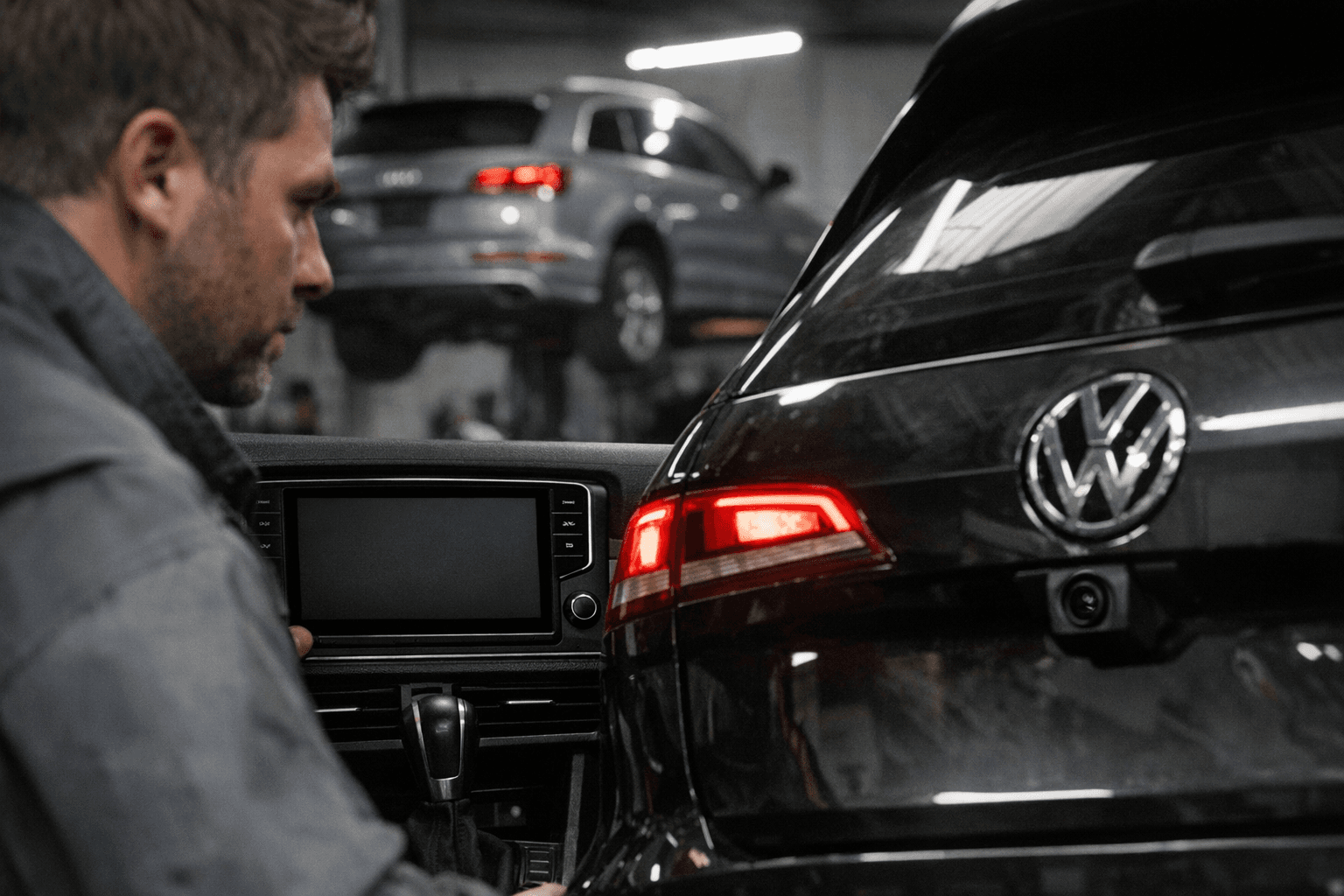
The National Highway Traffic Safety Administration announced on January 6, 2026, that Volkswagen Group of America, including its Audi brand, is recalling 356,649 vehicles in the United States because a software error can stop the rearview camera image from displaying when a vehicle is put into reverse. Dealers will install a free software update to restore camera functionality, NHTSA said.
The recall covers certain model years from 2019 through 2026. The agency warned that the failure of the camera image to appear while backing up could increase the risk of a crash. Volkswagen did not immediately provide a public comment to the agency’s announcement.
The Volkswagen Group action follows a Porsche Cars North America recall announced the prior week that affected 173,538 U.S. vehicles for the same rearview camera display issue. Combined, the two automakers’ recalls encompass more than 540,000 vehicles nationwide, putting a spotlight on a pervasive problem in vehicles increasingly reliant on software for safety-critical functions.
Public reporting has varied on the brand and model breakdown of the Volkswagen Group recall. Some accounts attribute the 356,649 figure specifically to Audi and list affected models such as the Q5, Q7, Q8, e-tron family and A4 through A8 series, and one media source has said 10,555 Lamborghini Urus units are implicated. Those model- and brand-level details are not uniformly reflected in the NHTSA summary and have not been confirmed in full by the manufacturer at the time of the announcement.
The recalls come amid a broader regulatory trend: in the prior year, NHTSA issued recalls for Hyundai, Ford, Toyota and Chrysler vehicles over comparable rearview camera failures. Regulators are increasingly scrutinizing software supply chains, update mechanisms and validation processes as automakers accelerate the integration of digital systems for safety, convenience and autonomous driving features.
From a market standpoint, the immediate financial hit to Volkswagen and Porsche should be limited because dealers will provide a software patch at no charge, avoiding the more costly parts-and-labor bills associated with mechanical recalls. Nevertheless, the coordination costs across dealer networks and the logistics of updating hundreds of thousands of vehicles can be substantial, and the recall activity raises reputational risk for brands that sold nearly 380,000 vehicles in the U.S. in 2024 and about 330,000 in 2023.
Policy implications extend beyond warranty costs. Regulators and consumer advocates are likely to press for stricter standards for automotive software quality assurance, mandatory over-the-air update protocols that are more transparent, and clearer reporting requirements when software faults affect safety functions. For investors and fleet managers, the episode underscores an emerging operating risk: as software accounts for a growing share of a vehicle’s safety architecture, failures can trigger concentrated recall campaigns with rapid, costly effects on sales, service networks and brand trust.
NHTSA said dealers will perform the update free of charge; owners should receive notification once repair schedules are set. The episode adds momentum to calls for tighter regulation of vehicle software and for automakers to bolster pre-release testing of safety-critical systems.
This article was produced by Prism’s automated news system from verified source data, official records, and press releases, then run through automated quality and moderation checks before publishing. The system is built and supervised by the people who set the standards it runs under. Read our full AI policy.
Did this article answer your question?

