Wadagni takes office in Benin, vows security push and broader growth gains
Benin’s new president promised security and visible gains after a vote he won with 94.05%, even as poverty still grips about 40.1% of the country.

Romuald Wadagni took office in Cotonou with a promise to make Benin’s macroeconomic gains visible in daily life, while also confronting a worsening security threat in the country’s north. The new president, a 49-year-old former finance minister, succeeded Patrice Talon after two terms and inherits a political order that has stayed within constitutional limits even as pressure mounts to turn growth into jobs, services and safer border towns.
Wadagni won the April 12 presidential election with 94.05% of the vote in provisional results, on turnout of 58.75%, before the Constitutional Court confirmed the outcome. The court invalidated 34,596 ballots because of irregularities, but observer missions did not view the problems as severe enough to undermine the vote’s credibility. The result marked Benin’s fifth democratic transfer of power since the 1990 National Conference, a measure of stability in a region where transitions are often more precarious. Paul Hounkpè conceded defeat and urged national unity and respect for republican values, while the main opposition party, Les Démocrates, was absent after failing to secure the required endorsements.

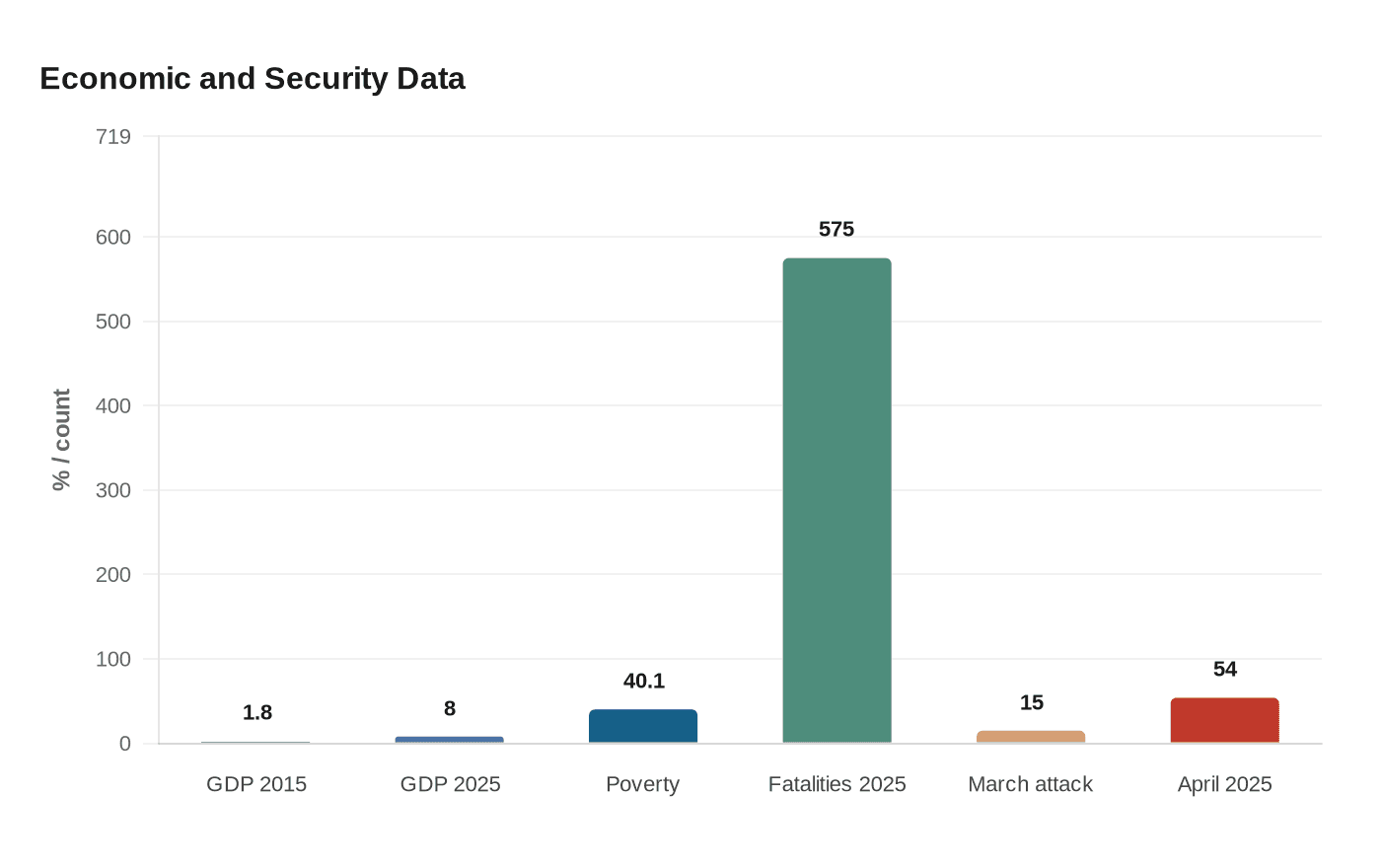
The economic test is more complicated than the electoral one. Under Wadagni’s decade as finance minister, Benin’s GDP growth rose from 1.8% in 2015 to about 8% in 2025, a striking improvement that has not erased hardship for many households. Roughly 40.1% of Benin’s population still lives below the poverty line, leaving the new president with the task of converting a record of fiscal discipline and business reform into broader living standards. His governing agenda for 2026 to 2033 centers on social wellbeing, a diversified and competitive economy, and national cohesion and security.

Security may prove the hardest part of that bargain. Militants linked to the Sahel have expanded their reach into northern Benin since the first attack in 2019, and the Africa Center for Strategic Studies estimated that fatalities reached about 575 in 2025. In March, an attack on a military camp in northern Benin killed 15 soldiers and wounded five more, following an earlier assault in April 2025 that killed 54 soldiers. Wadagni has already pledged to create municipal police forces in northern border towns and said Benin had “no choice” but to work with neighboring countries, including Nigeria, Niger, Burkina Faso and Mali, to contain the threat.
A December coup attempt narrowly failed, with neighboring countries helping foil it, underscoring how fragile the security environment has become. Wadagni now faces a sharper political test than winning office: proving that Benin’s growth can be felt in wages, roads, schools and safety before insecurity and public frustration erode the country’s relative stability.
This article was produced by Prism’s automated news system from verified source data, official records, and press releases, then run through automated quality and moderation checks before publishing. The system is built and supervised by the people who set the standards it runs under. Read our full AI policy.
Did this article answer your question?