Wake County School Board Renews SHARE Program Redistributing Unused Student Meals
Wake County is set to expand the SHARE program after its March 2025 pilot; organizers report recovering about 41 items per school per day and plan to reach 37 schools by the end of the school year.

Wake County school board members are preparing to extend the SHARE program - Stop Hunger And Restore Earth - run by Cary-based nonprofit Toward Zero Waste, which began as an eight-school pilot in March 2025 and collects unopened, uneaten packaged breakfast and lunch items for redistribution to students in need. Organizers say the effort has already diverted thousands of unopened meal packages from dumpsters since the pilot began.
The pilot expansion has moved in phases: eight schools at launch in March 2025, then 10 additional schools in a second phase and nine more in a third phase, bringing the program to 27 active sites so far. Toward Zero Waste officials and school staff have scheduled 10 more schools to join in a Phase 4 roll‑out in March and April, a step projected to increase the total to 37 Wake schools by the end of the school year; organizers also report dozens more schools have expressed interest in joining.
Organizers point to audits that motivated SHARE, which found that 20% to 35% of school lunch waste was recoverable food. Toward Zero Waste reported an average recovery of about 41 items per school per day during the pilot, and program leaders say the recovered items have been used to redistribute snacks and extra meals to students. Local coverage has described the pilot as saving hundreds of packaged items and fruit from the dumpster every day across participating sites.
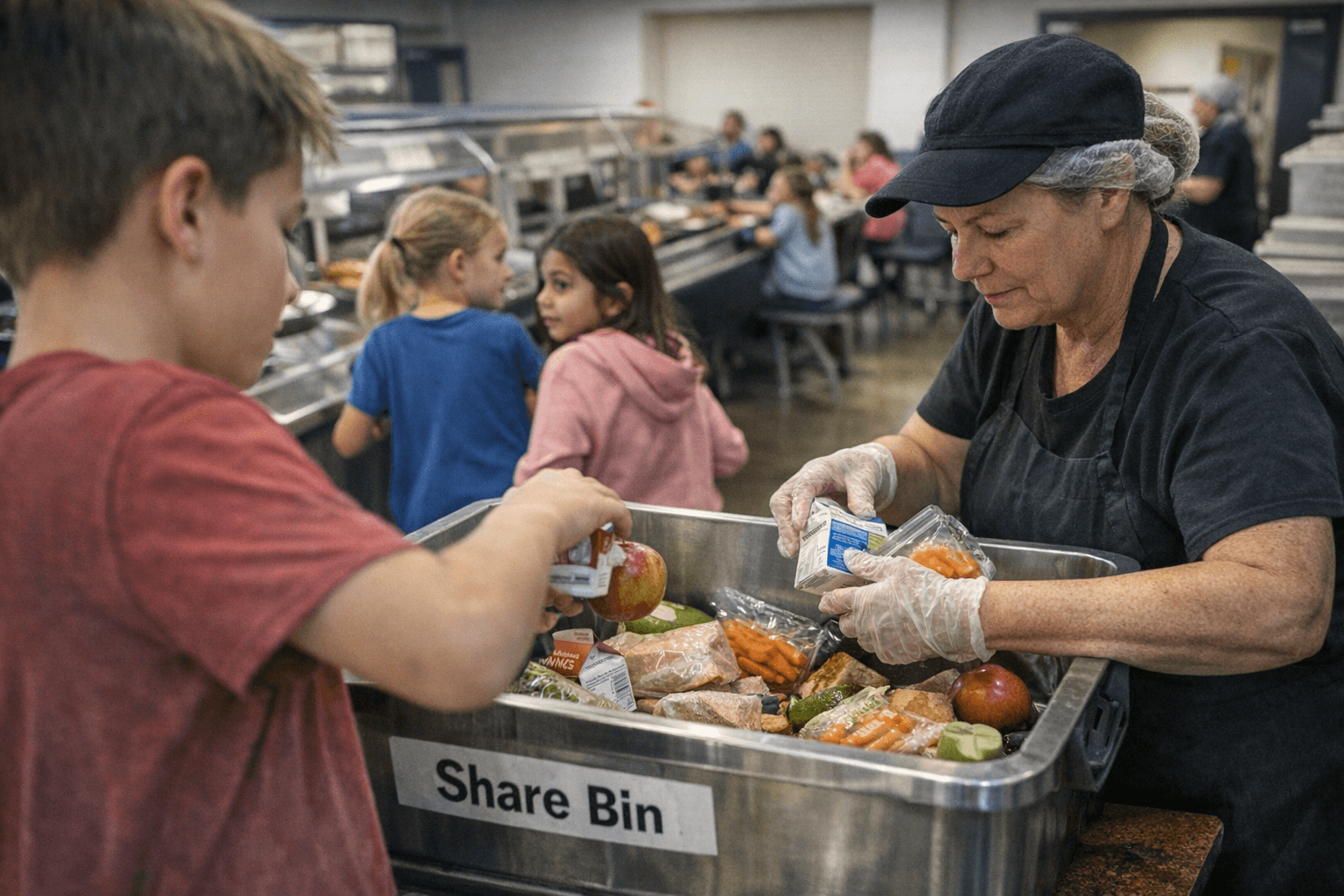
Cafeteria collection carts are set up during breakfast and lunch to gather unopened items students do not plan to eat, and federal National School Lunch Program and Breakfast Program rules that require certain items be offered - such as fruit - create some of the supply that SHARE redirects. Toward Zero Waste’s director of food recovery and compost, Megan Holler, said, “From what we’re hearing from the staff at the schools, students are taking the foods.” School volunteers and student cart managers have been active in the process, and program leaders have described classroom and leadership learning opportunities tied to the work.
Funding and capacity are central constraints as SHARE scales. Toward Zero Waste has relied on private donations and municipal contributions; a reported $10,000 Wake County waste-prevention grant is slated to fund most Phase 4 sites, and Wake County Community Services/Solid Waste, Cary, and Raleigh contributions are cited as partners in the expansion. Wake County school board vice chair Sam Hershey noted a district funding limit, saying the district “could fund the program if it was allowed to do so.”
Accounts differ on the school board’s formal action: some reporting indicated the two-year extension with Toward Zero Waste was placed on the board’s consent agenda for a forthcoming vote, while other summaries have characterized the program as having received a two-year agreement. The definitive record on whether a two-year memorandum of agreement has been signed would be the school board minutes and the executed MOA; organizers say further scaling will hinge on confirming funding, staffing capacity, and the rollout schedule for Phase 4 in March and April.
Know something we missed? Have a correction or additional information?
Submit a Tip