Wall Street futures rise as AI optimism offsets Middle East fears
AI spending and strong earnings pushed futures higher even as traders watched a Middle East ceasefire, a Fed fight and oil-sensitive warnings.
Artificial intelligence spending gave Wall Street the upper hand on Tuesday, even with Middle East tensions still hanging over the market. U.S. stock index futures climbed as traders leaned into the view that the AI trade, backed by powerful earnings, was still strong enough to outweigh the latest geopolitical shock.
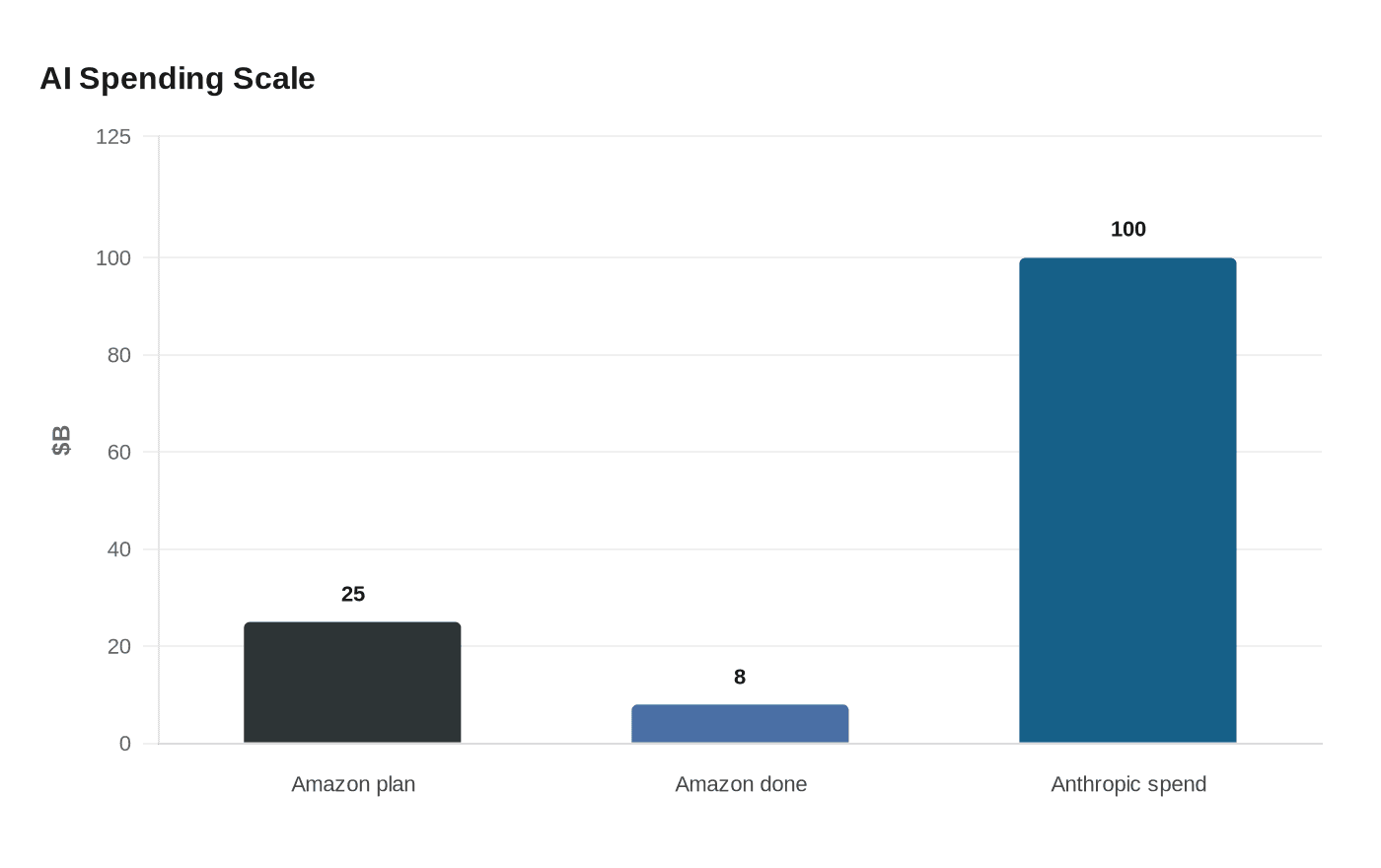
Amazon sharpened that message with a plan to invest as much as $25 billion in Anthropic, a deal that added to the $8 billion it had already committed and sent Amazon shares higher. Anthropic said it will spend more than $100 billion on Amazon Web Services technologies over the next 10 years, a scale that underscores how deeply the two companies are tying their futures to AI infrastructure and model development. For investors, the signal was clear: the biggest technology companies are still spending aggressively rather than pulling back.
That optimism helped offset concern over the Middle East conflict, where a U.S.-Iran ceasefire was set to expire on Wednesday, April 22. It also came as J.P. Morgan raised its year-end target for the S&P 500 after cutting it earlier in the spring tariff scare. The bank said the AI story and improving earnings still support the market’s advance, even if elevated valuations could limit how far stocks can run from here.
Earnings gave that case more support. More than 87% of reporting S&P 500 companies had topped estimates, and FactSet put the index’s estimated first-quarter earnings growth at 13.2%, which would mark a sixth straight quarter of double-digit year-over-year growth if it holds. UnitedHealth added to the tone with a stronger-than-expected quarter and a higher 2026 outlook, lifting its adjusted earnings forecast to more than $18.25 per share. GE Aerospace also said it was on track to reach the high end of its 2026 profit outlook, though it warned that elevated oil prices, fuel supply constraints and slower global growth were weighing on the backdrop.
Washington added another layer of uncertainty. Kevin Warsh was due to face Senate confirmation scrutiny for the Federal Reserve chair job, with lawmakers expected to press him on central-bank independence and whether he would move quickly on interest-rate cuts. Senator Thom Tillis said he would block Warsh’s confirmation unless the Justice Department dropped its inquiry into Jerome Powell, turning the Fed succession fight into another market variable. For now, the stronger force on the tape was still AI-led growth, but conflict risk and policy friction remained close behind.
This article was produced by Prism’s automated news system from verified source data, official records, and press releases, then run through automated quality and moderation checks before publishing. The system is built and supervised by the people who set the standards it runs under. Read our full AI policy.
Did this article answer your question?

