Wall Street Slips in Thin Year-End Trading as 2025 Ends
U.S. stock indexes edged lower on Dec. 31, 2025, in unusually light year‑end trading as investors wound down positions ahead of the New Year holiday. This article unpacks the market moves, the extreme drop in liquidity, the drivers behind 2025 gains and risks, and what low volume means for investors heading into 2026.
1. Year-End Market Snapshot
As of 11:07 a.m. Eastern on Dec. 31, 2025 the S&P 500 was down about 0.4%, the Dow Jones Industrial Average had fallen roughly 179 points (about 0.4%), and the Nasdaq Composite was also down about 0.4%. Markets entered the final session on the back of a three‑day losing streak, with traders describing the S&P as “largely flat to slightly down” while the Dow slipped modestly as Treasury yields rose.
2. Thin Trading Volume
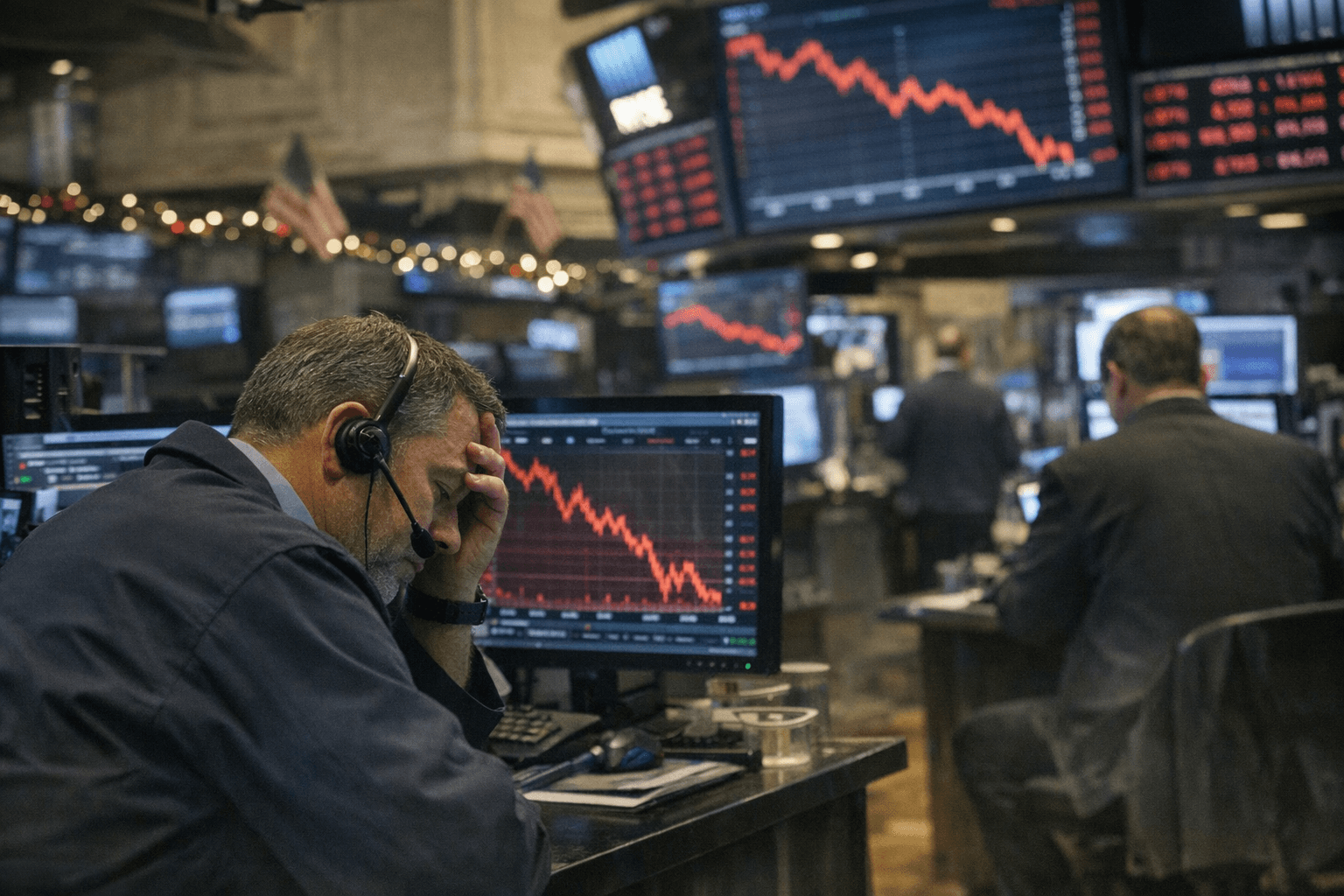
A striking feature of late‑2025 trading was extreme thinness: daily volume had dropped to roughly 10 billion shares, a decline of about 37% from a 16 billion‑share average. Major institutional desks, including at firms such as Goldman Sachs and BlackRock, were operating with skeleton crews, creating a “liquidity vacuum” that left order books shallow and price discovery more fragile.
3. Intraday Volatility Patterns
Thin order books amplified intraday swings: the S&P 500 traded in a narrow but jittery band of about 6,900 to 6,930 as of Dec. 30, while the Nasdaq experienced sudden 2% intraday drops even without clear fundamental news. Those episodes underline how modest flows in a low‑liquidity environment can generate outsized index moves and make short‑term risk management more difficult for investors.
4. Rotation and Positioning
Market participants noted rotation away from large AI‑heavy tech names into more defensive stocks, an example cited was money moving from Nvidia into retailers like Target. Analysts described that shift as “smart money” positioning for potentially higher volatility in 2026; the behavioral takeaway is that portfolio managers were trimming concentration risk and seeking cash flow visibility as the year closed.
5. Drivers of 2025 Performance
The bulk of 2025 gains were attributed to investor optimism about artificial intelligence lifting productivity and corporate profits across sectors, supporting elevated multiples for AI‑exposed firms. Yet the year also featured significant turbulence: uncertainty about the Federal Reserve’s rate path and policy‑related disruptions, notably on‑again, off‑again tariffs announced by President Donald Trump, left markets vulnerable to policy shocks despite strong thematic tailwinds.
6. Treasury Yields Impact
Rising Treasury yields on the final session were cited as a contributor to the Dow’s modest decline. Mechanically, higher yields increase discount rates used in equity valuation models, pressuring long‑duration, high‑growth names and nudging investors toward cyclicals or value exposures; on a thin trading day, those yield moves can ripple quickly through index returns.
7. Global Market Context
Global markets were mixed over Dec. 30–31 and many bourses were curtailed by holidays. Germany, Japan and South Korea were closed for year‑end holidays; France’s CAC 40 was down about 0.5% at 8,130.14, Britain’s FTSE 100 down about 0.2% at 9,923.59. In Asia, the Hang Seng dipped about 0.9% to 25,630.54, Shanghai Composite rose 0.1% to 3,968.84, Taiwan’s Taiex jumped about 0.9% to 28,963.60, and Australia’s S&P/ASX 200 dipped less than 0.1% to 8,714.30. Tokyo was set to be closed Thursday and Friday for New Year’s, and U.S. markets were scheduled to be closed Thursday (New Year’s Day).
8. Commodities and Energy Prices
Energy markets were relatively calm in the year‑end window: U.S. crude slipped about $0.16 to $57.79 per barrel and Brent crude fell roughly $0.16 to $61.176 per barrel (figures reported Dec. 30). The muted movement in oil underscores how reduced trading activity can dampen commodity volatility even when cross‑asset forces, like geopolitics and demand signals, remain relevant.
9. Market Microstructure Risks
The combination of shallow order books and reduced staffing at institutional desks heightens market microstructure risks: execution costs can rise, bid‑ask spreads widen, and ETFs or large block trades can move prices significantly. For portfolio managers and large traders, the environment demands smaller trade sizes, use of limit orders, and heightened attention to intraday liquidity indicators to avoid adverse price impact.
10. Visuals and Color
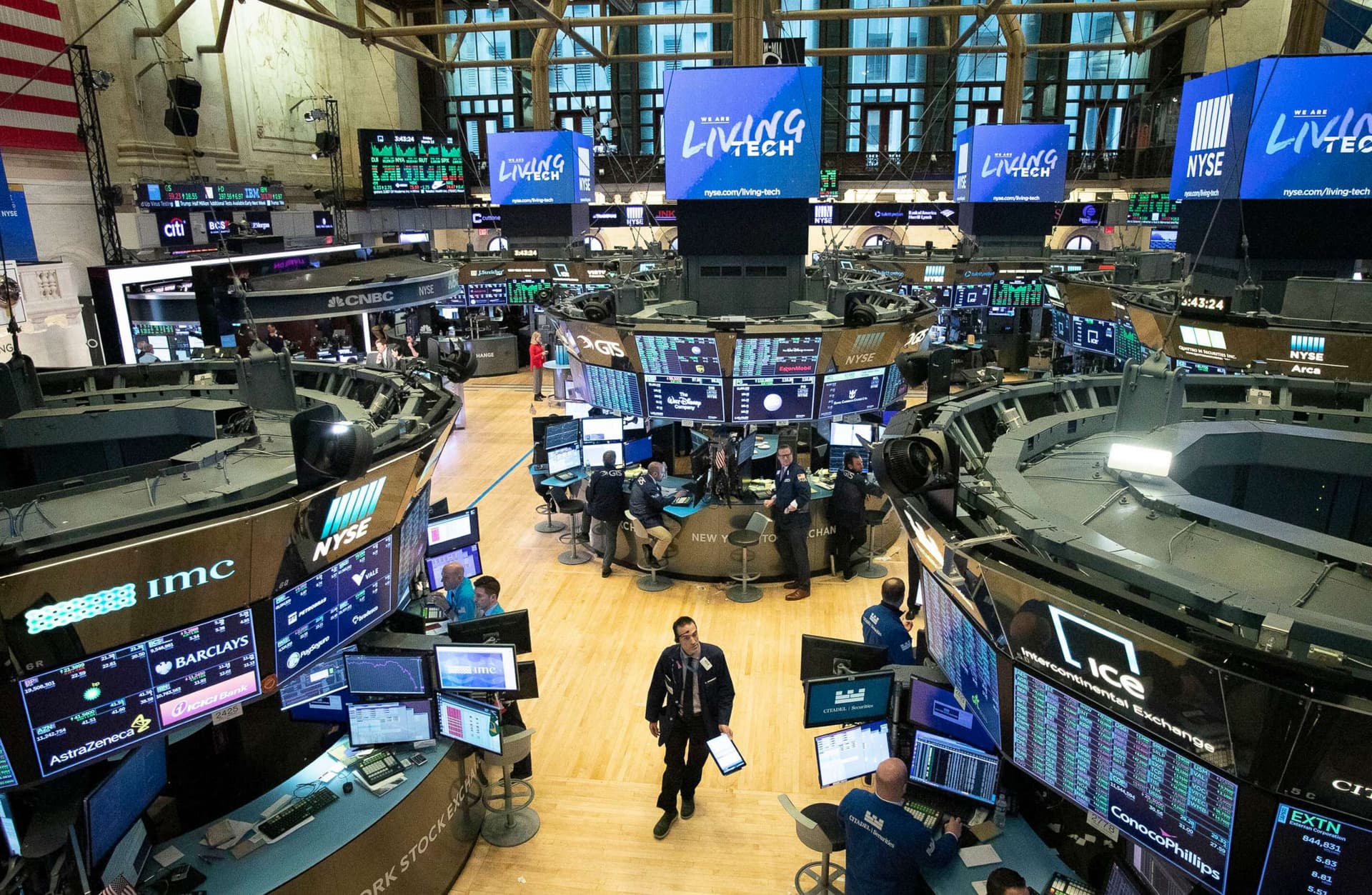
Photographic coverage captured the thin‑market atmosphere on the NYSE trading floor; an Associated Press photo identified specialist Glenn Carell and trader Robert Charmak working amid subdued year‑end activity (AP Photo/Richard Drew). The image serves as a visual reminder that market mechanics, the people and desks that keep markets liquid, were operating at reduced capacity.
11. Takeaways and Outlook for 2026
Key takeaways: markets are more sensitive to flows when daily volume is down roughly 37%, AI remains a powerful structural tailwind but valuation risks persist if rates reaccelerate, and policy uncertainty, including tariffs, is an ongoing downside risk. For investors, the practical checklist heading into 2026 includes monitoring Treasury yields and order‑book depth, reducing single‑name concentration, and preparing for larger moves in thin conditions. Policymakers and exchanges should also note that low staffing and holiday seasonality can amplify systemic sensitivity during moments of policy shock.
12. Sources and Credits
Reporting synthesized from Associated Press (Alex Veiga and AP global markets coverage), Markets Financialcontent, NewsNation Live, U.S. News/Newsday synopses; photo credit Richard Drew (AP).
This article was produced by Prism’s automated news system from verified source data, official records, and press releases, then run through automated quality and moderation checks before publishing. The system is built and supervised by the people who set the standards it runs under. Read our full AI policy.
Did this article answer your question?
%3Amax_bytes(150000)%3Astrip_icc()%2FCertificate-of-deposit-2301f2164ceb4e91b100cb92aa6f868a.jpg&w=1920&q=75)