Wall Street tumbles as strong jobs report dims rate-cut hopes
A 172,000-job gain and a 4.3% jobless rate sent Treasury yields higher and crushed Big Tech, with the Nasdaq dropping 4.18%.

Wall Street’s late-week rout showed how quickly a strong jobs report can become bad news for stocks. A labor market that added 172,000 jobs in May and left unemployment at 4.3% forced investors to confront a harsher message: the economy was still resilient enough to keep the Federal Reserve cautious, and that meant rate cuts could stay out of reach.
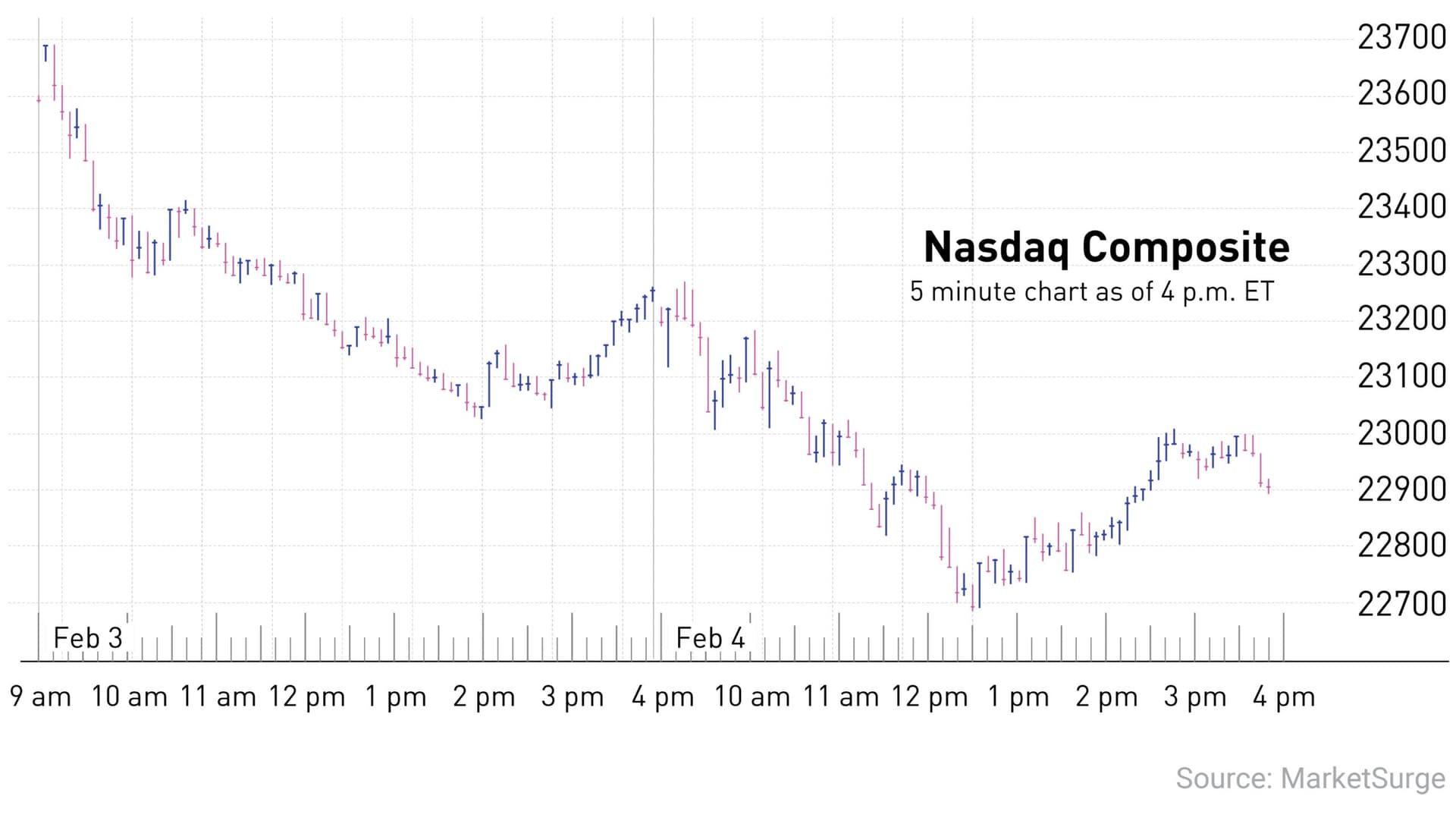
The selloff hit hardest in the stocks that had carried the market to record highs just weeks earlier. The Nasdaq Composite fell 4.18% to 25,709.43, its worst day since April 2025, while the S&P 500 dropped 2.64% to 7,383.74. The Dow Jones Industrial Average lost 695.15 points, or 1.35%, to 50,866.78, reversing a session in which it had closed at a record high the day before. Nvidia, Broadcom and Micron all slumped sharply, and Meta also came under pressure after a report that it may seek a new stock offering to help fund artificial intelligence infrastructure spending.

What made the reaction so sharp was the shift in interpretation. For months, investors had treated steady economic data as a sign that growth could support earnings and justify lofty valuations. On Friday, the same resilience read differently. Job gains in leisure and hospitality, local government and health care confirmed that hiring was still broad enough to keep the economy moving, even as employment in financial activities declined and April’s payroll gain was revised up to 179,000. That combination strengthened the case for higher borrowing costs for longer, or even another rate increase later this year.
Bond markets moved immediately. The 2-year Treasury note rose to 4.16% and the 10-year Treasury climbed to 4.54%, pushing discount rates higher just as investors were questioning whether Big Tech prices had outrun fundamentals. Interest-rate futures shifted to price in a 65% chance of Federal Reserve tightening in December, up from 48% before the jobs report. The message from traders was plain: the market had been leaning heavily on rate-cut hopes, and that support suddenly looked fragile.

The timing added another layer of tension. The Federal Reserve’s June 16-17 meeting was already approaching, with Kevin Warsh listed as chairman of the 2026 committee, while President Donald Trump continued pressing the central bank to lower borrowing costs. Friday’s drop suggested that the rally’s dependence on both Big Tech and easier policy had been narrower than it looked, and that good economic news could now hurt stocks instead of helping them.
This article was produced by Prism’s automated news system from verified source data, official records, and press releases, then run through automated quality and moderation checks before publishing. The system is built and supervised by the people who set the standards it runs under. Read our full AI policy.
Did this article answer your question?