Wall Street Warns: OpenAI Concentration Poses Systemic AI Trade Risk
A growing share of corporate AI investment and market enthusiasm is tied to OpenAI, raising concerns about concentration risk that could ripple far beyond the technology sector. As companies tap debt markets to finance AI projects and consumers push back on data and privacy practices, analysts urge caution and diversification.
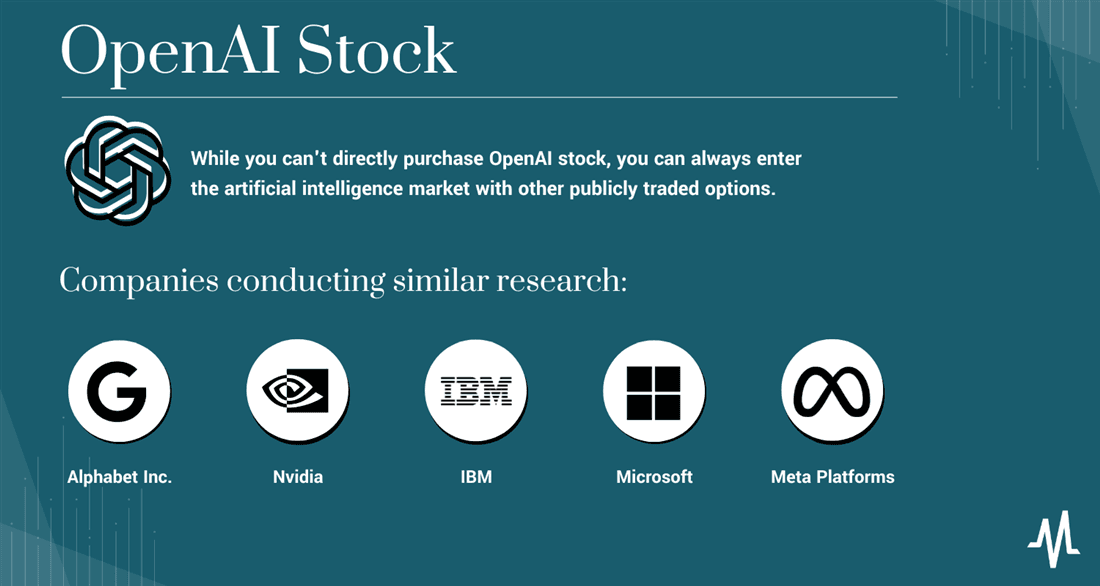
“Be careful.” That blunt admonition from Baird veteran Ted Mortonson captures a widening unease on the Street as investors and companies pile into artificial intelligence. With nearly $400 billion committed to AI by major technology firms this year and expectations of “hundreds of billions” more next year, market participants say the rally in AI-linked assets is becoming dangerously dependent on a single company’s technology and commercial fortunes: OpenAI.
The concentration is visible in corporate partnerships and product road maps. Microsoft’s deep commercial tie-up with OpenAI, which underpins key cloud and productivity offerings, means that any operational, regulatory or reputational setback for the developer of the leading large language models could quickly affect software vendors, cloud providers and a swath of AI supply-chain firms. “If OpenAI stumbles, it will impact the market beyond the tech sector,” Mortonson warned in an interview, echoing a refrain increasingly heard in trading rooms and boardrooms.
Market moves over the past week illustrated that fragility. Blue-chip software and cloud names have shown mixed reactions: Microsoft (MSFT +0.87%) and Alphabet (GOOGL +0.31%, GOOG +0.25%) have largely held ground, while Oracle (ORCL -2.70%) and some AI-focused funds have lagged. Broader risk-sensitive strategies also felt pressure, with certain multi-factor ETFs retreating (CRWV -4.99%) as investors recalibrated exposure to concentration and leverage.
Risk is not limited to stock prices. Companies are financing ambitious AI agendas by tapping debt markets, increasing corporate leverage in an environment of materially higher borrowing costs than during the pandemic-era boom. Borrowing to fund large-scale data-center builds, model training and acquisitions amplifies downside if revenue growth slows. At the same time, a rising stream of consumer complaints about privacy, misinformation and job displacement has prompted calls for stricter regulation, adding policy uncertainty that could diminish near-term monetization prospects for AI products.
Analysts point to two mechanics that exacerbate the danger. First, technology stacks have become more homogeneous: many firms use a narrow set of foundational models rather than building proprietary alternatives, creating single points of failure. Second, investor flows into AI-themed funds and ETFs have concentrated capital in a relatively small group of names, making the ecosystem sensitive to headline risk around one company.
Regulators in the U.S. and Europe have begun stepping up scrutiny of data practices and competition issues in AI, which could translate into legal and compliance costs and limit how companies commercialize their models. For bond investors, higher leverage plus policy risk raises the bar for credit discipline; for equity investors, it argues for more granular assessments of business models and earnings sensitivity.
The longer-term picture remains constructive: AI promises substantial productivity gains and new product categories. But market participants who have built portfolios and corporate plans around a narrow set of providers face an elevated chance of loss if that central player falters. “It’s not a question of whether AI will matter,” Mortonson said. “It’s a question of whether we’ve put too many eggs in one basket.”
This article was produced by Prism’s automated news system from verified source data, official records, and press releases, then run through automated quality and moderation checks before publishing. The system is built and supervised by the people who set the standards it runs under. Read our full AI policy.
Did this article answer your question?

