Walmart adds 150 stores to Wing drone network, 40 million reachable
Walmart employees will learn how adding 150 stores to the Wing drone network expands reach to about 40 million people and what that means for store operations, roles and schedules.

1. Expansion overview: 150 stores added to the Wing network
Walmart is accelerating its drone-delivery footprint by adding 150 more store locations to its partnership with Alphabet-owned Wing, bringing the Wing–Walmart network to roughly 270 locations. For workers, that means a materially larger set of stores that will either begin preparing for drone-demanded fulfillment or scale already-existing processes. The expansion is a clear signal that drone delivery is moving from pilot to broader program, and staff at affected stores will likely see new operational checklists and workflows introduced.
2. Reach and scale: roughly 40 million people, about 10% of the U.S.
The expanded network is expected to give drone delivery access to nearly 40 million people, approximately 10% of the U.S. population. For frontline employees, reach matters because higher customer density can mean more drone orders per store, tighter turnaround expectations, and changes in how inventory is prioritized for same-day or near-instant delivery. Managers should prepare for variable demand spikes as neighbors try the new service.
3. New metro rollouts: Los Angeles, St. Louis, Cincinnati and Miami
The announcement specifically names major metro areas coming online, Los Angeles, St. Louis, Cincinnati and Miami, bringing urban and suburban complexities into play. Stores in these metros will face denser customer demand patterns, parking and staging constraints, and potential coordination with local authorities about drone corridors and drop zones. Associates in those stores should expect early operational tests, community outreach, and possibly new customer-facing instructions to manage local expectations.
4. Timeline: scaling through 2026 and 2027
Walmart intends to scale the program further through 2026 and 2027, indicating a multi-year ramp rather than a one-off expansion. That extended timeline means workers will have time to adapt and for the company to iterate on processes, tech integrations, and staffing models. Employees should expect phased rollouts, training waves, and evolving KPIs as operations transition from pilot rules to regular service standards.
5. Background: builds on a 2023 partnership with Wing
This expansion builds on Walmart’s initial partnership with Wing, which began in 2023, and follows previous incremental rollouts. For staff, that history matters: stores that were part of earlier phases can serve as playbooks for new sites, sharing lessons on packaging, timing and customer communication. Operations teams should tap experienced stores for peer training and to avoid repeating early mistakes.
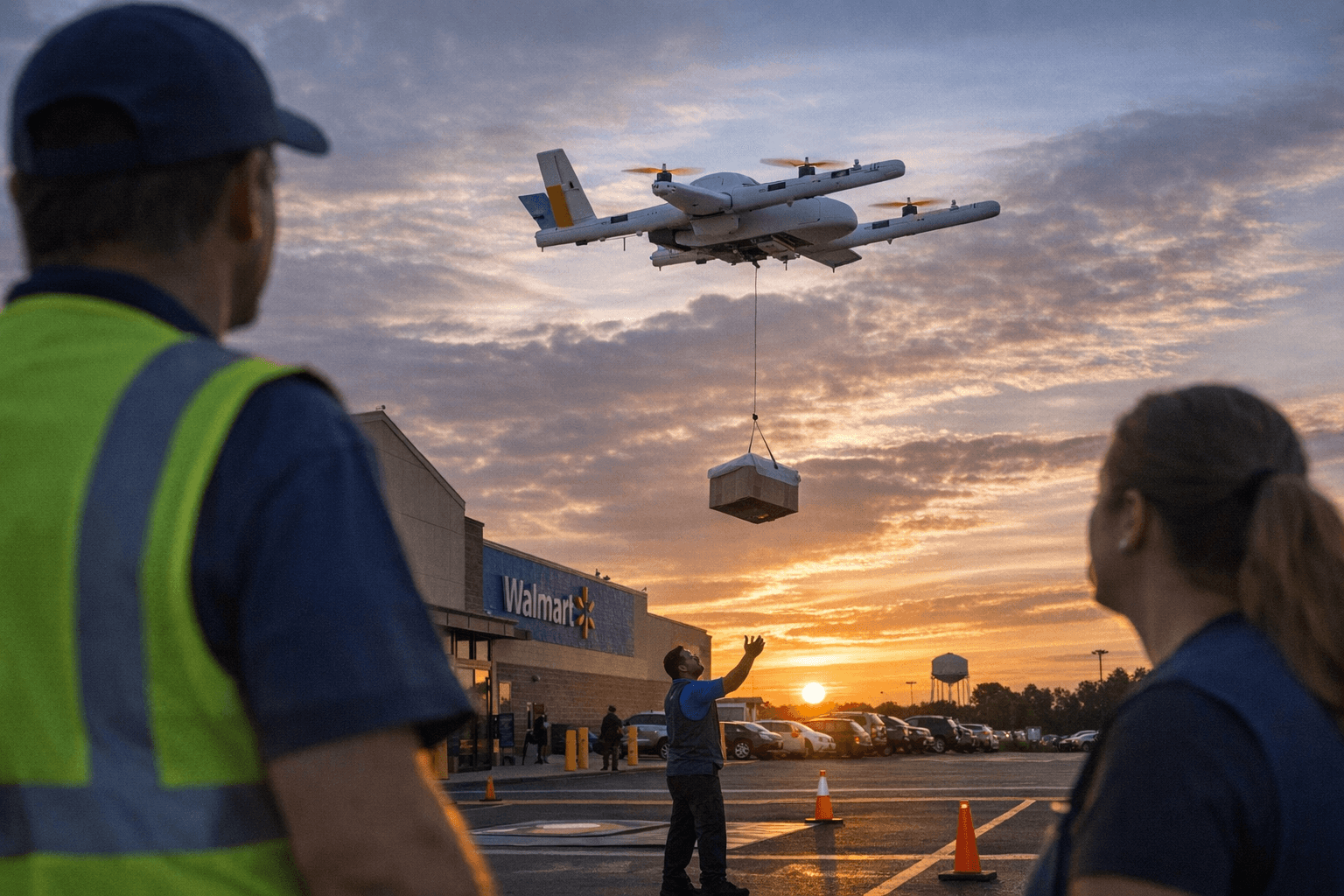
6. Store-level operational impacts: staging, packaging and timing
Drone deliveries change how orders are picked, packed and staged. Drones have size, weight and packaging constraints that can require different packing materials, labeling, and staging areas versus regular delivery or curbside pickup. Associates will likely need new checklists and may be asked to hit tighter pick/pack windows to meet short drone departure slots, which affects pace of work and daily cadence on the salesfloor and backroom.
7. Staffing, roles and training: redeployment and upskilling
Expect shifts in who does what. Some tasks traditionally tied to last-mile delivery, like bagging and staging orders, may grow, while some transporter duties could be reallocated as drone deliveries reduce certain in-vehicle delivery legs. That doesn’t automatically equal layoffs; more often, stores redeploy staff to in-store picking, omnichannel fulfillment, or customer service. Training in new tech, packaging standards and safety protocols will be key; associates who upskill could take on higher-value fulfillment or oversight roles.
8. Safety, compliance and coordination responsibilities
Drone operations require coordination with regulators, safety checks, and clearly defined handoffs for customer deliveries. Stores will play a role in ensuring items meet drone weight/size requirements, that staging areas are clear, and that teams document readiness checks. This adds a compliance layer to routine work, managers should expect additional audits, checklists and cross-functional coordination with logistics and store operations teams.
9. Customer experience and store traffic effects
Faster drone delivery can reduce some forms of traffic, fewer curbside pickups or delivery driver handoffs, but may increase foot traffic from customers trying to place drone orders or collect returns. Associates will need to explain new delivery windows and manage expectations when orders are in-flight. Stores may also set up visible pick/pack or drone staging stations, creating new touchpoints where customer questions and colleagues’ workflows intersect.
10. Labor relations and policy implications
An expansion of drone delivery raises questions around scheduling, performance metrics, and pay structures tied to fulfillment tasks. Workers and managers should watch how Walmart adjusts quotas, hourly assignments, or pay premiums for drone-related duties. Because the rollout is multi-year, there will be opportunities for local bargaining or feedback loops, store teams should document impacts on workload and staffing needs to inform policy decisions.
11. Practical advice for workers: how to prepare and adapt
Get familiar with the new packing and weight rules that apply to drone items, volunteer for pilot training, and track how drone orders flow through your store’s system so you can recommend improvements. Ask managers about cross-training paths that align with drone fulfillment tasks, those skills will be in demand. Finally, keep records of time and staffing impacts during early rollouts; those facts help your team make the case for fair schedules, staffing adjustments, or safety resources as the program scales.
Practical wisdom: treat the drone rollout like any new tool, learn the constraints, volunteer to pilot better processes, and document how it changes daily work so your store can turn a high-tech novelty into a reliable part of routine operations.
Know something we missed? Have a correction or additional information?
Submit a Tip