Walmart Scales Drone Delivery to Tens of Millions with Wing, Zipline, DroneUp
Walmart expands drone delivery to tens of millions with partners Wing, Zipline and DroneUp, reshaping store fulfillment and frontline roles.

Walmart has moved to scale residential drone delivery across the United States by expanding operations with multiple partners, a step that could reshape how stores fulfill orders and how associates spend their shifts. The company is adding new Wing-operated sites while continuing work with Zipline, DroneUp and other providers, aiming to reach tens of millions of customers as the rollout continues.
The Jan. 14 announcement laid out a multi-partner strategy that treats stores as fast fulfillment nodes for very short-range drops. The program focuses on lightweight payloads and quick deliveries of small grocery items and household essentials, prioritizing orders that fit within strict weight and size limits. That operational model is designed to speed same-day convenience orders while keeping most flights close to stores to comply with local rules and runway-free drop systems.
Walmart's approach relies on partner diversity. Different providers bring different aircraft, control systems and operational models, and Walmart plans to deploy the mix that best fits each market. Wing will expand its site footprint; Zipline and DroneUp will continue running their own operations where they already have permits and infrastructure. Using several partners allows Walmart to scale more rapidly without building a single proprietary drone network.
For store-level workers, the expansion means shifts in daily tasks and new training requirements. Associates will likely take on more picking and staging of drone orders, preparing small-parcel deliveries for rapid dispatch. The company will need technicians, safety coordinators and logistics leads to coordinate launches, maintain equipment and manage regulatory compliance. At the same time, reliance on aerial drops could reduce some traditional last-mile delivery tasks performed by contracted drivers, even as it creates new roles tied to drone operations.
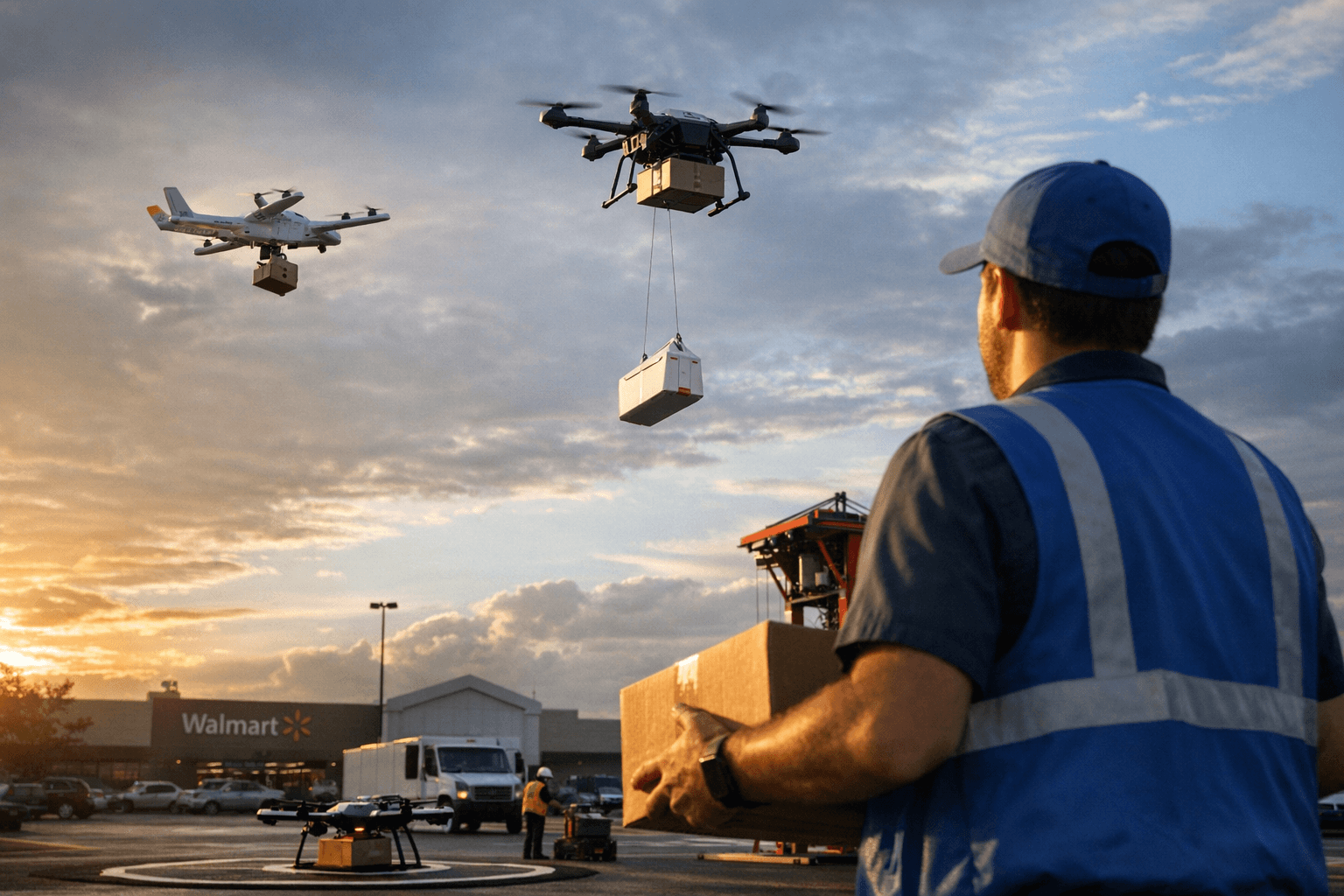
Safety, scheduling and labor-management dynamics will be central to implementation. Stores will need to integrate drone workflows into busy front-end operations, adding time-sensitive pick windows and new quality checks. Supervisors and shift planners may have to revise coverage models to ensure drones are supported during peak order periods, and training programs will be necessary to certify associates for drone-related responsibilities.
As the rollout continues, employees should expect incremental changes rather than an overnight overhaul. The program's emphasis on small, short-range deliveries means most in-store jobs will persist but evolve toward faster fulfillment and technology-enabled tasks. For frontline workers and managers, the coming months will show whether the new drone network primarily adds new career paths or simply shifts routine duties around the store.
Sources:
Know something we missed? Have a correction or additional information?
Submit a Tip