Walmart shareholders reject AI worker wellbeing report as automation expands
Walmart shareholders gave just 4.95% support to an AI worker-wellbeing report as automation spread across stores and warehouses. Workers say the costs are already showing up in injuries and burnout.

Walmart shareholders on Thursday rejected a proposal that would have required the retailer to report on how artificial intelligence is affecting worker wellbeing, offering little resistance as the company deepens automation across its vast store, logistics and delivery network. The measure, filed by United for Respect, received about 4.95% of votes cast at Walmart’s virtual annual meeting, even as nearly 89.88% of outstanding shares were represented.
The vote underscored how little outside pressure major employers face to explain the labor consequences of AI adoption, even at a company with about 1.6 million employees in the United States and 2.1 million associates globally. Walmart said shareholders were voting on 11 director nominees, three company proposals and four shareholder proposals, with the AI and automation disclosure item listed as proposal No. 8. Its board had urged investors to vote no, saying the company already discloses relevant workforce and technology information in annual reports, earnings calls, investor forums and other materials.

At the meeting, Walmart leadership cast AI as a productivity tool rather than a threat to frontline jobs. Chief Executive John Furner said the company is using AI to give associates technology and information that help them serve customers and members. Chairman Greg Penner said Walmart evaluates investments in AI and automation through the lens of return on investment.
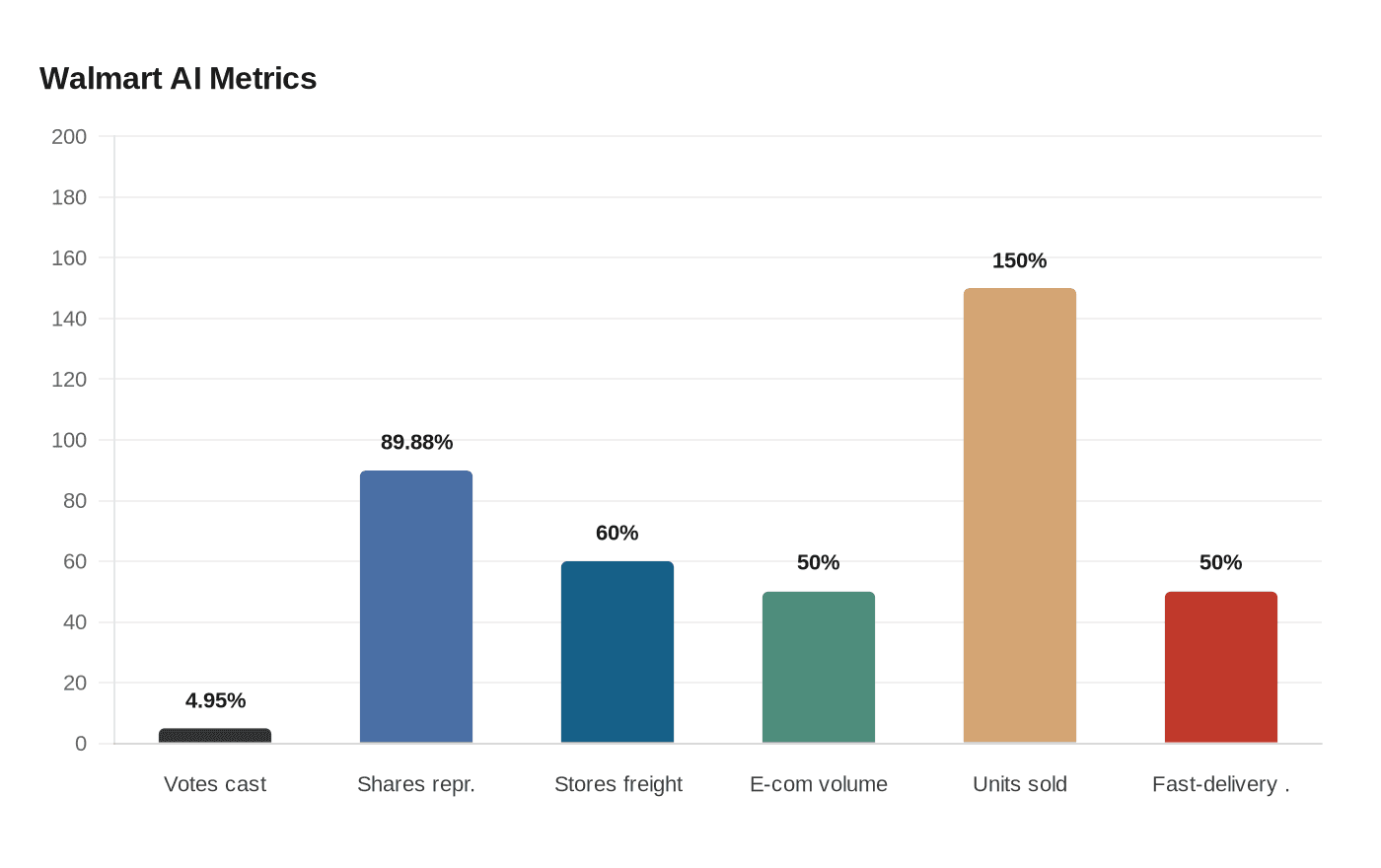
That message is landing inside a business that is rapidly automating the mechanics of retail. Walmart said more than 60% of its stores receive freight from automated distribution centers, while more than half of its e-commerce fulfillment volume is automated. The company said same-day and next-day units sold from fulfillment centers jumped 150%, and fast-delivery sales rose more than 50% year over year in the first quarter. Chief Financial Officer John David Rainey has said shipping costs have been declining in the 30% range for several quarters, a reminder of why the company is pushing so hard on speed and efficiency.
But workers and advocates say the pressure is being felt on the floor. Ava Williams, an overnight worker in Spokane, Washington, said AI-driven employee standards are contributing to injuries, burnout and high turnover, with workers pushed to meet impossible timelines and sometimes pressured to skip safety steps such as sanitizing shelves or checking for expired products. The shareholder filing also pointed to Walmart’s October 2025 rollout of an algorithmic, performance-based system for annual pay increases for hourly employees, deepening concerns about how automated systems are shaping pay, pace and accountability. For a company that describes itself as people-led and tech-powered, the vote showed investors are still willing to back automation without demanding much public accounting of its human cost.
This article was produced by Prism’s automated news system from verified source data, official records, and press releases, then run through automated quality and moderation checks before publishing. The system is built and supervised by the people who set the standards it runs under. Read our full AI policy.
Did this article answer your question?