War relic explosion injures children at Upper Austria youth hostel
Five children were hurt when a campfire in Upper Austria detonated a buried war relic, exposing how wartime ordnance still threatens civilians more than 80 years later.
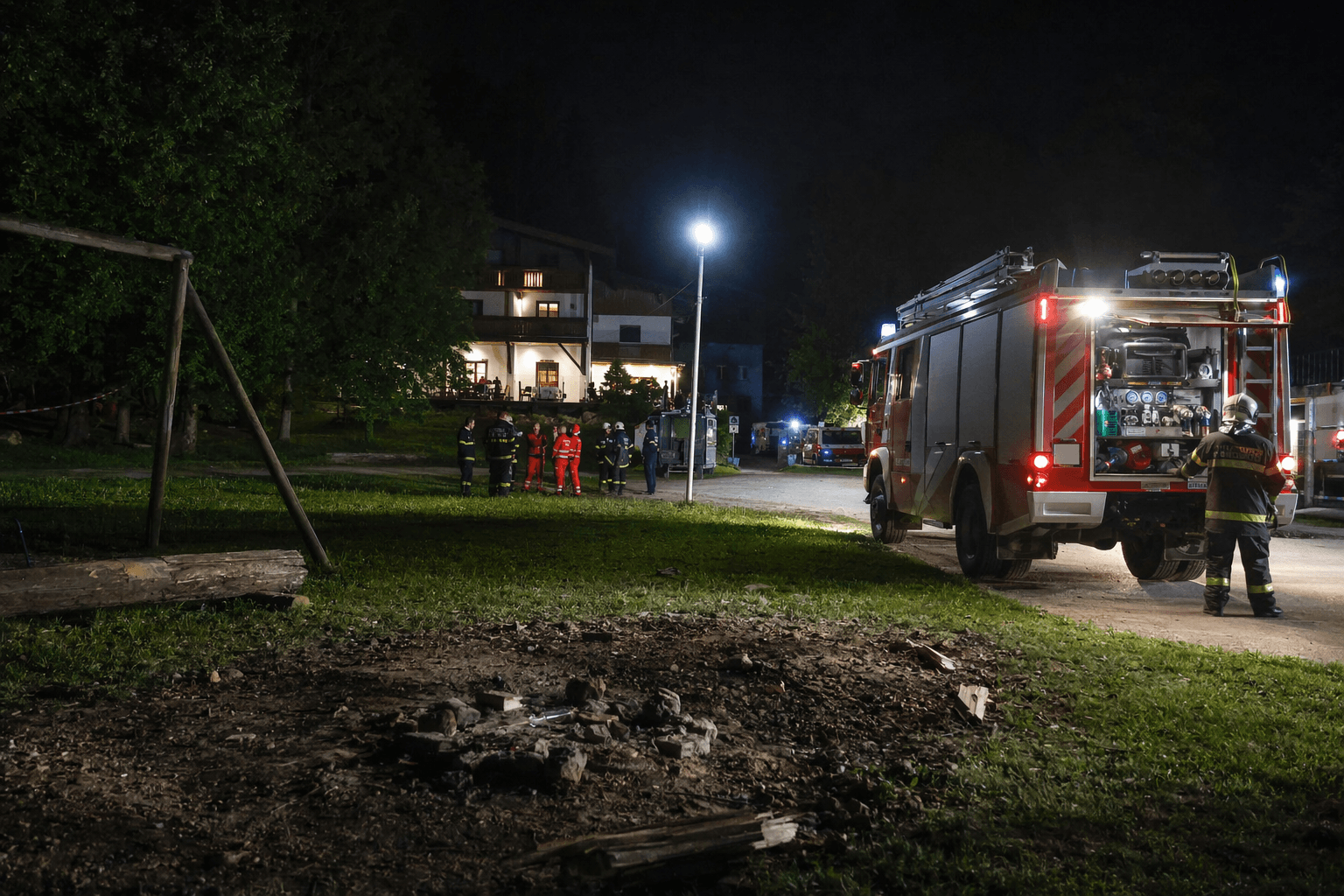
A campfire at a youth hostel in Upper Austria turned violent when a buried war relic exploded beneath the fire pit, injuring five children aged 10 to 14 and sending them to hospital. The blast happened on Saturday evening, May 2, 2026, in St. Oswald bei Freistadt in the district of Freistadt, where an organized youth group had gathered for the night.
Police said the explosive was hidden under the fire pit. Local reporting identified the group as the Guggenberg Youth Fire Department group, made up of four girls and one boy, with two adult supervisors. The fire had reportedly been burning for about an hour before a sudden deflagration ripped through the campsite.
Officers who searched the area found another explosive object in an adjacent fire pit, which they also described as a war relic. A bomb disposal unit was called in to handle it, underscoring how one blast can expose a wider hazard area that is not visible from the surface.
The incident is a sharp reminder that the aftermath of World War II still reaches into ordinary life in Austria, far from any battlefield. In Upper Austria, unexploded ordnance continues to surface regularly more than 80 years after the war ended. The Austrian Armed Forces ordnance disposal service was deployed 126 times in the state in 2024, evidence of how often authorities are still called to clear old munitions from fields, forests, construction sites and family spaces.
The scale of the problem remains significant. In the first eight months of 2025, the military’s ordnance disposal service recovered more than 17 tons of war relics in Upper Austria alone. That haul suggests a persistent burden for local authorities, who must locate, identify and safely remove aging explosives before they can injure civilians.
For the children in St. Oswald bei Freistadt, the danger appeared in the most ordinary of settings, a campfire at a youth hostel. For officials, the explosion renewed a familiar task: mapping where war still lies buried, warning the public, and sending specialists to clear the ground before the next accident occurs.
This article was produced by Prism’s automated news system from verified source data, official records, and press releases, then run through automated quality and moderation checks before publishing. The system is built and supervised by the people who set the standards it runs under. Read our full AI policy.
Did this article answer your question?


