Warsh Faces Senate Roadblock as Fed Chair Hearing Nears
A Senate hearing for Kevin Warsh opened with a fight over the Fed’s independence and a criminal probe that gave Thom Tillis leverage to stall the nomination.
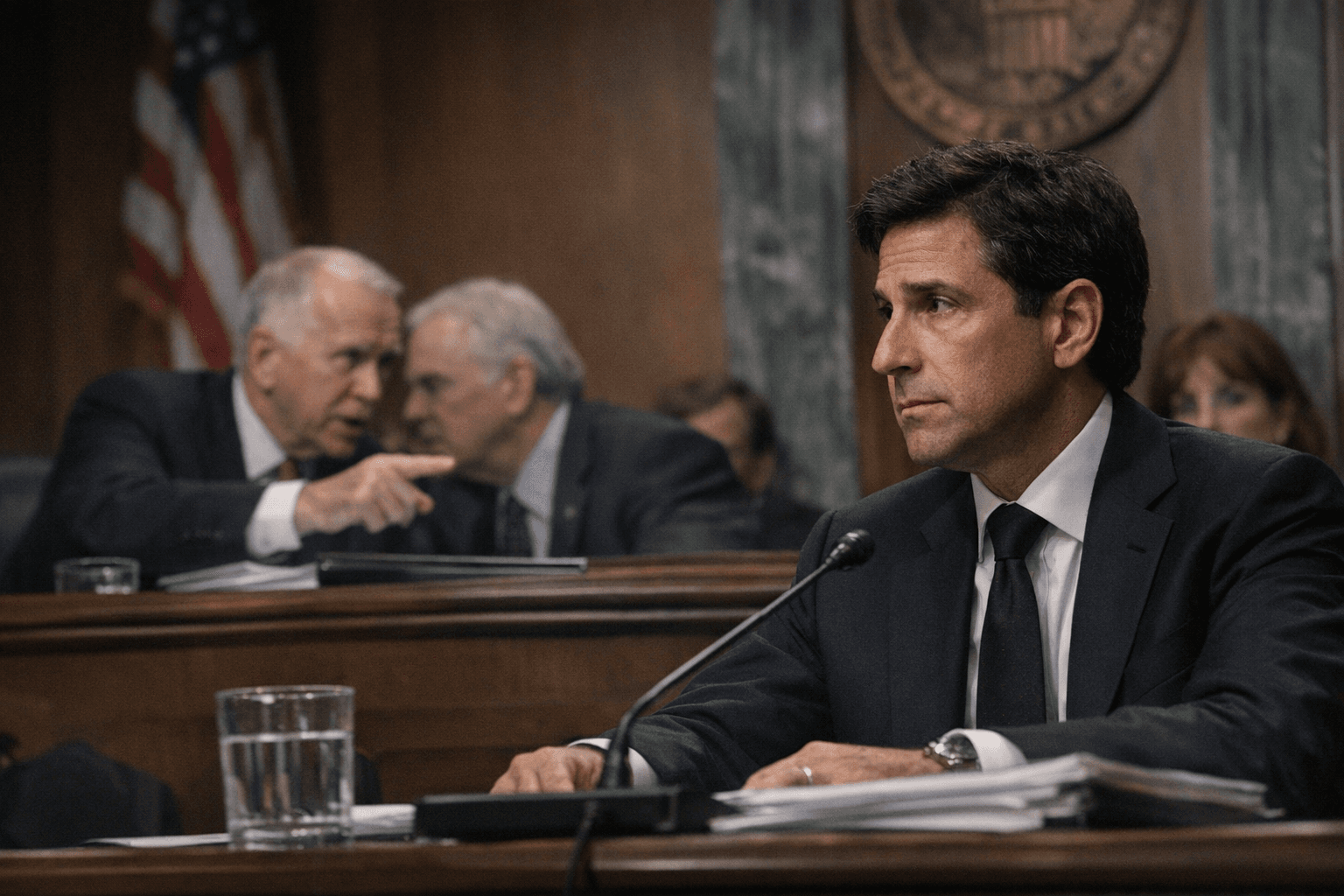
Kevin M. Warsh came to Capitol Hill with enough Republican support to become the next Federal Reserve chair, but the path was already narrowing around a legal fight that had little to do with his qualifications. The Senate Banking Committee set his confirmation hearing for Tuesday, April 21, 2026, at 10 a.m. ET, after officially announcing it on April 14, and lawmakers prepared to press him on inflation, interest rates and whether he would keep the central bank insulated from White House pressure.
That question mattered because the nomination had become entangled with a separate criminal investigation involving Jerome Powell. Sen. Thom Tillis, R-N.C., said he would block or delay any Fed nominee while that probe remained unresolved, giving the North Carolina Republican enough leverage to complicate the process even as Warsh reportedly had broad GOP backing. Powell’s term as Fed chair ends in May 2026, adding urgency to a confirmation battle that now sits at the intersection of monetary policy and partisan combat.
In prepared remarks released Monday, Warsh said he was committed to ensuring that monetary policy remained strictly independent. He also argued that the Fed should stay focused on its primary goals, a formulation that signaled he would try to reassure senators that he would not use the central bank as a political tool even as the Trump administration has pushed for lower interest rates. The hearing was expected to test whether Warsh could convince skeptical lawmakers that he would defend the Fed’s autonomy while still operating inside an administration eager for easier money.
Warsh, born in Albany, New York, and a graduate of Stanford University and Harvard Law School, was no stranger to the institution he now sought to lead. He served as a member of the Federal Reserve Board of Governors from February 24, 2006, to March 31, 2011, after working at Morgan Stanley. That history gave him credentials unusual among current Fed contenders, but it also meant senators could scrutinize how his past experience lined up with the very different political environment now surrounding the central bank.
Financial disclosure filings added another layer of scrutiny. The new documents showed Warsh held assets worth well over $100 million, a level that could make him the wealthiest Fed chair in history if confirmed. He also pledged to divest some assets if he wins Senate approval, a step designed to ease ethics concerns but unlikely to end the broader fight over who should control the direction of U.S. monetary policy at a moment of legal turmoil around the Fed.
Know something we missed? Have a correction or additional information?
Submit a Tip