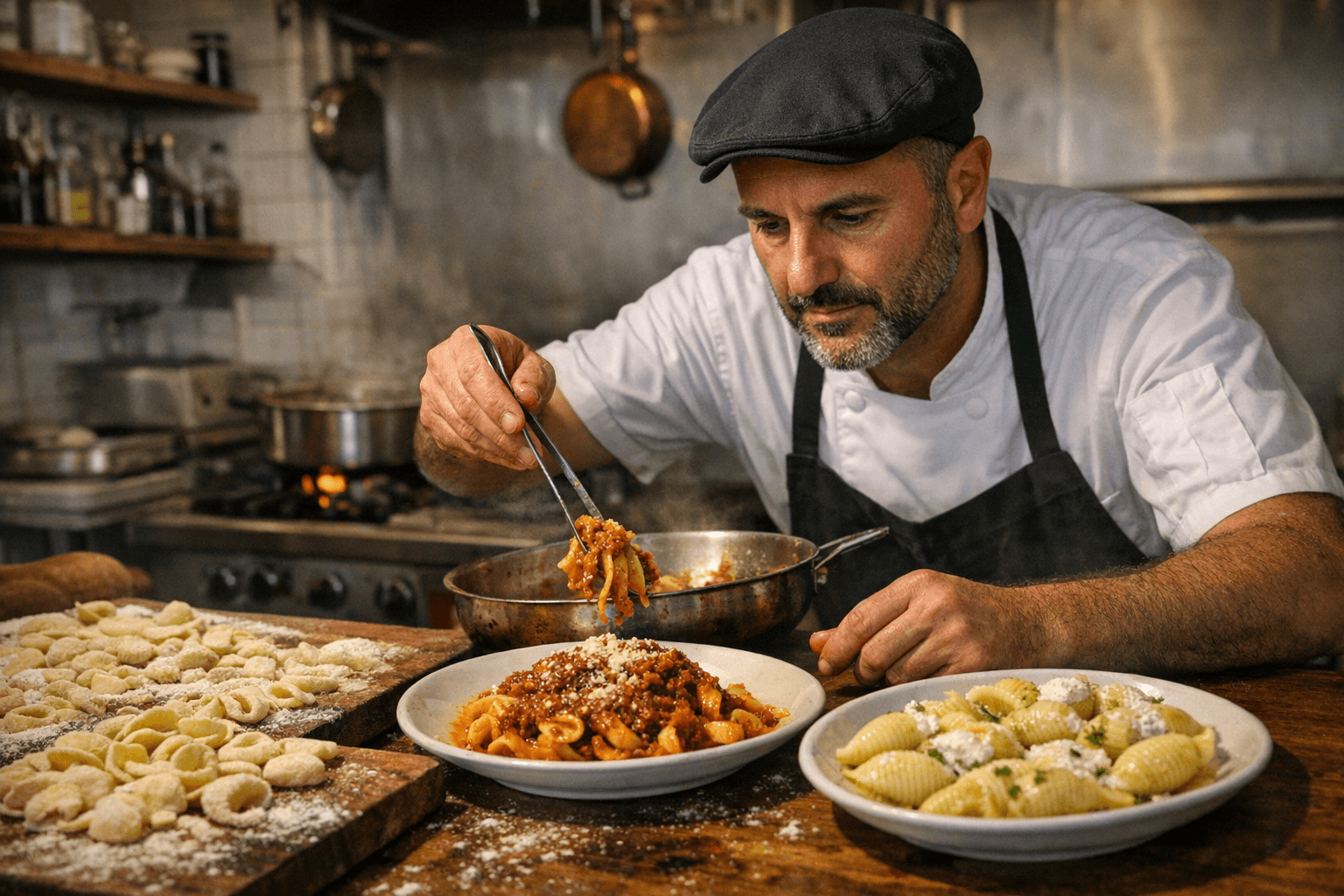
Weeknight Fresh Pasta: Step-by-Step Guide to Dough, Shapes, Storage
Learn quick, practical methods to make fresh pasta dough, shape common cuts like tagliatelle and ravioli, and store or freeze for easy weeknight dinners.
1. Dough
Fresh pasta starts with a simple, reliable dough: a typical hobbyist ratio is roughly 100 g flour to 1 large egg for about two servings, which scales easily. To make it by hand, mound your flour on the work surface, make a well, crack the eggs into the center, then use a fork to gradually incorporate flour until a shaggy dough forms; knead for 8–10 minutes until smooth and elastic. If you use a mixer, combine flour and eggs in the bowl and mix with the dough hook at low speed until the dough comes together, then knead a few minutes more, the machine shortens hands-on time but watch texture closely. Rest the dough, wrapped or under a bowl, for at least 20–30 minutes so the gluten relaxes; this makes rolling and shaping far easier and prevents tearing.
- Flour choices: 00 flour gives silkier texture and rolls super-thin, while all-purpose is forgiving and widely available; sprinkle in semolina for a bit of bite or when making shapes that need more grip.
- Hydration fixes: if dough is sticky, knead in small amounts of flour; if it’s dry and crumbly, add teaspoon-sized amounts of water or an extra yolk.
- Troubleshooting overworking: if you feel the dough getting gummy or tough, let it rest longer, resting relaxes overworked gluten and saves the batch.
2. Shapes
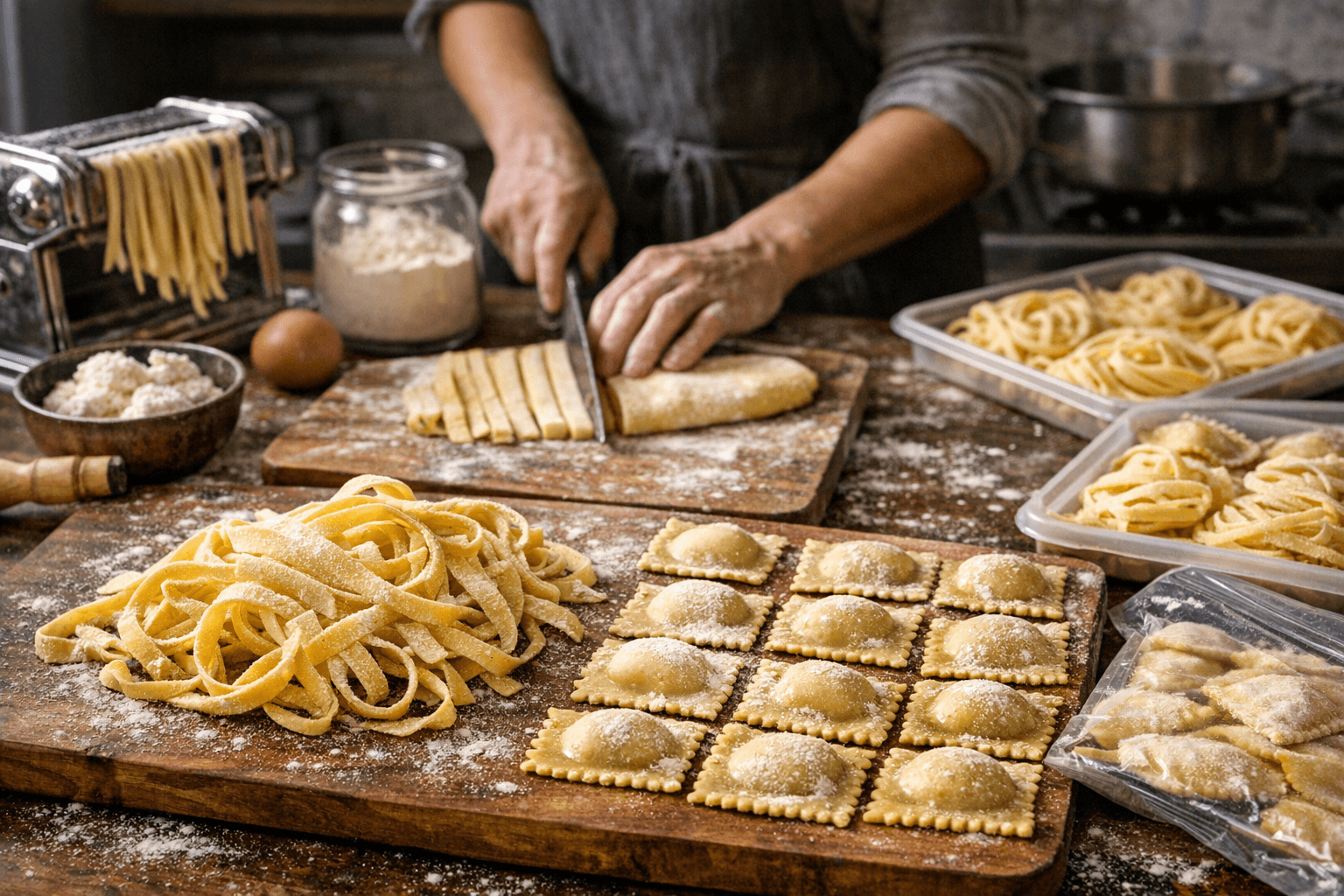
Once rested, a handful of straightforward shapes will cover most weeknight menus: ribbons (tagliatelle, pappardelle) and filled pasta (ravioli) are the most practical. Divide your dough into manageable pieces, flatten them, and either roll by machine or with a rolling pin: pass sheets through the thinner settings until the sheet is thin but still strong; if rolling by hand, work from the center outward and rotate often to keep an even thickness. For ribbons, dust sheets lightly with flour, roll into a loose cylinder and slice to the desired width, tagliatelle are narrower ribbons, pappardelle wider; unroll and hang or lay flat to dry slightly before cooking. For ravioli, cut sheets to size, place small mounds of filling spaced evenly, brush edges lightly with water or an egg wash, then sandwich with another sheet and press out air; use a cutter or knife to seal and trim.
- Rolling machine tips: feed each piece through progressively thinner settings; a smooth, steady motion prevents stretching and tearing.
- Filling basics: keep fillings moderately dry, a damp spoonful is fine, but watery filling will leak during sealing and cooking.
- Timing: work in batches so fresh shapes don’t stick together; a dusting of semolina or flour prevents clumping and adds texture.
3. Storage and cooking
Fresh pasta cooks far faster than dried, often 1–3 minutes for thin sheets or ribbons, a bit longer for thicker cuts and filled pasta; always taste-test for doneness rather than strictly timing. To refrigerate, toss lightly with semolina or flour, place in a shallow container or on a tray, and use within 1–2 days for best texture; for longer storage, freeze. Freeze pasta on a tray in a single layer until solid, then transfer to airtight bags or containers, this tray-freeze-then-bag method prevents clumping and makes portioning easy for weeknight meals. When cooking from frozen, add a minute or two to fresh pasta cook times and avoid thawing in water first.
- Freezing tip: label bags with date and type so you can rotate batches; frozen fresh pasta generally keeps well for a few months.
- Sauce pairing: lighter sauces suit delicate ribbons; robust ragùs and butter-sage pair well with wider noodles or stuffed shapes.
- Reheat idea: for stuffed pasta from the freezer, simmer gently in simmering (not rolling) water until heated through to avoid bursting.
Practical, community-minded wisdom: making fresh pasta on a weeknight is about limits and tricks, keep recipes small, lean on semolina for handling, and freeze portions for future dinners. Once you nail the dough-rest-roll routine, you’ll save time and impress neighbors with flavor that beats the boxed stuff; noodle around with widths and fillings until you find your go-to combo.
Know something we missed? Have a correction or additional information?
Submit a Tip