Welsh childcare costs for under-twos hit highest in Great Britain
Welsh parents are facing the highest under-two nursery costs in Great Britain, with a part-time place averaging £166.33 a week and rising fast.

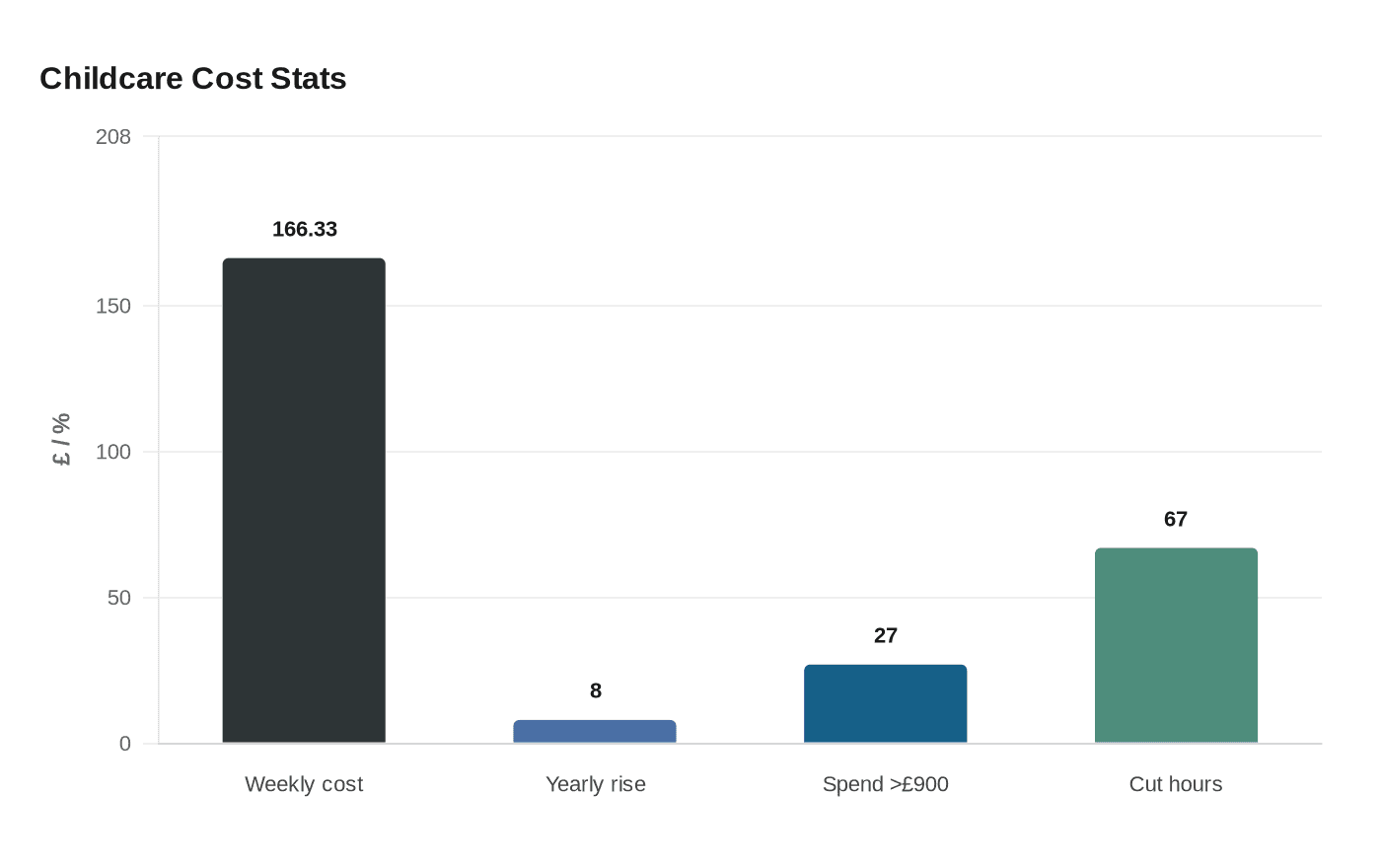
Childcare bills are now big enough in Wales to decide whether one parent stays in work. For babies and toddlers under two, the average part-time nursery place reached £166.33 a week, the highest in Great Britain, and families faced an 8% rise over the past year.
Coram Family and Childcare said the figure marked the first time Wales had overtaken England for this age group. Its 25th annual childcare survey, based on local-authority returns collected between October and December 2025, showed a widening split across Britain: costs for under-twos in England fell sharply after the full rollout of funded hours, while prices in Scotland and Wales kept climbing.

That gap has sharpened a political argument in Wales about whether childcare should be treated as part of the cost of living rather than a lifestyle choice. The Welsh Government’s Childcare Offer gives eligible working parents of three- and four-year-olds up to 30 hours a week of combined nursery education and childcare, usually for up to 48 weeks a year. But campaigners say there is still no equivalent universal support for children under three, leaving families with infants and young toddlers exposed to some of the steepest bills.
Some help is available through Flying Start in limited parts of Wales for some two-year-olds, but parents and campaigners have long described that system as a postcode lottery. The pressure is felt in household budgets as well as work decisions. Earlier research by Oxfam Cymru and the Make Care Fair coalition found that 27% of more than 300 parents surveyed were spending more than £900 a month on childcare, 43% had struggled to pay other essential bills after childcare costs, and 67% had reduced their working hours because of it.

The issue has moved to the centre of the Senedd election campaign. Nesta said all major Welsh parties had pledged to extend funded childcare to children as young as nine months, including Plaid Cymru, Welsh Labour, the Liberal Democrats, the Welsh Conservatives and the Green Party, though they differ on how quickly to do it and what the policy should be for. Nesta said the first 1,000 days of a child’s life had moved to the heart of Welsh politics, but warned that the real challenge now was finding the workforce and funding to deliver promises on the ground.
For families already weighing rent, food and energy bills, the childcare squeeze is becoming a calculation about work, income and family size. In Wales, the price of nursery care for the youngest children has turned that calculation into a national test of whether policy can keep pace with real life.
This article was produced by Prism’s automated news system from verified source data, official records, and press releases, then run through automated quality and moderation checks before publishing. The system is built and supervised by the people who set the standards it runs under. Read our full AI policy.
Did this article answer your question?

