West Virginia Jail Officer Pleads Guilty to Conspiracy Against Inmates' Civil Rights
A West Virginia jail officer admitted conspiring with colleagues to beat inmates as punishment, the latest federal civil rights case targeting the Southern Regional Jail's entrenched culture of violence.
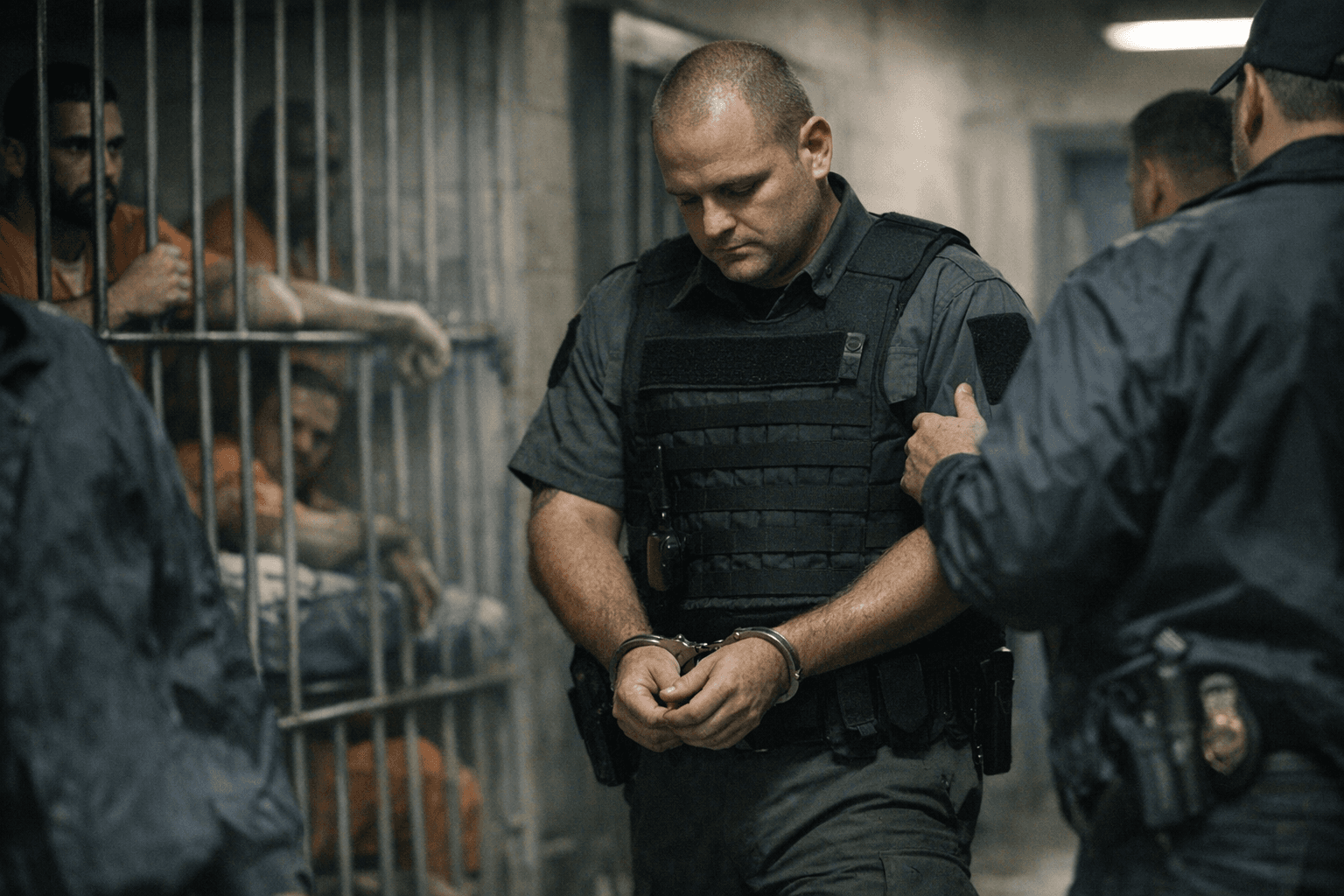
Michael Pack, 39, of Beckley, entered a guilty plea in federal court on March 30 to one count of conspiracy to violate inmates' civil rights, admitting that he and fellow officers at the Southern Regional Jail in Beaver routinely "would strike, assault, and harm inmates they believed or perceived to have engaged in misconduct." Many of those inmates had not been convicted of any crime. The Justice Department announced the plea on April 1, 2026. Pack now faces up to five years in federal prison at a sentencing hearing yet to be scheduled.
Federal prosecutors charged Pack under 18 U.S.C. § 371, the general federal conspiracy statute, which requires proof of a mutual agreement between two or more people and at least one overt act in furtherance of it. Charging conspiracy rather than the underlying assault is a deliberate prosecutorial choice: it reaches everyone who agreed to participate in a pattern of abuse, not merely the officer who delivered a particular blow. The U.S. Attorney's Office for the Southern District of West Virginia has now deployed that tool repeatedly against officers from the same facility.
Pack's plea is the most recent in a series of federal prosecutions rooted in a documented institutional culture at the Southern Regional Jail. The facility became the subject of an extended federal investigation following the March 1, 2022 death of pretrial detainee Quantez Burks, identified in court documents by the initials Q.B. Officers had deliberately exploited rooms without surveillance cameras, known internally as "blind spots," to assault inmates as punishment, shielded from any recording. Burks died the day after his booking. By the time federal sentencing concluded in those related cases, former officer Corey Snyder had received 19 years and 7 months in prison, former officer Andrew Fleshman 8 years and 4 months, and former Lieutenant Chad Lester was convicted at trial on three obstruction of justice charges for conspiring to cover up the death. Multiple officers knew which rooms lacked camera coverage and specifically directed detainees there.
That detail about physical architecture carries direct policy implications. When coordination against inmates depends on identifying camera-free zones, the structural remedy is unambiguous: comprehensive coverage with no blind spots, paired with independent review of footage that corrections staff cannot delete or access unilaterally. The Justice Department's Civil Rights Division holds one of the most powerful tools for forcing those changes at recalcitrant facilities: consent decrees that impose binding requirements on use-of-force protocols, physical surveillance, staffing ratios, and grievance intake systems. Without external mandates, internal cultures of abuse can persist through staff turnover and even individual prosecutions.
What the string of Southern Regional Jail cases demonstrates is that conspiracy charges function as an accountability mechanism precisely because they expose the chain of agreement: who decided, who participated, who kept quiet, and who actively lied to investigators. Lester's obstruction conviction showed that a supervisor's cover story is itself a chargeable act. Pack's plea adds another node to that chain, signaling that federal prosecutors continue to investigate beyond the officers already sentenced.
For the pretrial detainees assaulted at the Southern Regional Jail, people the law presumes innocent, the accumulating weight of federal prosecution provides accountability that the facility's own reporting structures were designed to suppress. Whether it produces lasting reform depends on what structural requirements follow the courtroom verdicts.
This article was produced by Prism’s automated news system from verified source data, official records, and press releases, then run through automated quality and moderation checks before publishing. The system is built and supervised by the people who set the standards it runs under. Read our full AI policy.
Did this article answer your question?

