What continuous glucose monitors still miss, despite real-time tracking
CGMs can reveal patterns fast, but they still lag, miss data, and can mislead healthy users who treat every reading as truth.
The promise and the limit
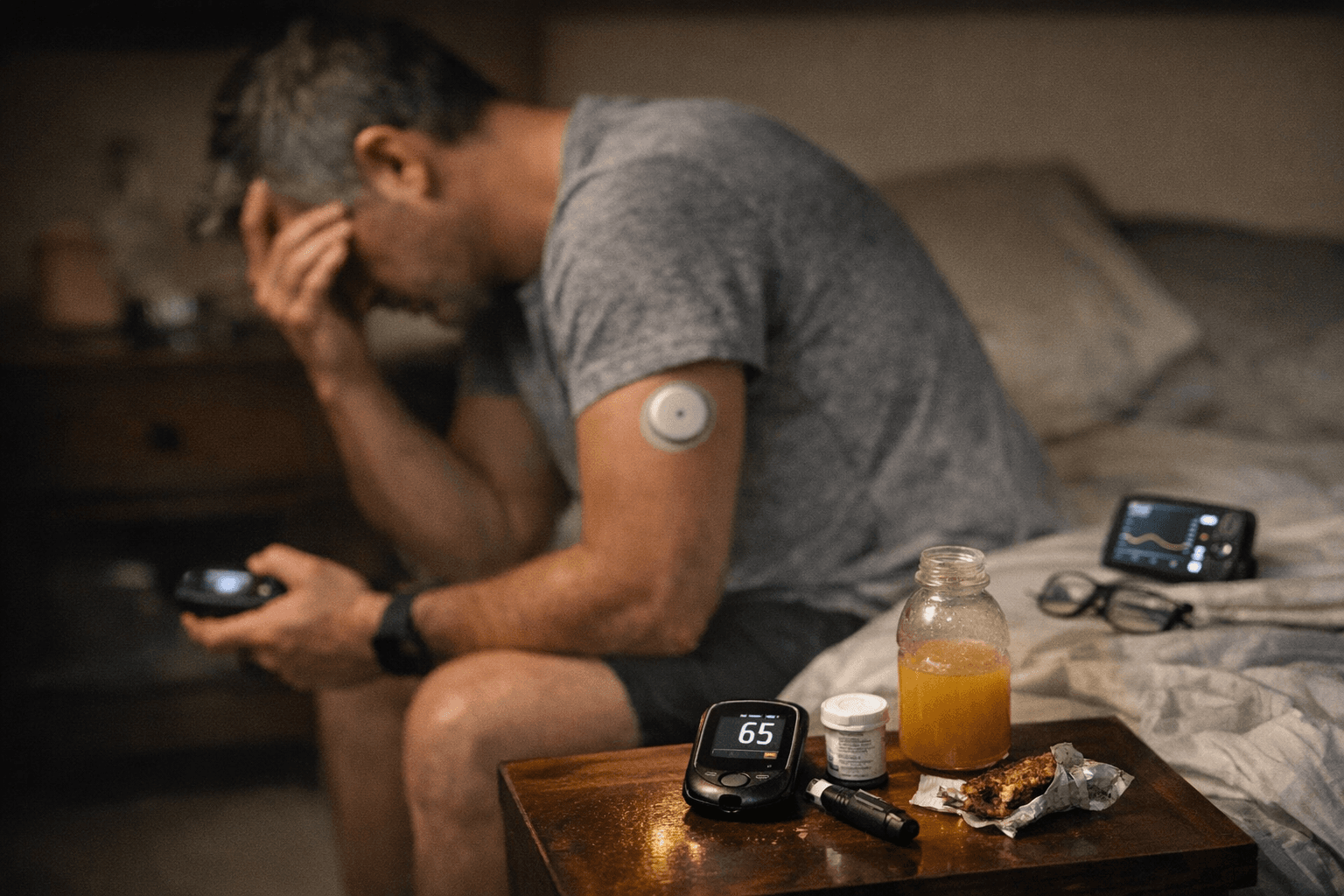
Continuous glucose monitors have become one of the clearest symbols of the consumer health wearable boom: always-on, app-connected, and deeply persuasive because they turn the body into a live dashboard. But the core problem is simple. A CGM does not measure blood directly; it measures glucose in interstitial fluid under the skin, and that creates a delay that becomes most visible when glucose is changing quickly, such as after meals or during exercise.
That gap between expectation and physiology is where many users get tripped up. A real-time number looks definitive, yet it is still a proxy, not a direct blood test. For people with diabetes, that distinction can be manageable and medically useful. For healthy users trying to optimize sleep, diet, or energy, it can create a false sense that every spike or dip carries a clear prescription for action.
Why the lag matters
The lag in CGM readings is not a niche technical footnote; it is a longstanding issue in the field. Peer-reviewed research has documented that readings can trail blood glucose, especially during rapid shifts, which means the device may be catching up to the body rather than fully describing it in the moment.
That matters because interpretation changes when the body is moving quickly. After a meal, a CGM may still be showing a lower reading while blood glucose is already rising. During exercise, the reverse can happen. If the user assumes the sensor is always the most current truth, the device can encourage unnecessary corrections, extra snacking, or anxiety about normal fluctuations.
What CGMs do well in diabetes care
For people with diabetes, CGMs have earned their place because they improve visibility and can support better day-to-day management. The Centers for Disease Control and Prevention says CGMs can help people with diabetes more effectively and easily manage blood sugar, but users still need blood sugar meter checks to help confirm accuracy.
Their clinical role has expanded sharply. The American Diabetes Association’s Standards of Care in Diabetes-2025 say diabetes technology now includes automated insulin delivery systems that use CGM-informed algorithms to adjust insulin delivery. That is a major marker of medical trust: CGMs are no longer peripheral gadgets, but a central input in modern diabetes treatment.
The market reflects that shift. Dexcom G7 is a prescription device intended to continuously measure glucose in interstitial fluid, while Abbott Diabetes Care’s Libre Rio is an over-the-counter CGM intended for home use. The move from prescription-only tools toward broader consumer access shows how quickly the category is spreading beyond specialist care.
Where healthy users are most vulnerable
The biggest risk for people without diabetes is not that CGMs are useless. It is that they are easy to overinterpret. A constant stream of numbers can look like a behavioral scorecard, tempting users to turn every reading into a judgment about food, stress, or personal discipline.
That is the point highlighted by the broader debate around consumer wearables. CGMs are increasingly marketed and discussed not just as medical devices, but as wellness and behavior-change tools. Yet more data does not automatically produce better decisions. In some cases, it produces more self-monitoring without more understanding, which can amplify confusion and unnecessary worry rather than improve health.
This is where the gap between consumer expectations and medical reality becomes most important. Healthy users often expect a device to reveal hidden truth in a way that is immediate and actionable. In practice, the device is better at showing patterns over time than at explaining what a single reading means in isolation.
The known sources of error
CGMs are also vulnerable to device-specific interferences. FDA materials say more than a standard acetaminophen dose can falsely raise Dexcom G7 readings, and hydroxyurea can do the same. For Libre Rio, taking more than 1000 mg of vitamin C per day may falsely raise readings.
Those details matter because they show that a number on a screen can be affected by chemistry, not just physiology. A person may think they are seeing a meaningful glucose change when the reading is partly driven by a medication or supplement. That is one reason meter checks remain important, especially when symptoms and sensor readings do not line up.
The FDA also issued a 2025 correction saying Dexcom G7 and ONE+ app sensor failures could stop reporting values without alerting the user. That creates extended periods of missed glucose data, which can delay treatment of hypoglycemia or hyperglycemia. In other words, the danger is not only inaccurate data; it is also missing data that leaves users thinking they are continuously monitored when they are not.
Why missing data changes the picture
A 2024 peer-reviewed study found that missing CGM data can influence clinical decision-making. That finding pushes the discussion beyond convenience and into real medical consequences. If data loss changes how clinicians interpret glucose patterns, then gaps in sensor coverage are not just annoying interruptions. They can distort the whole picture of glycemic control.
For users, the lesson is straightforward: a device that promises continuity still depends on the continuity actually being there. When data are missing, the story the graph tells may be cleaner than the body’s reality. That is especially dangerous for users who treat short-term traces as proof of a trend or a trigger.
How to use the data without being ruled by it
The most useful way to think about CGMs is as pattern tools, not verdict machines. They are strongest when paired with context: symptoms, meals, exercise, medications, and occasional confirmatory finger-stick checks. The CDC’s advice to use meter checks for accuracy is not a sign of failure; it is recognition that CGMs work best as part of a broader decision system.
- Look for repeated patterns, not one-off readings.
- Compare sensor numbers with how you actually feel.
- Be alert to known interferences such as acetaminophen, hydroxyurea, and high vitamin C intake.
- Treat missing data as meaningful, not harmless.
- Use the device to support decisions, not to replace judgment.
A disciplined approach keeps the data in proportion:
That is the central tension in the CGM boom. The technology is real, useful, and increasingly embedded in diabetes care. But outside that setting, the promise of total self-knowledge can outrun what the device can actually tell you. The future of wearables will not be determined by how much data they collect, but by whether users and clinicians can separate signal from noise.
This article was produced by Prism’s automated news system from verified source data, official records, and press releases, then run through automated quality and moderation checks before publishing. The system is built and supervised by the people who set the standards it runs under. Read our full AI policy.
Did this article answer your question?


