What the President Left Out of His Primetime Address
Trump's 19-minute Iran war address promised victory "very shortly" but left unanswered every question that matters most: end state, ground troops, civilian deaths, and congressional authority.
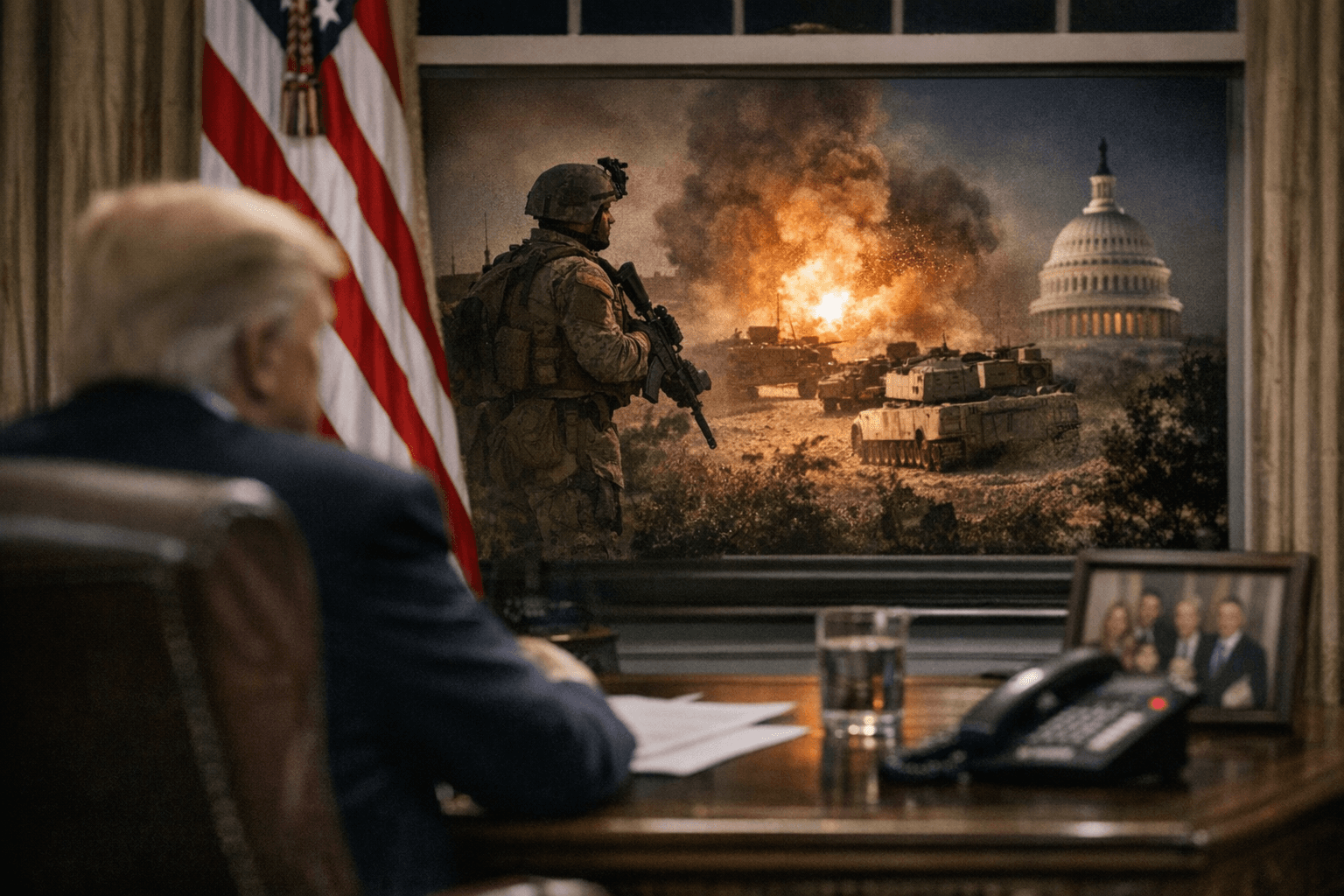
Five weeks into a war he once promised would last days, President Donald Trump stepped before Cabinet members and cameras in the White House Cross Hall on Wednesday night and delivered a 19-minute address that raised nearly as many urgent questions as it resolved.
Trump promised a swift end to the war in Iran during the speech but did not describe what military objectives his administration is pursuing, nor what it wants from the Iranian government. The silence on those core questions is not incidental. Each unanswered item carries direct consequences for U.S. troops already in the field, for rattled allies, and for markets that sold off in real time as he spoke.
The most glaring omission was any mention of ground forces. "The president did not say anything about ground troops," one analyst noted. "Nothing. Didn't rule it out, didn't rule it in." That ambiguity matters because, in near-daily briefings with top military officials at the White House, Trump has reviewed options that include sending American troops into Iran, a decision that for many of his own allies in Washington would mean the swift end of their public support for the war. He also said nothing about the thousands of additional U.S. troops deployed to the Middle East this week, a deployment that went unacknowledged in the address.
Trump glossed over what Mark Cancian, a senior adviser at the Center for Strategic and International Studies and a retired Marine Corps officer, called a glaring shortcoming in the war effort: Iran's de facto closure of the Strait of Hormuz, a global chokepoint for the world's oil and gas supply. Trump's own position during the speech was blunt: "The United States imports almost no oil through the Hormuz Strait and won't be taking any in the future. We don't need it." Markets registered what that framing meant for allies who do. S&P 500 futures slid 0.75 percent, Nasdaq futures sold off by 1 percent, and Dow futures dropped more than 310 points as he spoke. Oil prices shot higher, with U.S. crude rising from around $98 to nearly $104 a barrel, and Brent soaring from $99 to $106. The moves in oil prices will directly translate into higher gas prices, which have already climbed from an average of $2.46 per gallon before the war began on February 28 to more than $4 today.
The civilian toll of Operation Epic Fury also went unaddressed. More than 4,800 people have been killed in the conflict, most of them in Iran, where more than 3,400 deaths have been recorded. Iran's foreign minister has said the dead include "hundreds" of civilians and more than 200 children. Trump made no reference to those figures.
On the legal foundation for the war, there was similarly nothing. In a primetime address, the president listed no military objectives and did not articulate what the U.S. wants from Tehran. Congressional authorization under the War Powers Act was never raised.
The address also stripped out any mention of ongoing diplomacy. Trump has said repeatedly that U.S. officials are in discussions with Iranian counterparts, yet the speech made no mention of the two main potential routes to ending the war: conducting negotiations or sending in ground troops.
The timeline itself has shifted dramatically. Trump initially told British Prime Minister Keir Starmer that "the war is going to be over in three days." He now says it could last another two to three weeks, "with or without a deal," though it was unclear what that meant in practice. Even that revised estimate is conditioned on variables the president left entirely undefined Wednesday night.
Iranian parliamentary security official Ebrahim Azizi warned that the Strait of Hormuz will reopen "but not for you," a statement that casts direct doubt on Trump's framing that the U.S. can walk away from the war and leave the strait situation to resolve itself. British Prime Minister Keir Starmer announced that the U.K. foreign secretary would host counterparts from nearly three dozen countries this week to coordinate strategies for keeping the waterway open, a coalition effort the White House has largely declined to lead.
For U.S. commanders managing an active air campaign, the absence of defined success metrics leaves open the question of when "nearing completion" actually means complete. For NATO allies already alarmed by Trump's threat to pull the U.S. from the alliance, the 19-minute address offered no reassurance. And for oil markets, the next 72 hours hinge on a question the president chose not to answer: what exactly does it take to end this war?
This article was produced by Prism’s automated news system from verified source data, official records, and press releases, then run through automated quality and moderation checks before publishing. The system is built and supervised by the people who set the standards it runs under. Read our full AI policy.
Did this article answer your question?

