What to know before buying a handheld mini fan this summer
A mini fan pays off when it matches a real heat problem, not just a summer impulse. Battery safety, runtime and use case matter more than brand hype.
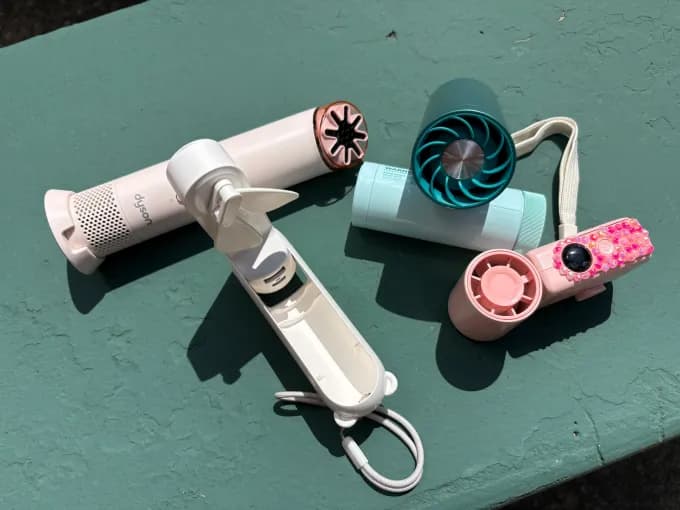
On a packed commute, a travel day or a brief outage, a handheld fan can offer useful relief. A weak one is just another rechargeable gadget with weak airflow and a lithium-ion battery that deserves a closer look.
What these fans do well, and where they fall short
Mini fans are at their best when you need targeted cooling, not room-wide air circulation. That is why shoppers keep looking at them during hotter weather and summer travel, when a few inches of moving air can make a train platform, airport gate or car line feel more manageable. The market now stretches from premium offerings to cheaper handhelds sold alongside ordinary impulse buys, but the real question is whether you need portability or power.
Recent testing shows how different those needs are. In Wirecutter’s 2026 cordless-fan roundup, the Shark FlexBreeze Outdoor & Indoor Fan was the top pick, with the Faraday Oscillating Standing Fan as runner-up. The DeWalt 20V Max Jobsite Fan DCE512B was the pick for rugged conditions, and the Abode Gale Cordless Cooling Fan for travel.
How reviewers measure value
The most useful tests focus on real-world comfort, not just whether a fan spins fast. TODAY’s 2026 handheld-fan roundup evaluated cooling power, noise level, portability and ease of use, while Travel + Leisure tested 20 portable fans to find options for travel. Wirecutter’s cordless-fan coverage also weighed battery life and charging time, the two specs that usually decide whether a fan feels practical or frustrating.
A fan that is quiet enough for a crowded train but dies before the ride ends is not a bargain, even if the sticker price is low. The simplest way to judge cost per hour of cooling is to compare what you pay with how long the fan realistically runs in your routine, whether that is a commute, a lunch break or a power outage. Battery life, recharge time and noise all shape that calculation as much as airflow does.
If you are buying for a specific use case, the category matters more than the brand name on the box:
- For commuting, look for low noise, compact size and simple controls.
- For travel, prioritize light weight and a battery that lasts through delays and layovers.
- For outages, runtime and charging time matter more than gimmicks.
- For outdoor work or rough conditions, rugged designs like the DeWalt jobsite fan make more sense than tiny pocket models.
Battery safety is not an afterthought
Rechargeable fans are only as safe as their batteries and charging hardware. The U.S. Consumer Product Safety Commission recalled about 9,780 rechargeable handheld fans sold by Rite Aid in 2021 because the lithium-ion battery could overheat while charging and pose a fire hazard. Rite Aid recalled about 9,700 of those fans from stores in April to June that year.
In 2025, the CPSC recalled IcyBreeze portable misting fans because of a fire hazard. In 2026, Merkury Innovations Hot + Cool Heating and Cooling Fans were recalled after reports of fires, and the products had been sold nationwide at TJ Maxx, Marshalls and Sierra stores.
A few checks are worth making before you charge one at home:
- Read the charging instructions and use the recommended cable or adapter.
- Inspect the battery compartment and casing for damage before first use.
- Look up the exact model name, not just the brand.
- Be wary of fans with no clear safety documentation or unclear seller information.
When a mini fan is a smart buy
A handheld fan makes the most sense when it solves a specific problem at a lower cost than a bigger cooling setup. If you mainly need relief for short periods, the convenience can be worth it. If you want to cool a whole room for hours, a handheld model will usually disappoint, and a sturdier cordless or standing fan may deliver better value.
Cooling power, noise, portability, battery life and charging time are the main checks, and the right fan depends on the use case. The Shark FlexBreeze, the Faraday Oscillating Standing Fan, the DeWalt jobsite model and the Abode travel pick each solve a different problem.
This article was produced by Prism’s automated news system from verified source data, official records, and press releases, then run through automated quality and moderation checks before publishing. The system is built and supervised by the people who set the standards it runs under. Read our full AI policy.
Did this article answer your question?