White House aide warned CBS to air Trump interview unedited or face lawsuit
Leaked audio captures a warning from the White House that a taped Trump interview must run in full or face legal action, raising concerns about press independence and public trust.
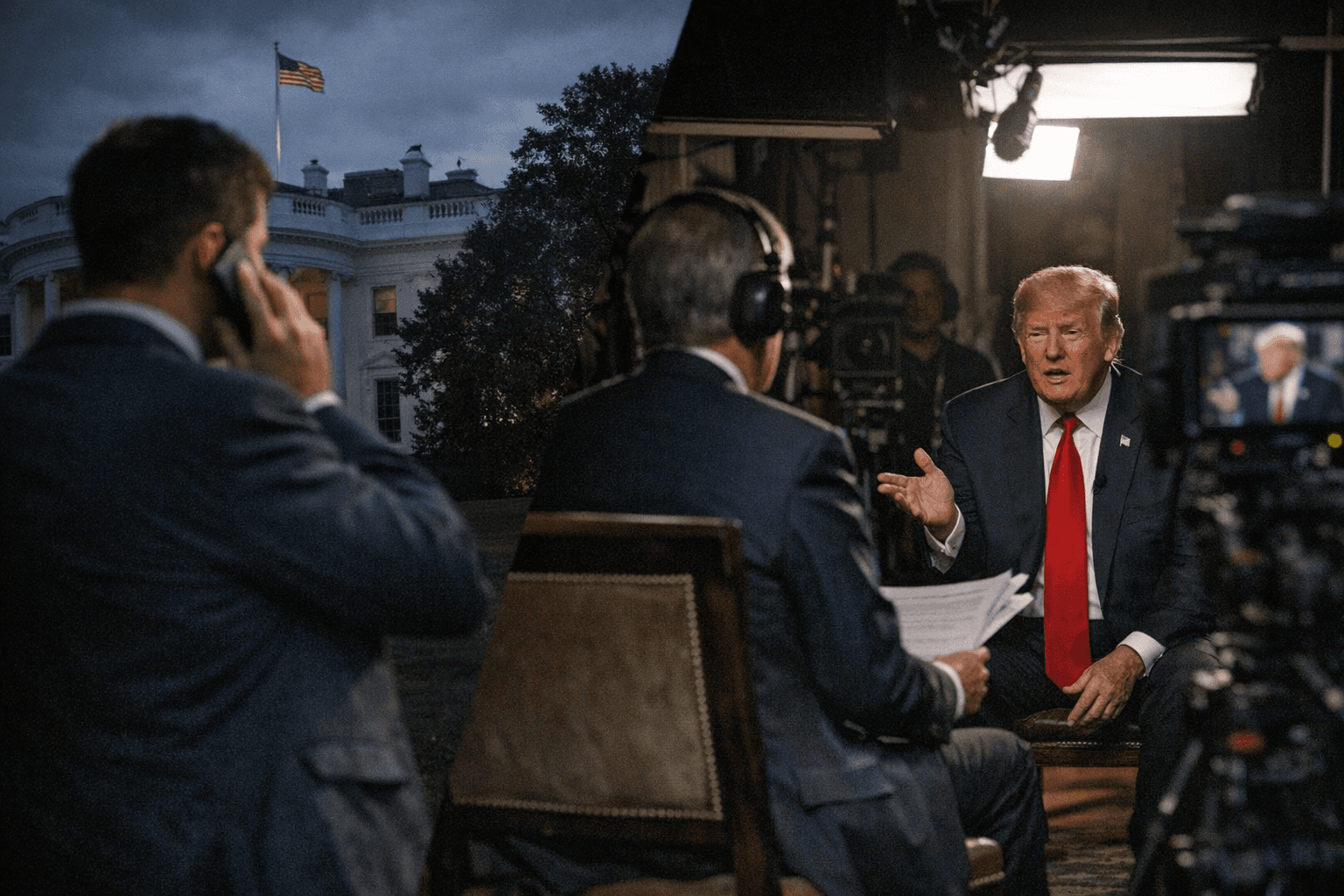
Leaked audio captures White House press secretary Karoline Leavitt delivering a blunt message to CBS staff after a taped interview with President Donald Trump: air the full segment or face litigation. The exchange, recorded moments after the interview was filmed in Michigan, includes a direct admonition attributed to the president and was circulated among news organizations late this week.
In the recording Leavitt, quoting the president, says, "Make sure you guys don't cut the tape, make sure the interview is out in full." She then adds, again attributing the remark to Mr. Trump, "If it's not out in full, we'll sue your ass off." The CBS anchor Tony Dokoupil replies, "Yeah, we're doing it, yeah," and later, "He always says that!" An executive producer heard on the tape responds, "Oh, great, OK!" The 13-minute conversation between Mr. Trump and Dokoupil, which touched on protests in Iran and a criminal inquiry involving Federal Reserve Chair Jerome Powell, was published in full the same evening it was recorded.
CBS News publicly said that it had decided "the moment we booked this interview" to air it unedited and in its entirety, and the network followed through. The White House initially did not respond to requests for comment. Leavitt later told reporters, "The American people deserve to watch President Trump's full interviews, unedited, no cuts. And guess what? The interview ran in full."
The exchange arrives against a recent legal backdrop that helps explain why newsroom staff took the warning seriously. In 2024 Mr. Trump sued a network over its editing of a television interview; the network's corporate parent later paid $16 million to settle the suit. Legal experts at the time judged the earlier case to have little merit, but the financial settlement underscored the practical leverage litigation can exert on media organizations.
The episode highlights a tension that reaches beyond media management: when government figures seek to constrain how interviews are presented, community access to reliable information can be at risk. Newsrooms make editorial choices about context, fact-checking and emphasis that shape public understanding of policy, health guidance and civic processes. Legal threats aimed at shaping those choices can chill critical scrutiny and alter how timely information reaches communities that rely on local and national reporting for public health decisions and civic participation.
Coverage of the recording immediately generated wide public engagement, including social media posts that drew thousands of reactions and comments. Some staffers present on the tape interpreted the warning as jocular, but lawyers and editors say even offhand statements from powerful officials can carry weight in newsrooms accustomed to weighing the cost of litigation.
For communities that already face information disparities, pressure that affects how interviews are edited can compound existing inequities. Public health responses and other policy debates depend on transparent, accountable reporting. When editorial independence is perceived to be under threat, trust in media and institutions may erode most sharply among marginalized populations who already experience gaps in access to clear, actionable information.
The recording raises questions about norms for interactions between the White House and news organizations and about the role of litigation in shaping editorial behavior. As the media and legal communities parse the implications, journalists and public officials alike will face renewed scrutiny over how conversations with the press are conducted and how those interactions affect the public interest.
This article was produced by Prism’s automated news system from verified source data, official records, and press releases, then run through automated quality and moderation checks before publishing. The system is built and supervised by the people who set the standards it runs under. Read our full AI policy.
Did this article answer your question?