White House orders U.S. forces to enforce a Venezuelan oil quarantine
The White House has directed U.S. military forces to focus almost exclusively on enforcing a "quarantine" of Venezuelan oil and related sanctions enforcement for at least the next two months, a senior U.S. official said. The move signals a shift toward intensified economic pressure intended to force political concessions from President Nicolás Maduro, raising legal, operational and oversight questions for Congress and regional partners.

The administration has ordered U.S. military forces to concentrate their efforts on enforcing a "quarantine" of Venezuelan oil shipments and on related sanctions enforcement for at least the next two months, a U.S. official who spoke on condition of anonymity told reporters on December 24. The directive emphasizes economic coercion over immediate kinetic military action and is intended to create acute economic strain on President Nicolás Maduro's government.
"The efforts so far have put tremendous pressure on (Venezuelan President Nicolás) Maduro and the belief is that by late January Venezuela will be facing an economic calamity unless it agrees to make significant concessions to the U.S.," the official said. The same source added that "while military options still exist, the focus is to first use economic pressure by enforcing sanctions to reach the outcome the White House is looking for."
The instruction frames the coming weeks as an intensified campaign of interdiction and sanctions enforcement. Officials provided no operational checklist, did not identify the military units or commands that will be assigned, and declined to specify rules of engagement or whether allied partners will join the effort. Those gaps leave questions about how interdiction would be carried out at sea, how commercial shipping and neutral nations will be treated, and how enforcement will comport with U.S. and international law.
Legal and institutional implications are immediate. The shift raises oversight questions for Congress, which has authority over war powers and budgetary appropriations. It also places agencies charged with sanctions implementation at the center of a military focused operation, potentially blending the Treasury Department's financial tools, the U.S. Coast Guard's maritime enforcement role, and naval interdiction capacity in ways not yet explained by the administration.
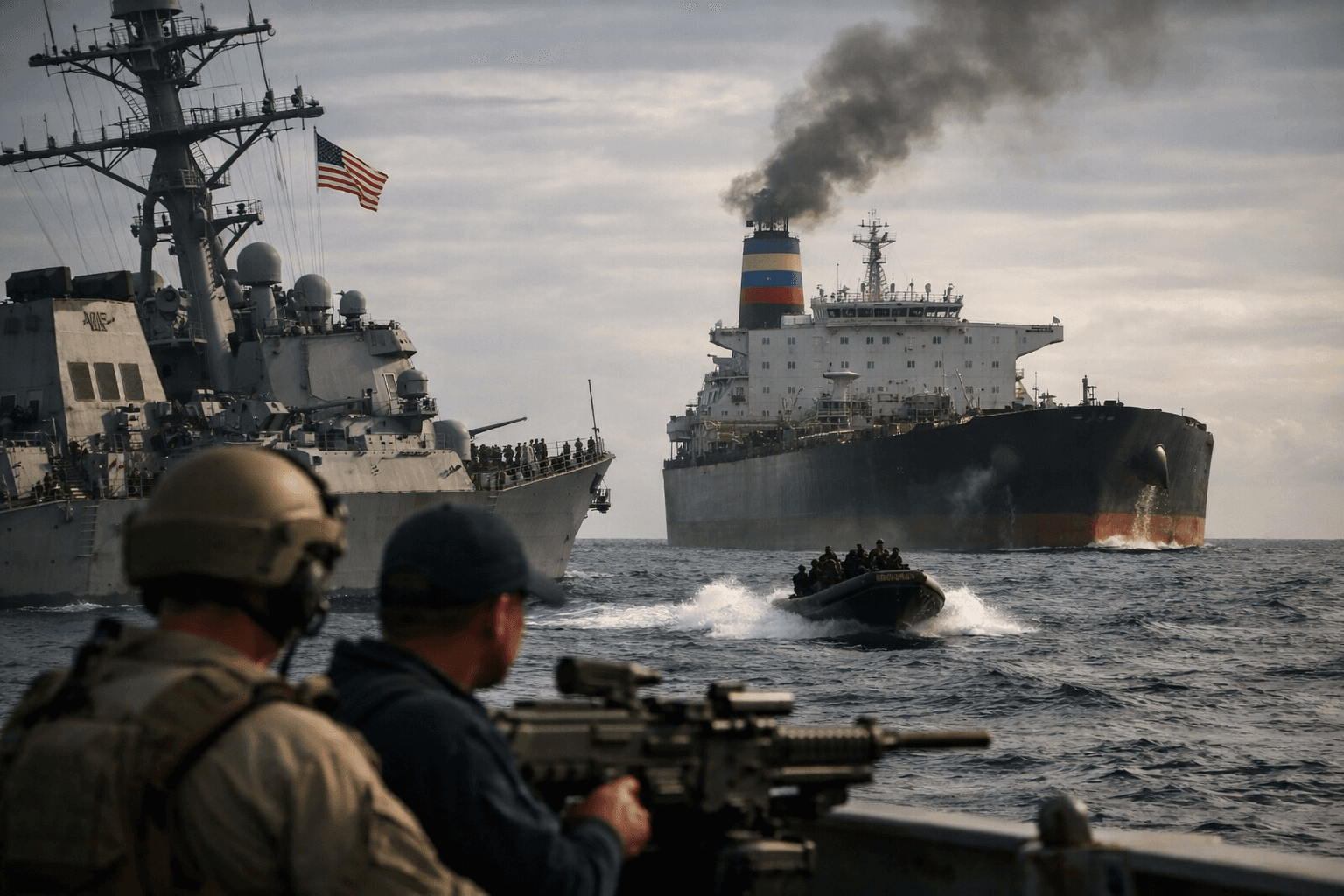
Regionally the strategy could produce cascading effects. An intensified blockade of Venezuelan oil exports risks accelerating an economic collapse that could trigger larger refugee flows, stress neighboring states, and heighten the risk of confrontations between U.S. maritime forces and Venezuelan security vessels. The administration's explicit choice to prioritize sanctions and interdiction over land strikes reduces the immediate prospect of a large scale military incursion, but it does not remove the possibility of escalation if interdiction operations lead to clashes.
Domestically the policy will test political coalitions. Supporters of the administration who favor pressure on Caracas will point to nonkinetic means as a measured approach, while critics will press for clarity on legal authority and accountability. Lawmakers from both parties are likely to seek briefings and to press for hearings on the plan's legal basis, its potential humanitarian consequences, and the criteria for lifting or intensifying the campaign.
Transparency on operational rules, multinational coordination, and contingency plans will determine whether the effort achieves its stated goal of extracting concessions without wider harm. For now, the White House has signaled a clear preference for economic pressure as the principal lever in its Venezuelan policy, setting a tense timetable that could alter conditions in Caracas and reverberate across the hemisphere through late January.
This article was produced by Prism’s automated news system from verified source data, official records, and press releases, then run through automated quality and moderation checks before publishing. The system is built and supervised by the people who set the standards it runs under. Read our full AI policy.
Did this article answer your question?

