White-Label WordPress Guide Helps Agencies Scale Builds and Recurring Revenue
SEO agencies can standardize site delivery and protect client rankings by systematizing white-label WordPress builds around six clear process steps, productized pricing, and SEO-gated QA.

Signing a new client on a complex WordPress project while your developers are already stretched is one of the fastest ways to watch an agency's organic delivery capacity collapse. Web Help Agency recently published a tactical guide built specifically for design agencies, marketing shops, and SEO teams that need dependable WordPress builds and maintenance without growing headcount. The result is a checklist-oriented manual that translates white-label WordPress partnerships into a repeatable, margin-protected operation and, critically for SEO practitioners, a framework that bakes search performance directly into the delivery workflow.
The Six-Step Engagement Framework
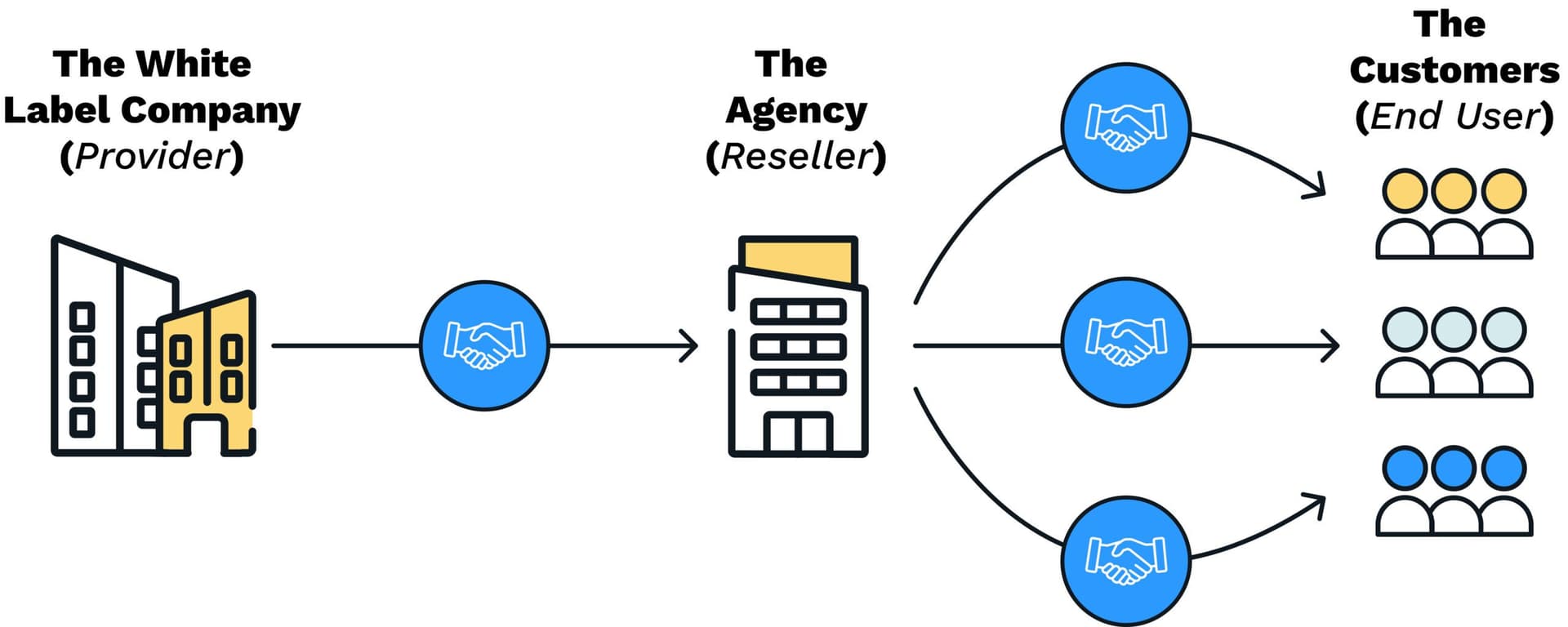
The guide outlines a six-step white-label WordPress engagement designed to keep the agency in control of the client relationship at every stage. Running through them in sequence reveals how an SEO-first mindset fits into each gate:
1. Agency signs the client and sets expectations. This is where scope, timeline, and performance benchmarks get locked.
For SEO agencies, that means defining Core Web Vitals targets (Largest Contentful Paint, Interaction to Next Paint, Cumulative Layout Shift), schema requirements, and crawlability standards as contract line items, not afterthoughts.
2. Agency sends a detailed scope and NDA to the white-label partner. The SOW should specify design handoff format, plugin versions, hosting environment, and the SEO deliverables expected at launch: clean information architecture, structured data implementation, XML sitemap configuration, and canonical tagging.
The NDA must include explicit agency-first contact rules, so the partner never communicates directly with the end client.
3. Partner builds in a staging environment under agency branding. All development happens behind the agency's flag.
Staging credentials and access controls stay with the agency, not the client, protecting the transparency of the white-label arrangement.
4. Consolidated agency review and revision cycle. This is where QA gates tied to SEO metrics earn their place.
Rather than reviewing builds aesthetically, agencies should run Google PageSpeed Insights, Screaming Frog crawls, and structured data validation tools against the staging URL before any revision is signed off.
5. Client sign-off and launch. Performance acceptance criteria, confirmed in step one, get verified here.
No launch proceeds until the site meets agreed LCP, CLS, and INP thresholds alongside indexability checks.
6. Post-launch support and knowledge transfer. The guide includes documentation handoffs here, ensuring that if the white-label partner ever changes, the agency retains full site knowledge, source code, and access credentials.
Scope and SOW Language That Protects Margin
Vague statements of work are the single biggest contributor to rework costs in white-label engagements. The Web Help Agency guide prescribes checklists covering design handoff types, plugin and version control requirements, staging credentials, and performance acceptance criteria. For SEO agencies writing SOW language, these checklists translate into specific deliverable rows: schema type per page template, robots.txt and sitemap structure, redirect mapping for migration projects, and a performance benchmark table that the partner signs against.
Without those specifics, revision cycles balloon. A partner who ships a theme-heavy build that fails Core Web Vitals forces the agency into unplanned remediation work, rework costs that are invisible until the client's rankings start slipping and the account manager is fielding difficult calls.
Productized Pricing That Preserves Agency Margins
The guide recommends packaging WordPress builds as productized offerings with fixed-price tiers covering brochure sites, e-commerce, and complex integrations, a structure designed to streamline proposals and protect margins. For SEO agencies, those tiers should carry explicit inclusions: the brochure tier might cover up to ten page templates, on-page schema, and a PageSpeed score floor; the e-commerce tier adds product schema, site search configuration, and faceted navigation controls; the complex integration tier covers custom post types, API connections, and advanced crawl-budget management.
Beyond the initial build, the guide advises agencies to incorporate a managed maintenance subscription, converting one-off projects into recurring revenue through uptime monitoring, updates, security, and monthly optimization. The revenue potential here is significant: an agency managing 50 client websites at an average care plan rate of $75 per month generates $3,750 in monthly recurring revenue, or $45,000 annually, from maintenance alone. For SEO agencies specifically, that monthly optimization slot is an opportunity to run technical audits, push Core Web Vitals improvements, and deliver performance reports under the agency's brand, all fulfilled by the white-label partner.
The Six Mistakes, Scored by Their SEO Cost
Web Help Agency flags six specific mistakes agencies make when working with white-label WordPress suppliers: insufficient NDAs, lax QA, allowing vendor access to client contact lists, missing source control, poor documentation, and having no exit plan. Read through an SEO lens, each carries a distinct risk profile:
- Insufficient NDAs expose the agency if a partner approaches the client directly. Beyond the relationship damage, a mid-project partner switch without a proper NDA means no guaranteed handoff of theme files, plugin licenses, or build documentation. A site with missing source control is a site that cannot be efficiently modified for technical SEO without reverse-engineering what was built.
- Lax QA is where organic traffic risk is most acute. A build that launches with render-blocking scripts, unoptimized images, or broken structured data can suppress rankings from day one. Rework after launch costs more than QA gates before it, in developer time and in the indexing delay while Google re-crawls corrected pages.
- Vendor access to client contact lists risks the agency's transparency arrangement. If a white-label partner contacts a client directly, the agency loses control of how the relationship and the site's technical state are communicated, creating misinformation risk around SEO performance.
- Missing source control means no version history, no rollback capability, and no audit trail when a plugin update breaks a page's structured data or introduces a JavaScript rendering issue.
- Poor documentation is an exit-plan killer. Without build documentation, plugin lists, and credential records, migrating a site to a new partner or in-house developer triggers a discovery period during which technical SEO configurations are frequently lost or misconfigured.
- No exit plan is the compounding risk. Every other mistake above becomes catastrophic when an agency has no contractual clause requiring the partner to deliver source files, database exports, and access credentials on termination. The guide prescribes contractual clauses that guard IP and control communication paths through agency-first contact rules and handoff documentation requirements.
Strategic Implications for SEO Agency Growth
The guide positions white-label WordPress development as a low-friction capability that helps agencies retain sales momentum, allowing them to accept larger or more complex website work without hiring. For SEO practitioners, that framing extends beyond project volume. Technical SEO services, site migrations, Core Web Vitals remediation, and CMS upgrades are all WordPress-dependent deliverables. Reliable white-label WordPress partners mean faster delivery of technical fixes and migration projects, services that directly protect client rankings and core retention metrics.
Core Web Vitals remain Google's primary metrics for measuring real user experience, with Largest Contentful Paint, Interaction to Next Paint, and Cumulative Layout Shift directly influencing how search engines evaluate page quality. An SEO agency that can guarantee those metrics at launch, built into a productized SOW and enforced through QA gates, is offering something most generalist web shops cannot: a WordPress build that is search-ready on go-live day, not after three rounds of performance remediation.
White-label WordPress development enables agencies to provide technical capabilities without building a large in-house staff, and when the engagement is systematized with the right scope language, QA checkpoints, and exit-plan clauses, the model scales cleanly. The agencies that operationalize it correctly will close more complex site projects, convert them into managed maintenance revenue, and protect their clients' organic visibility without ever expanding their developer headcount.
Sources:
Know something we missed? Have a correction or additional information?
Submit a Tip