DesignRush Updates White-Label PPC Agency Directory Amid Surging Global Ad Spend
With CPC rising for 87% of industries and global ad spend hitting $1 trillion in 2026, DesignRush's refreshed white-label PPC directory is a practical first move for SEO agencies scaling paid media.

Cost-per-click rose for 87% of industries in 2025, averaging a 10% increase across the board. For SEO agencies watching clients' paid-search budgets compress while organic timelines stretch, that number is a decision point: build in-house PPC capacity or find a white-label partner who can absorb the pressure. DesignRush's April 1, 2026 refresh of its white-label PPC agency directory is designed to accelerate that second path.
DesignRush, the North Miami Beach-based B2B marketplace founded in 2017, now indexes more than 30,000 verified agency profiles globally. The updated directory filters by budget, team size, hourly rates, and verified client reviews, covering platform specialists across Google Ads, Meta, Microsoft Advertising, and local service ads. Under General Manager Gianluca Ferruggia, the platform has expanded from web design and development into a broad digital marketing sourcing hub.
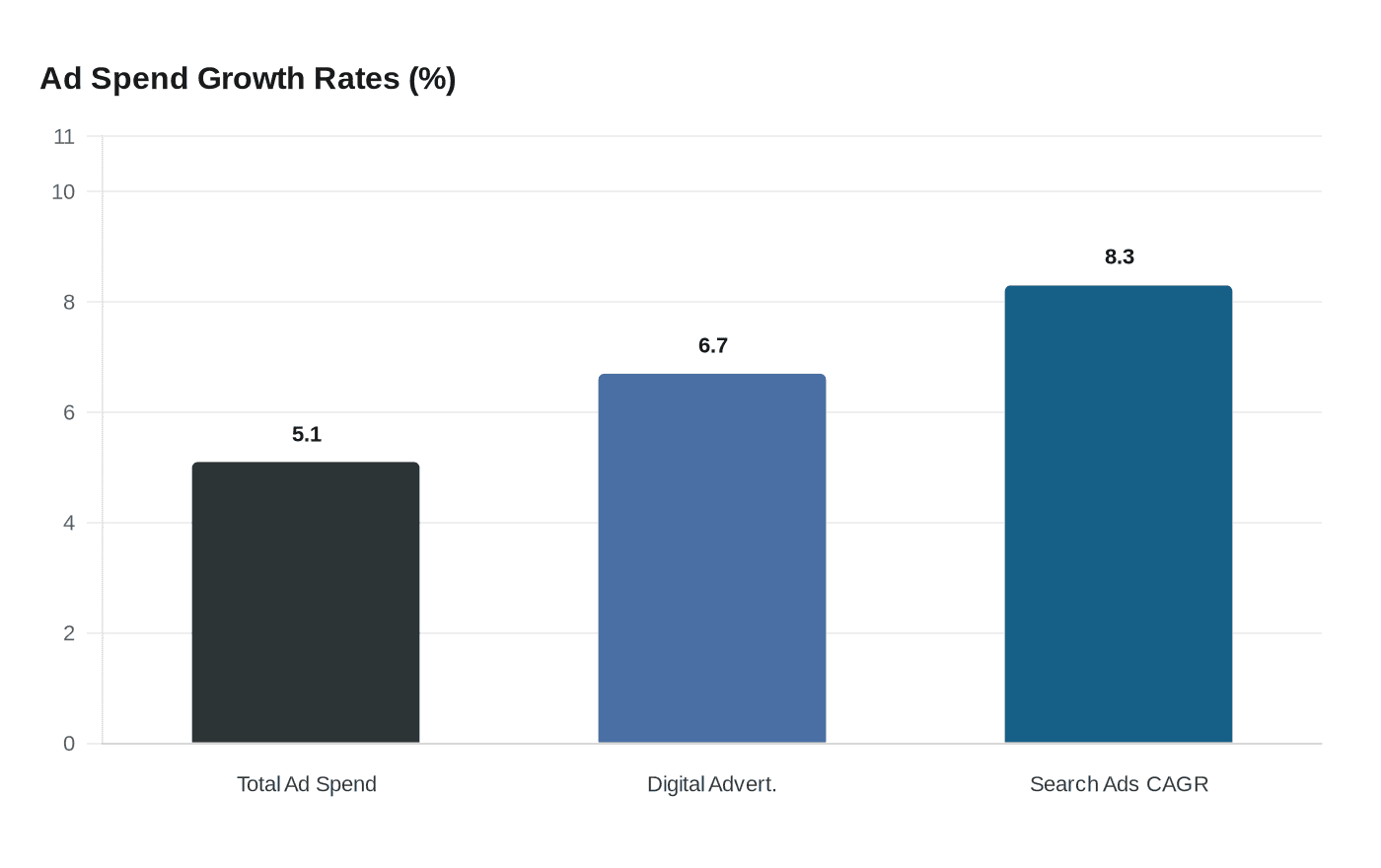
The timing is pointed. Dentsu's December 2025 Global Ad Spend Forecasts projected that worldwide advertising spend would cross $1 trillion for the first time in 2026, a 5.1% year-over-year increase, with digital advertising specifically forecast to grow 6.7% and account for 68.7% of total investment. Within paid search, Google commands approximately 69.04% of global market share and is expected to capture more than 70% of traditional search-ad spending by 2026. Amazon holds roughly 22.3% of U.S. search-ad spend. Statista projects the broader search advertising market will grow at a CAGR of 8.30% between 2025 and 2029, reaching $483.55 billion.
For an SEO agency evaluating white-label PPC partners through a directory like this, the listing is a starting map, not a finish line. Filter by vertical fit and minimum budget first, then shortlist three to five providers. But before signing anything, demand sub-account or MCC access to the Google Ads account, not dashboard screenshots. Ask for a change log showing weekly optimizations: bid adjustments, negative keyword additions, audience exclusions, and ad copy iterations. A partner who cannot show that cadence is running set-and-forget campaigns.
On the SEO side specifically, a white-label PPC partner should be accelerating your organic strategy, not working against it. Search term reports from paid campaigns surface high-converting keyword intents that inform content targeting faster than six months of rank tracking. Paid landing page tests reveal which value propositions convert before you invest in organic content around them. Used this way, PPC becomes a learning engine for SEO, not a competing budget line. To keep that dynamic clean, require the partner to isolate branded search terms in a separate campaign so organic credit is not absorbed into paid ROAS figures. Incrementality testing, even a simple geo-holdout or time-based lift analysis, should be written into the pilot scope. Without it, performance numbers may simply reflect traffic your SEO program already earned.
Contract terms carry equal weight. Insist on data portability clauses: all campaign assets, audience lists, and conversion history remain the agency's property if the relationship ends. White-label compliance language should explicitly prohibit the partner from contacting clients directly or running ads targeting client brand terms independently. A 30-day notice period with guaranteed data export protects everything the agency has built.
The financial case for this kind of structure is well-documented. An Amra & Elma 2025 benchmark study found that agencies outsourcing 40 to 60% of service delivery grow 2.3 times faster than in-house-only peers and report 20% higher profit margins. The Agency Management Institute has found that white-label delivery produces 22% less revenue volatility and 42% longer client retention. More than 60% of agencies already outsource some PPC capacity for exactly these reasons.
DesignRush's April refresh signals an active supplier market with new entrants and updated profiles. The discovery friction is lower now. The vetting work, account access verification, change log review, attribution alignment, still falls entirely to the agency doing the sourcing.
Sources:
Know something we missed? Have a correction or additional information?
Submit a Tip