WHO Chief Calls for Stronger Commitment, Innovation at Pandemic Agreement Talks
WHO chief Dr. Tedros called for stronger political will and innovation as member states opened crunch talks on the pandemic agreement's unfinished PABS annex, with a May deadline looming.
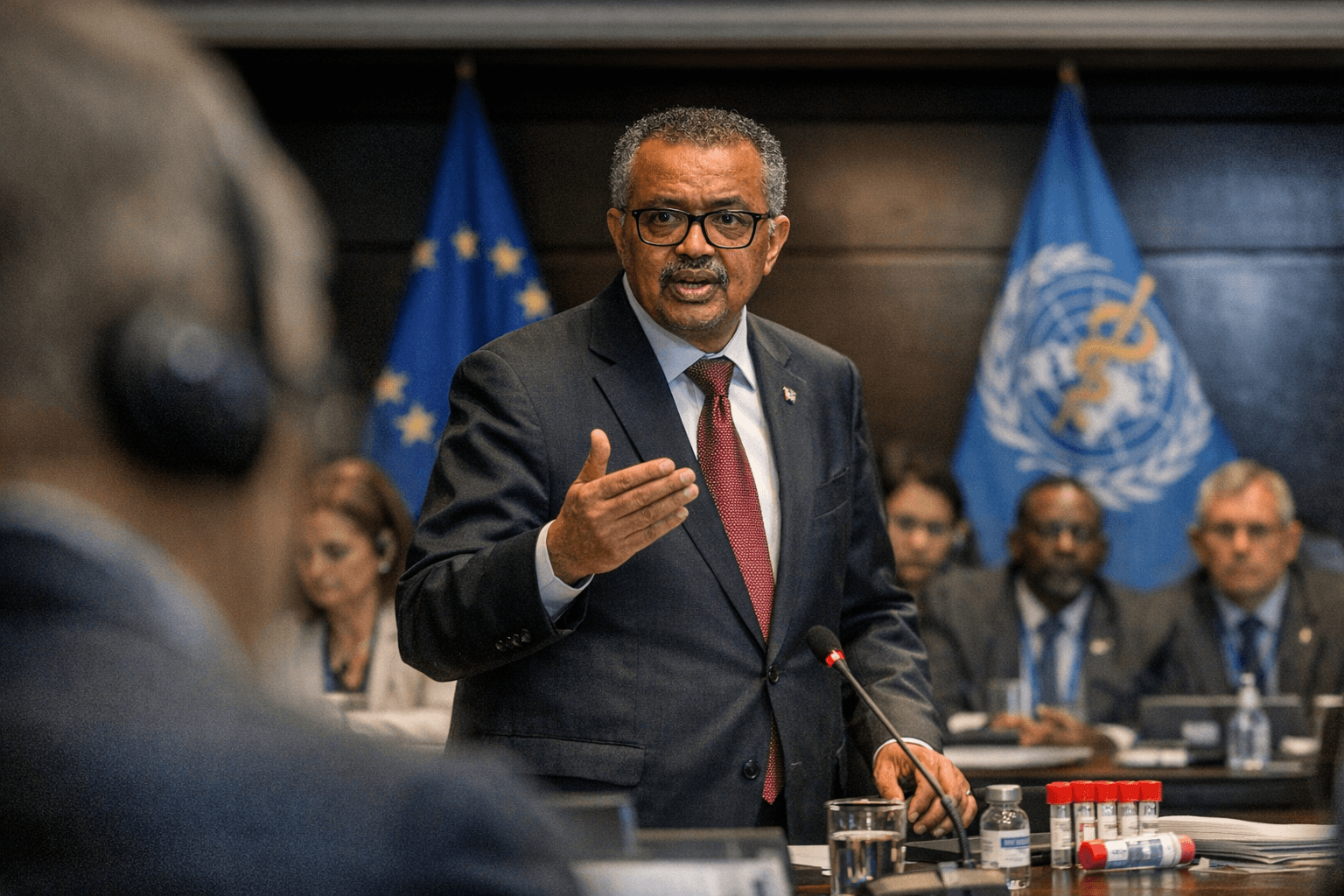
With less than two months until a make-or-break deadline, WHO Director-General Dr. Tedros Adhanom Ghebreyesus opened the sixth session of the Intergovernmental Working Group on the WHO Pandemic Agreement on March 23 by pressing member states for deeper political commitment, more innovation, and greater reliance on decentralized care.
The session runs in hybrid format through March 28, 2026, with negotiations stretching across multiple daily time blocks. At the center of the talks is a single unresolved piece of the agreement that is holding up its entry into force: a formal annex on the Pathogen Access and Benefit Sharing system, known as PABS.
The world's first Pandemic Agreement, a legally binding international instrument designed to make the world safer and more equitable in the face of future pandemics, was adopted by the World Health Assembly on May 20, 2025. But the agreement will not be opened for signature until the supplementary PABS annex is completed, an uncommon feature in international law that temporarily halts the agreement's progress toward entry into force until the details of the annex are agreed.
The PABS system aims to ensure that scientists and public health researchers have access to pathogen samples and genetic sequencing data, while also securing vaccines, diagnostics, and therapeutics for distribution to countries during a pandemic. The outcome of the IGWG's work will be submitted to the 79th World Health Assembly in May 2026 for its consideration.
Getting there will not be easy. The gap between developed and developing countries remains large, with a bloc of approximately 100 low- and middle-income countries continuing to call for mandatory benefit sharing, including guaranteed access to vaccines, therapeutics, and diagnostics, while high-income countries remain focused on protecting the pharmaceutical innovation ecosystem and ensuring open access to pathogen sequence data.
Only six more negotiating days remain after this session before WHO member states hit the May 2026 deadline. Critical topics, including financing, have yet to be meaningfully addressed.
The pharmaceutical industry has also sounded its own alarm. The International Federation of Pharmaceutical Manufacturers and Associations warned that as currently proposed, the PABS annex introduces overlapping and potentially conflicting obligations that could disincentivize research and slow innovation, with increased rigidity and complexity undermining the agility required in a crisis.
The IGWG is co-chaired by representatives from Brazil and the United Kingdom, with vice chairs from Australia, the Kingdom of Eswatini, the State of Qatar, and the Kingdom of Thailand. After the fifth session in February, UK co-chair Matthew Harpur acknowledged that "important differences remain, but there is a shared recognition of what is at stake."
Dr. Tedros has been consistent in framing the negotiations as both a moral and strategic imperative. In January, he described the PABS system as "a cornerstone of a safer and more equitable world." Once the annex is adopted by the World Health Assembly, the full agreement will be open for countries to sign and ratify, and will officially enter into force 30 days after 60 countries have ratified it.
The sixth session's closing plenary is scheduled for the late evening of March 28, leaving negotiators just weeks to bridge divisions that have persisted across five prior rounds of talks.
Know something we missed? Have a correction or additional information?
Submit a Tip