WHO warns global health progress is slowing, and reversing
WHO says global health gains are stalling, with life expectancy, child survival and immunization all exposed as weak data and aid cuts widen gaps.
The World Health Organization is warning that the world is no longer making steady progress on health, and in some places is sliding backward. Its World Health Statistics 2026 report, published May 13, said the latest global data show uneven gains in life expectancy, healthy life expectancy, premature mortality, immunization and other Sustainable Development Goal measures, with fragile advances threatened by weak financing and weak surveillance.
The report pulls together health indicators the agency has tracked since 2005, and this edition places unusual weight on the quality of mortality reporting. WHO said its data, current through March 2026, also examine COVID-19-related excess deaths and the strength of country civil registration and vital statistics systems. That matters because WHO estimates 36 million babies born each year are not registered, nearly 40% of deaths worldwide are not recorded, and only 8% of reported deaths in low-income countries include a documented cause.
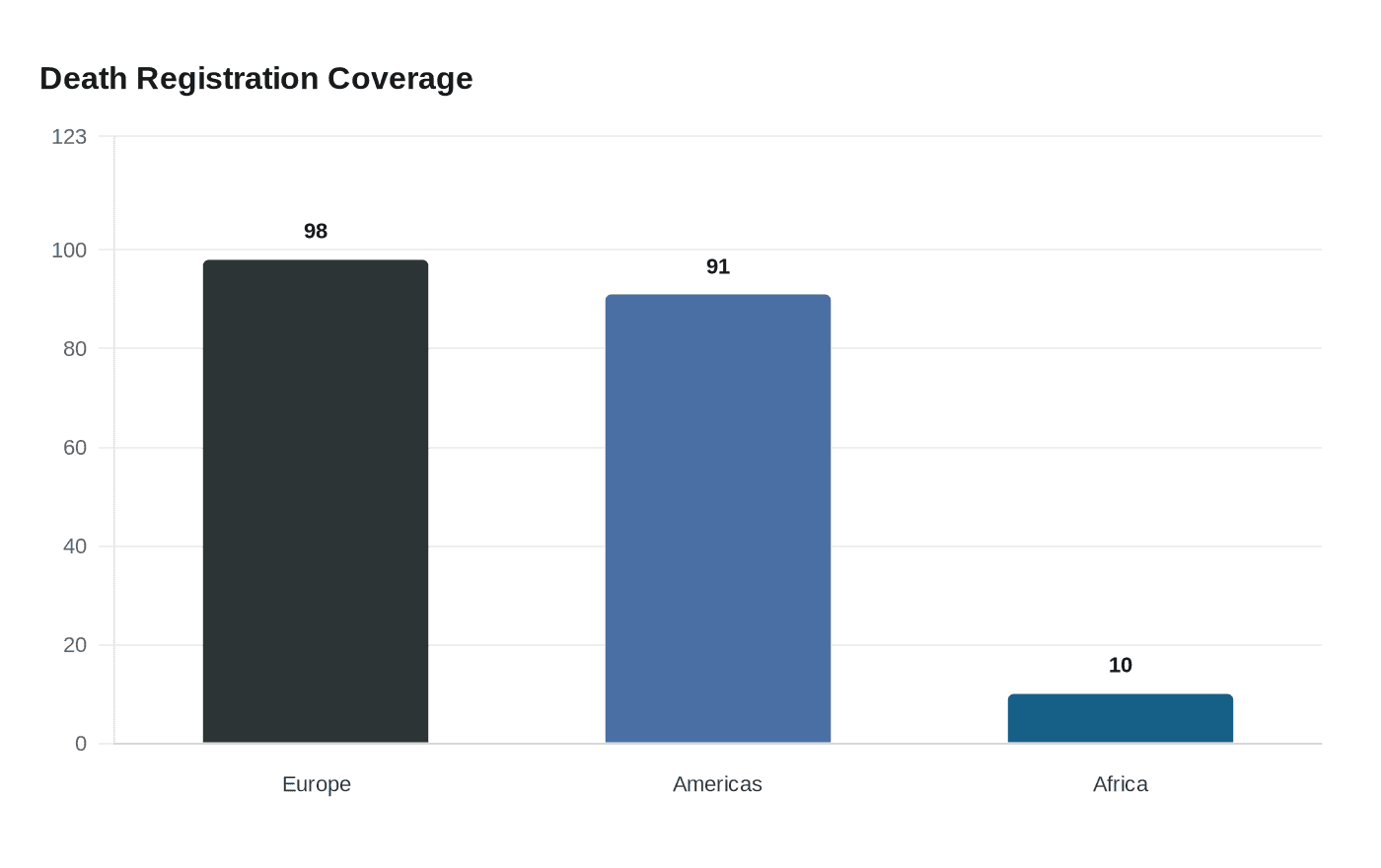
The regional gap is stark. WHO says registered death coverage reaches 98% in the European Region and 91% in the Region of the Americas, but falls to just 10% in the African Region. Birth registration shows the same divide, with much higher coverage in Europe than in Africa. In practical terms, that means the places with the weakest systems are also the places least likely to see where children are dying, where maternal risks are rising, or where outbreaks are spreading fastest.
The warning lands after years of uneven recovery from the pandemic. WHO’s 2025 statistics report said global life expectancy fell by 1.8 years between 2019 and 2021, the largest drop in recent history, while global healthy life expectancy fell by six weeks because of COVID-19-linked anxiety and depression. WHO also said 1.4 billion more people were living healthier by the end of 2024, surpassing the 1 billion target, but that progress was still too slow to guarantee the SDGs by 2030.
The pressure is showing up in hospitals and clinics. In April 2025, WHO said 70% of surveyed country offices were already reporting health-service disruptions from aid cuts, and up to 24% said budget cuts were increasing out-of-pocket payments for patients. At the same time, WHO, UNICEF and Gavi said measles, meningitis and yellow fever outbreaks were rising, and WHO estimated measles cases reached 10.3 million in 2023, up 20% from 2022. A March 2026 UN, WHO and UNICEF estimate said 4.9 million children died before age five in 2024, including 2.3 million newborns, a reminder that child survival remains a live emergency even as headline indicators improve.
WHO’s message is blunt: without stronger primary care, immunization equity, maternal and child health services and far better mortality data, global health gains can still be reversed before the decade ends.
This article was produced by Prism’s automated news system from verified source data, official records, and press releases, then run through automated quality and moderation checks before publishing. The system is built and supervised by the people who set the standards it runs under. Read our full AI policy.
Did this article answer your question?