Why 529 plans may still beat new Trump accounts for families
The new Trump account adds a $1,000 seed and stock-index investing, but 529 plans still offer tighter education tax breaks and more flexibility for most families.
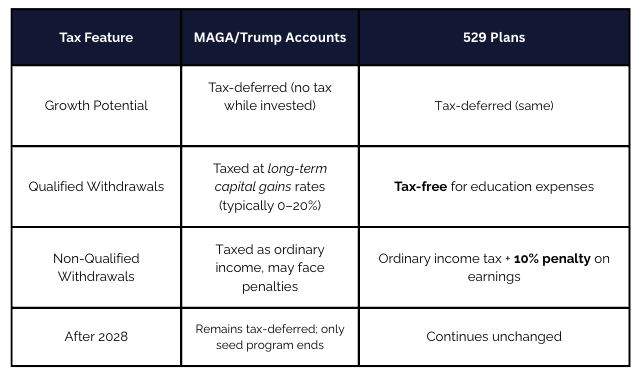
Children born between January 1, 2025 and December 31, 2028 qualify for a $1,000 government seed deposit in a Trump Account, giving families a second federally backed savings bucket for children. But the new Trump Account is not a clean replacement for a 529 plan. The difference is purpose: Trump Accounts lean toward long-term investing and eventual IRA-style rules, while 529s are built for education spending and often come with state tax breaks that can matter more than the headline government deposit. For many households, the smarter sequence is still to treat the 529 as the first education account and the Trump Account as a possible add-on.
What a Trump Account actually is
Trump Accounts were created by the 2025 One Big Beautiful Bill Act as tax-advantaged savings and investment accounts for children under 18. Eligible children born between January 1, 2025 and December 31, 2028 receive a $1,000 government seed deposit, families can contribute up to $5,000 a year, and some employers may be able to add another $2,500 pre-tax through cafeteria plans.
The accounts are designed to be invested in low-cost U.S. stock index funds until age 18, when they follow traditional IRA rules. That structure gives the account a long runway, but it also makes it different from a school-specific savings tool. The IRS and Treasury have already issued guidance, and more regulations are coming.
Why 529 plans still fit the education job better
A 529 plan is a state-sponsored education savings vehicle, and that simple design matters. Parents, grandparents, and other relatives can open one, earnings grow tax-free, and withdrawals are tax-free when the money is used for qualified education expenses. 529 contributions are not deductible on federal tax returns, but more than 30 states offer a state income tax deduction or credit, which can create an immediate payoff that a federal seed deposit does not always match.
These plans are also more flexible for education spending. 529 money can be used for future education costs, including K-12 tuition in some cases, and the tax benefits vary by state. For a family that knows college is likely, that combination of tax-free growth, tax-free qualified withdrawals, and possible state relief is a stronger fit than a newer account with broader, less education-focused rules.
The trade-off families need to weigh
The big consumer question is not whether a child can have a Trump Account. It is where the first dollar should go. A 529 plan usually has the edge when the goal is education, because the account is built around that purpose and can unlock state-level tax savings on top of federal tax-free treatment of qualified withdrawals.

The Trump Account is more restrictive, less proven, and tied to a retirement-style framework once the child turns 18. That makes it harder to treat as a general-purpose family savings tool, especially compared with a 529 plan that can be opened by extended family members and aligned directly with school costs.
A practical hierarchy looks like this:
- If education is the goal and your state offers a deduction or credit, a 529 often belongs first.
- If your child qualifies for the Trump Account, the seed deposit can still be worth taking.
- If you have room to save beyond education needs, both accounts can coexist.
The accounts are increasingly being framed as complementary rather than competitive. J.P. Morgan Asset Management said the answer for newborns may be both a 529 plan and a Trump Account, which reflects how families can separate school money from longer-term investing money instead of forcing one account to do both jobs.
Why the policy backdrop matters
The debate around 529s is not standing still. In November 2025, the Institute on Taxation and Economic Policy warned that the 2025 federal tax law could make Section 529 college savings accounts more costly for states because of their expanded use for private and religious K-12 schools. State tax breaks are part of what makes 529s so valuable in the first place.
Treasury Secretary Scott Bessent held a Trump Accounts press conference on December 2, 2025, and Michael Dell and Susan Dell later said they would donate $6.25 billion to fund Trump Accounts for at least 25 million American children. By mid-2026, firms including Fidelity, Wells Fargo, Schwab, and J.P. Morgan were publishing comparison guides, a sign that families are now being asked to choose among real savings strategies, not just political branding.
This article was produced by Prism’s automated news system from verified source data, official records, and press releases, then run through automated quality and moderation checks before publishing. The system is built and supervised by the people who set the standards it runs under. Read our full AI policy.
Did this article answer your question?