Why a silent retreat can reset stress and mental chatter
Silent retreats are drawing more people because they can quiet stress, reduce mental chatter and improve well-being, with benefits seen in as little as six days.
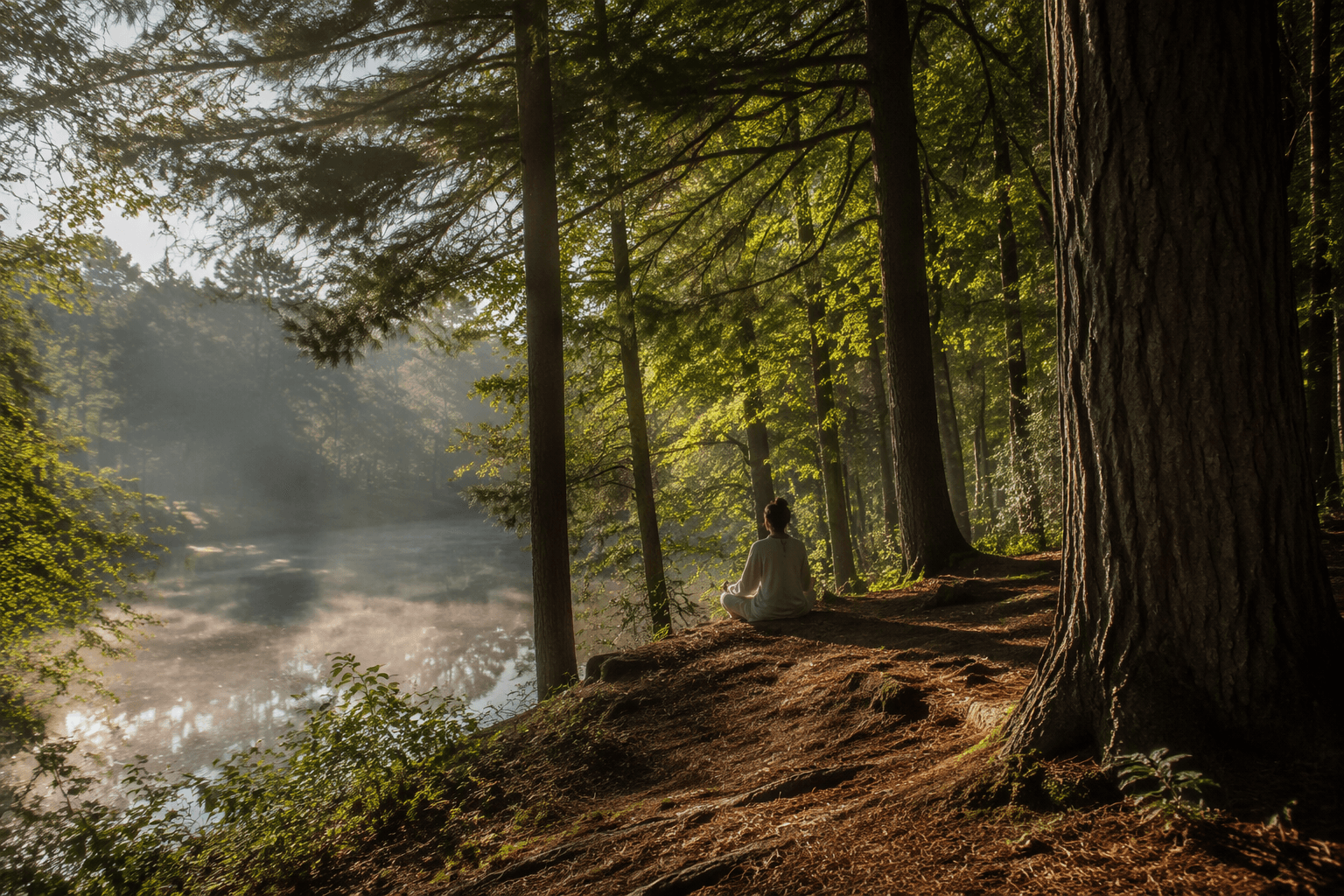
The appeal of a silent retreat is easy to understand: stop talking, stop scrolling and give the nervous system a break from constant input. What looks like withdrawal can function as a reset, with evidence linking meditation retreats to lower stress, better mental health and less of the brain activity tied to inner chatter.
Why silence changes the stress response
A University of California, San Diego story on a one-week mind-body retreat found rapid changes in brain function and blood biology tied to resilience, pain relief and stress recovery. The same work pointed to a key mechanism that makes silence feel different from an ordinary weekend off: meditation reduces connections in parts of the brain associated with inner chatter.
That matters because rumination is not just a feeling, it is a pattern of attention. When the brain is no longer chasing the next conversation, alert, podcast or notification, it has a chance to leave the loop that keeps stress loud. Silence does not solve every problem, but it can interrupt the mental replay that makes stress feel nonstop.
What the evidence says
The National Center for Complementary and Integrative Health treats meditation and mindfulness as commonly used practices and offers guidance on their effectiveness and safety. That framing is important: silent retreats are not fringe experiments, they are part of a broader set of mind-body practices that public health researchers take seriously.
The retreat literature also points in the same direction. A PubMed-indexed systematic review of traditional meditation retreats concluded that retreat participation can improve mental health outcomes. A separate meta-analysis found that a 6-day mindfulness meditation retreat can produce mental health benefits on par with longer 8-week mindfulness-based programs, a useful finding for anyone who cannot step away for months but can manage nearly a week of structured quiet.
Those studies do not mean every retreat works the same way for every person. They do show that the dose of silence matters, and that even a short retreat can be enough to move measurable outcomes when the format is disciplined and the attention is guided.
Why silent retreats have surged
A September 20, 2025 Washington Post piece described silent retreats as surging in popularity, with religion optional and interest crossing faith traditions. The draw was not limited to one spiritual tradition: people were seeking distance from technology and daily stress, and silence was being repackaged as a practical response to always-on life.
That pattern also fits a 2024 MDPI literature review examining how media exposure and mental health intersect. The review underscores a simple modern problem: constant news, feeds and stimulation can leave people overfed with input but under-rested in attention. Silent retreats answer that by removing the channels that usually fill every gap.
A CBS Mornings post pointed to the same post-pandemic momentum, noting strong interest among researchers and retreat leaders. The surge reflects more than curiosity about meditation; it reflects a broader search for places where the phone is off, the schedule is spare and silence is not a failure of conversation but the point of the exercise.
What a retreat actually looks like
Silent retreats are often multi-day affairs rather than a single long sit. Spirit Rock Meditation Center offers multi-day silent meditation retreats, and True North Insight does the same, showing that the format is now part of established retreat culture rather than an obscure niche.
Access also matters. True North Insight says its retreat fees use a sliding scale and that scholarships are available, which is crucial in a field that can otherwise feel financially out of reach. The practical detail is important: if silence is presented as a stress intervention, the structure around it should not make participation dependent on disposable income.
In that sense, the best retreats are not just quiet rooms. They are organized containers for attention, with enough support that participants can actually remain still long enough for the nervous system to settle.
Who is most likely to benefit
Silent retreats are most useful when the problem is overload. If your days are packed with meetings, screens, family demands and constant commentary, a few days of structured quiet can create enough separation to notice what stress feels like before it becomes background noise.
They can also help when the mind is stuck in repetition. The combination of reduced speech, limited media and meditation practice can make room for sleep to improve, for attention to widen and for stress to stop ricocheting through every hour of the day. That is especially relevant for people who are not looking for a dramatic life overhaul, only a cleaner mental baseline.
- If you are considering one, look for multi-day programs with clear guidance rather than an unstructured do-it-yourself silence.
- If cost is a barrier, ask about sliding-scale fees and scholarships, which True North Insight already offers.
- If you want the least religious framing, note that some retreats now present religion as optional, a shift highlighted in The Washington Post’s 2025 coverage.
Who may need more than solitude
Silence is not a substitute for care when stress has become a clinical problem. The NCCIH’s emphasis on effectiveness and safety is a reminder that meditation is one tool among many, not a replacement for therapy, medication or urgent support when symptoms are severe.
That distinction matters for people whose distress is persistent, destabilizing or tied to an underlying mental health condition. For those cases, a retreat can still be helpful, but only as part of a broader plan that may include professional treatment and ongoing support. Silence can create space; it cannot always do the work of treatment on its own.
The larger lesson
The research points to a rare policy for the attention economy: subtract. A one-week retreat can change brain and molecular markers linked to resilience and recovery, shorter retreats can rival longer programs on mental health measures, and the popularity of silence keeps rising because modern life keeps adding noise.
That is why a silent retreat can feel unexpectedly effective. It does not promise escape from the world so much as relief from the constant performance of being available to it.
This article was produced by Prism’s automated news system from verified source data, official records, and press releases, then run through automated quality and moderation checks before publishing. The system is built and supervised by the people who set the standards it runs under. Read our full AI policy.
Did this article answer your question?